The road to Omaha has officially reached its most critical junction. As the NCAA baseball regionals get underway this week, the scouting community has descended upon campuses across the country with a singular focus: the 2026 MLB Draft prospects. With the draft now just weeks away in July, these postseason games represent the final and most high-stakes job interview for the nation’s elite collegiate talent. For the players on our ranked rosters, every plate appearance and every high-leverage inning could be the difference between a mid-round selection and a life-changing first-round bonus.
Identifying which programs have the most concentrated talent is essential for understanding how the first round will take shape this summer. As the postseason begins, certain rosters stand out not just for their ability to win a national championship, but for their incredible wealth of professional potential. Programs like UCLA, Georgia Tech, and the University of Florida have established themselves as the primary hubs for elite talent in this current draft cycle.
The Elite Class: Top 2026 MLB Draft Prospects to Watch
The 2026 draft class has been praised by evaluators for its combination of polished college hitters and high-ceiling arms that have shown significant development over the last three seasons. When evaluating 2026 MLB Draft prospects, scouts are prioritizing physical durability, advanced plate discipline, and the ability to perform against the elite competition found in the Power Five conferences. The current NCAA regional format provides the perfect pressure cooker for these athletes to showcase their tools under professional-grade scrutiny.
The Final Evaluation Window
While years of data have already been collected on these juniors and draft-eligible sophomores, the "Postseason Factor" remains a massive variable for MLB front offices. Teams want to see how a projected top-10 pick handles the atmosphere of a packed regional crowd or how a Friday night ace responds when facing a lineup of fellow professional prospects. For many of these players, the statistical profile is already locked in; now, it is about proving the mental makeup matches the physical tools.
UCLA: The West Coast Talent Factory
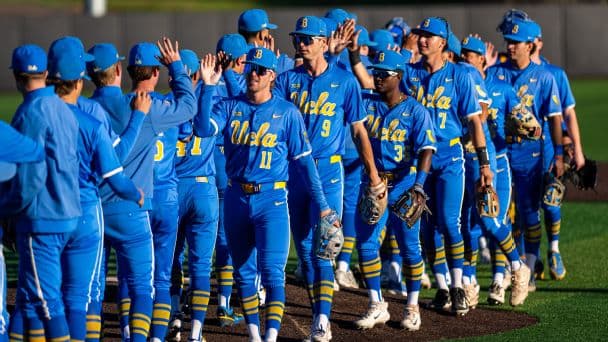
Historically a powerhouse for professional development, UCLA has once again assembled a roster that has scouts buzzing as the tournament begins. The Bruins have a reputation for producing "pro-ready" players who move quickly through the minor league systems, and their current crop of 2026-eligible talent is no exception. Their success in recruiting has translated into a roster filled with athletic middle infielders and power arms that fit the modern MLB profile perfectly.
Defensive Versatility and Projectable Arms
What sets the UCLA roster apart in this draft cycle is the defensive floor of their prospects. Scouts have noted that the Bruins' infielders possess the range and arm strength to stick at premium positions like shortstop and center field at the next level. On the mound, the program continues to churn out right-handers with high-spin rates and the ability to command three or more pitches, making them highly coveted targets for the early rounds of the July draft.
Georgia Tech and the Power of the ACC
The Atlantic Coast Conference (ACC) continues to be a primary source of elite hitting, and Georgia Tech is at the forefront of that movement. The Yellow Jackets have built a reputation for developing high-octane offensive players, and their 2026 class is one of the deepest in recent memory. With several players displaying an advanced approach at the plate and elite exit velocities, Georgia Tech has become a mandatory stop for every scouting director in the league.
High-Octane Bats and Exit Velocities
- Offensive Versatility: The Yellow Jackets feature several multi-positional players who offer defensive flexibility that MLB teams crave in the modern era.
- Power Profiles: Georgia Tech’s draft-eligible hitters have posted some of the most impressive power numbers in the country, with several prospects ranking in the 90th percentile for exit velocity.
- Pitching Depth: While the bats garner the headlines, their pitching staff includes several projectable arms with high-velocity fastballs that have touched the upper 90s this spring.
SEC Dominance: Florida and the Southern Pipeline
No discussion of 2026 MLB Draft prospects is complete without mentioning the Southeastern Conference (SEC). The University of Florida continues to be a juggernaut in talent acquisition and player development. The Gators have a knack for landing the "best of the best" from the high school ranks and refining them into first-round locks. Florida's ability to develop both high-end starters and middle-of-the-order bats makes them a perennial favorite for MLB scouts.
Physicality and High-Stakes Performance
The physicality of the Florida roster is often what strikes scouts first. Many of their 2026 prospects already possess the frames and muscle mass of established major leaguers. This physical maturity, combined with the experience of playing in the most difficult conference in college baseball, gives Florida prospects a significant advantage. As the regionals progress, expect the Gators' draft class to be the primary driver of their postseason success, as these players look to cap off their collegiate careers with a trip to the College World Series before turning professional in July.
The Impact of the Modern Collegiate Landscape
What makes the 2026 class particularly intriguing is how the transfer portal and NIL have allowed talent to concentrate at elite programs. We are seeing "super-rosters" that are top-heavy with professional prospects, creating a highly competitive environment that mimics the minor leagues. This concentration allows scouts to see multiple high-level matchups in a single weekend, streamlining the evaluation process and ensuring that the top prospects are battle-tested.
As we look toward the 2026 MLB Draft this July, the performance of these players in the current NCAA tournament will serve as the final chapter of their scouting reports. While the rankings have been fluid all spring, the programs that have invested in elite development—like UCLA, Georgia Tech, and Florida—are clearly positioned to dominate the first round. Fans watching the regionals this weekend are getting a final look at the future stars of Major League Baseball before they trade their college colors for professional uniforms.
Sources & Original Reporting