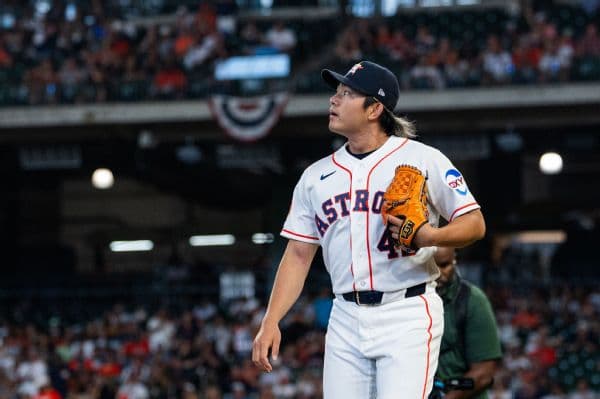
The Houston Astros received a significant boost to their pitching outlook this week as rookie right-hander Tatsuya Imai cleared a major hurdle in his recovery process. After being sidelined with right arm fatigue, the promising starter has successfully completed his second bullpen session, signaling that his arm is ready for the rigors of game action. The team has officially announced that a Tatsuya Imai rehab assignment is the next logical step, moving the pitcher closer to a return to the big-league rotation.
Imai was placed on the 15-day injured list earlier this month. At the time, the move was described as a precautionary measure to address general fatigue rather than a structural injury. For a young pitcher navigating his first full season in the majors, such breaks are often necessary to ensure long-term viability. The Astros’ training staff has been methodical in their approach, prioritizing rest followed by a gradual ramp-up in throwing intensity.
Bullpen Success Signals Readiness
The most recent bullpen session was a critical test for Imai. According to reports from the team, the right-hander was able to work through his entire pitch mix without any lingering issues. This session followed an initial bullpen earlier in the week, showing that his arm is recovering well between high-effort outings. Coaches observed that his mechanics appeared fluid, a key indicator that the fatigue which had hampered his performance has dissipated.
For the Houston Astros, seeing their rookie sensation back on the mound in a practice capacity is a welcome development. Imai had quickly established himself as a reliable arm in the rotation before the injury, and his return is viewed as a vital piece for the team's depth. The successful completion of two bullpen sessions without setbacks confirms that the rest period served its purpose, allowing the inflammation and fatigue in his throwing arm to subside completely.
The Structure of the Tatsuya Imai Rehab Assignment
With the controlled environment of the bullpen now behind him, the Tatsuya Imai rehab assignment will focus on building up his pitch count in a competitive setting. While the specific minor league affiliate has not been finalized, Imai is expected to report to one of the Astros' upper-level clubs to begin his game progression. These assignments are designed to simulate the stress of an MLB game while allowing the player to focus on specific mechanical goals.
Tracking Velocity and Arm Strength
One of the primary focal points during the rehab starts will be Imai’s velocity. During his bullpen sessions, scouts and trainers monitored his radar gun readings to ensure his fastball sat in its usual range. In a live game environment, the Astros will look for that velocity to remain consistent over multiple innings. If Imai can maintain his mid-to-upper 90s heat into the fourth or fifth inning of a rehab start, it will be a clear sign that the arm fatigue is fully behind him.
Refining Command and Control
Beyond pure power, the Tatsuya Imai rehab assignment will serve as a period to sharpen his command. Fatigue often leads to "flat" pitches or a lack of location, which can be disastrous at the major league level. By facing minor league hitters, Imai can work on the "tunneling" of his breaking balls and the precision of his fastball location. The coaching staff will be looking for a high strike-to-ball ratio and the ability to put hitters away efficiently.
- Velocity Maintenance: Ensuring his fastball speed remains consistent throughout multiple innings.
- Command and Control: Verifying that his location hasn't been affected by the layoff.
- Recovery: Assessing how his arm feels the day after a high-intensity outing.
Managing Rookie Pitcher Workloads
The decision to use the 15-day IL for arm fatigue is part of a broader trend in MLB player management. The jump from the collegiate or international level to the 162-game grind of the American professional season is a massive adjustment. The Astros have been leaders in using data-driven approaches to manage pitcher health, and Imai’s situation is a textbook example of proactive injury prevention.
By shutting him down temporarily, the organization avoided a potential long-term injury that could have resulted from pitching through tired-arm symptoms. The rehab assignment acts as a bridge, allowing the body to re-acclimate to the "up and down" nature of a starting pitcher's schedule—sitting in the dugout while the team bats and then returning to the mound with maximum effort.
Strategic Impact on the Houston Astros Rotation
The return of Tatsuya Imai will have a ripple effect throughout the entire Houston pitching staff. His presence allows the team to return to a standard five-man rotation, which provides consistent rest for veteran starters. This depth is especially crucial during the hot summer months when doubleheaders and long road trips can stretch a bullpen to its breaking point.
Furthermore, having Imai back in the rotation allows the Astros to move swing-men or temporary starters back to the bullpen, strengthening the late-inning options for the manager. As the Tatsuya Imai rehab assignment progresses, the front office will be monitoring every box score closely. If he completes his scheduled starts without setback, the rookie sensation could be back on the mound at Minute Maid Park within the next two weeks, providing a timely boost for the stretch run.
Sources & Original Reporting