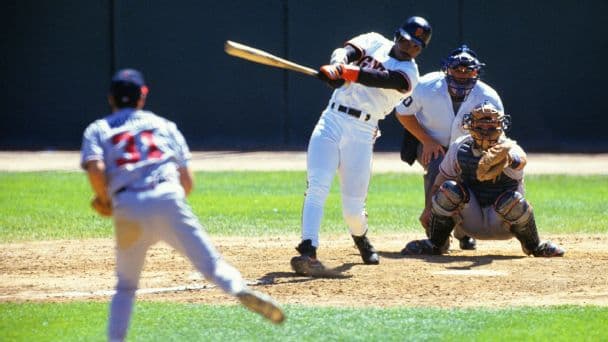
Exactly five decades ago today, the landscape of Major League Baseball shifted on its axis. With the signing of the first-ever free agent contract, the power dynamic between players and owners was transformed, birthing a multi-billion dollar market that defines the modern era of the sport. To commemorate this golden anniversary, a comprehensive analysis has been conducted on the 8,340 deals signed over the past half-century to identify the best and worst MLB free agent signings in history.
The Dawn of a New Era: 50 Years of Player Movement
Before the mid-1970s, the reserve clause bound players to their teams indefinitely, offering little leverage for better compensation or a change of scenery. The arrival of free agency allowed players to finally test the open market, leading to some of the most iconic moments in sports history. Over the last 50 years, franchises have spent hundreds of billions of dollars in pursuit of championships, with results ranging from dynasty-defining masterstrokes to franchise-altering financial disasters.
Analyzing over 8,000 contracts requires a look at more than just the raw dollar amount. The most successful signings are those that provided immense surplus value—players who performed at an elite level while leading their teams to postseason success. Conversely, the most regrettable deals often involve aging stars whose production plummeted immediately after signing massive, long-term guarantees.
The Gold Standard: Elite Value in Free Agency
When evaluating the best and worst MLB free agent signings, the conversation usually begins with the legendary acquisitions that turned franchises into powerhouses. These players did not just meet expectations; they exceeded them in ways that redefined the value of a veteran addition.
Greg Maddux (Atlanta Braves, 1992)
After winning a Cy Young with the Cubs, Maddux signed a five-year, $28 million deal with Atlanta. He proceeded to win three consecutive Cy Young Awards and anchored a rotation that led the Braves to a 1995 World Series title. His precision and longevity made this one of the most efficient uses of capital in baseball history.
Randy Johnson (Arizona Diamondbacks, 1998)
The "Big Unit" signed a four-year, $52.4 million contract that is widely considered the greatest pitching signing ever. He won four straight Cy Young Awards and earned World Series co-MVP honors during that span, instantly legitimizing the young Arizona franchise.
Barry Bonds (San Francisco Giants, 1992)
Bonds signed a then-record six-year, $43.75 million deal with the Giants. He immediately won the NL MVP in his first season in San Francisco and transformed the team into a perennial contender, becoming the most feared hitter of his generation.
Max Scherzer (Washington Nationals, 2015)
A seven-year, $210 million deal seemed risky for a pitcher in his 30s, but Scherzer delivered two Cy Youngs and a 2019 World Series championship. He proved to be worth every penny, providing the Nationals with a reliable ace for the duration of the contract.
The Cautionary Tales: Significant Financial Misses
For every Greg Maddux, there is a contract that serves as a stern warning to front offices. This side of the ledger is often defined by "albatross" contracts—deals so large and unproductive that they hampered a team's ability to compete for several seasons.
Josh Hamilton (Los Angeles Angels, 2012)
Hamilton’s five-year, $125 million deal with the Angels is frequently cited as a major misstep. His production fell off significantly, and he was eventually traded back to Texas while the Angels continued to pay the majority of his massive salary.
Albert Pujols (Los Angeles Angels, 2011)
The Angels' 10-year, $240 million commitment to Pujols started with respectable numbers, but it became a significant burden as his athleticism and health declined. The latter half of the decade saw the team paying premium prices for below-average statistical output.
Barry Zito (San Francisco Giants, 2006)
Zito’s seven-year, $126 million deal saw his ERA balloon almost immediately upon arriving in San Francisco. While he eventually found redemption with a heroic 2012 postseason performance, the regular-season return on investment was consistently disappointing for the Giants.
Chris Davis (Baltimore Orioles, 2016)
Davis’s $161 million extension became a statistical anomaly for the lack of offensive output relative to the financial commitment. His struggles at the plate resulted in some of the lowest batting averages for a full-time starter in league history.
The Evolution of the Market
As we look back on 8,340 deals, it is clear that the methodology of the MLB offseason has evolved. In the early years of free agency, teams often overvalued past performance without considering the natural aging curve. Today, advanced analytics and metrics like Value Over Replacement Player (VORP) help front offices predict future decline with greater accuracy, though the lure of a superstar remains strong enough to drive record-breaking contracts.
The 50th anniversary of free agency serves as a reminder that while the numbers have grown—from Catfish Hunter’s pioneering deal to the massive $700 million contracts of today—the goal remains the same: finding that perfect balance of talent, timing, and value. Whether a signing becomes a legend or a lesson, free agency remains the most volatile and exciting aspect of the MLB calendar.
Sources & Original Reporting


