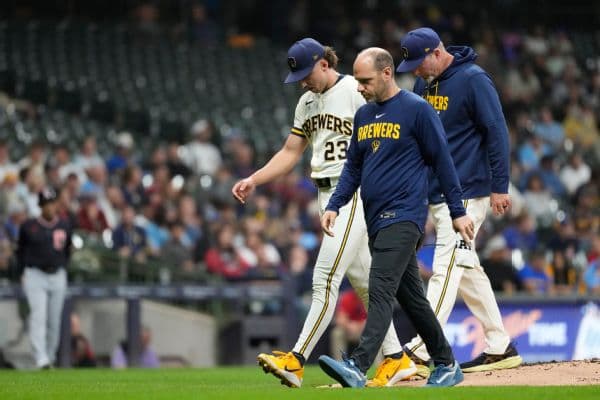
The Milwaukee Brewers faced a concerning moment during their Wednesday night clash against the Cleveland Guardians when starting pitcher Brandon Sproat was forced to make an early exit. The young right-hander, who has been a key component of the Brewers' rotation strategy, left the mound in the fourth inning after experiencing physical distress. The team later confirmed that the cause of the departure was a right hamstring cramp, an issue that halted what was shaping up to be a competitive outing for the starter.
The Incident: Fourth Inning Departure
The Brandon Sproat injury occurred during a pivotal sequence in the bottom of the fourth inning. After navigating the early stages of the Guardians' lineup, Sproat appeared to labor following a specific delivery. With the count at 0-1 against a Cleveland hitter, Sproat delivered a pitch that was called a ball. Immediately following the follow-through, it became evident to the training staff and manager that something was wrong.
Sproat was seen favoring his right leg, prompting an immediate visit from the Brewers' athletic trainer and manager. After a brief discussion on the mound and a few tentative movements to test the leg, the decision was made to remove him from the contest as a precautionary measure. At the time of his exit, the Brewers were forced to activate their bullpen earlier than anticipated, shifting the tactical burden to the relief corps for the remainder of the Wednesday night game.
Immediate Impact on the Milwaukee Brewers
Losing a starting pitcher in the fourth inning creates an immediate ripple effect for any MLB team. For the Milwaukee Brewers, Sproat’s exit meant the bullpen had to cover at least five innings of work. This sudden shift requires the coaching staff to manage high-leverage arms carefully, especially in the middle of a series where pitching depth is tested.
The official diagnosis of a right hamstring cramp is, in many ways, a best-case scenario compared to a strain or a tear. Cramps are typically associated with dehydration, fatigue, or electrolyte imbalances rather than structural damage to the muscle tissue. However, the Brewers' medical staff will likely monitor Sproat closely over the next 24 to 48 hours to ensure that the cramping does not mask any underlying tightness that could lead to a more significant Brandon Sproat injury if he were to return to the mound too quickly.
Contextualizing Brandon Sproat’s Role
Brandon Sproat has been a player of interest for the Brewers as they look to solidify their standing in the National League. As a starter, his ability to provide length and consistency is vital for a team that relies heavily on a structured pitching hierarchy. Entering the game against the Guardians, the focus was on his ability to challenge a disciplined Cleveland lineup that excels at putting the ball in play.
Prior to the cramp in the fourth inning, Sproat had been working through the Guardians' order, utilizing his pitch mix to keep hitters off-balance. The sudden nature of the exit serves as a reminder of the physical toll that high-intensity pitching takes on the lower body, specifically the drive leg. In Sproat’s case, the right hamstring is the primary muscle group responsible for generating power and stability during the delivery, making any level of discomfort a significant hurdle for a pitcher.
Managing Hamstring Issues in Major League Baseball
Hamstring issues are among the most common ailments for professional ballplayers, though they are often more associated with baserunning or fielding than pitching. For a pitcher like Sproat, a right hamstring cramp can occur due to the explosive nature of the pitching motion. The drive off the rubber puts immense pressure on the posterior chain, and even minor dehydration can lead to involuntary muscle contractions.
The standard protocol for a pitcher exiting with a cramp involves:
- Immediate Rehydration: Replenishing fluids and electrolytes lost during the game.
- Massage and Manual Therapy: Helping the muscle fibers relax and return to their normal state.
- Monitoring: Observing the player the following day for any signs of lingering soreness or decreased range of motion.
Because the Brewers acted quickly to remove Sproat, they minimized the risk of him overcompensating for the cramp, which often leads to secondary injuries in the arm or shoulder as the pitcher alters their mechanics to avoid leg pain.
Looking Ahead for the Brewers Rotation
While the news of a cramp is generally positive relative to other possibilities, the Brewers will need to evaluate Sproat’s recovery before confirming his next scheduled start. The team has not yet announced if he will miss any time or if he will be able to maintain his spot in the rotation. Much will depend on how his leg responds to treatment on Thursday.
For now, the Milwaukee Brewers remain focused on the health of their young starter. With the grueling MLB schedule, maintaining a healthy rotation is the top priority for the front office and coaching staff. Fans and analysts will be watching the injury report closely to see if Sproat is cleared for his next bullpen session, which will be the ultimate test of his readiness to return to game action.
Sources & Original Reporting


