The intensity of the Crosstown Classic between the Chicago Cubs and the Chicago White Sox is legendary for its high stakes and heated moments on the field. However, during Saturday night's matchup, the focus shifted from the players to the officiating crew when veteran umpire Brian O'Nora was forced to leave the game following a frightening incident behind the plate.
The Incident: A Scary Moment in the Fourth Inning
The Brian O'Nora injury occurred in the top of the fourth inning while the veteran official was working home plate. With Cubs right-hander Jameson Taillon on the mound, White Sox outfielder Jarred Kelenic fouled off a 93.1 mph fastball. The ball took a sharp, direct carom off the bottom of O'Nora's mask, appearing to strike him in the sensitive neck and jaw area.
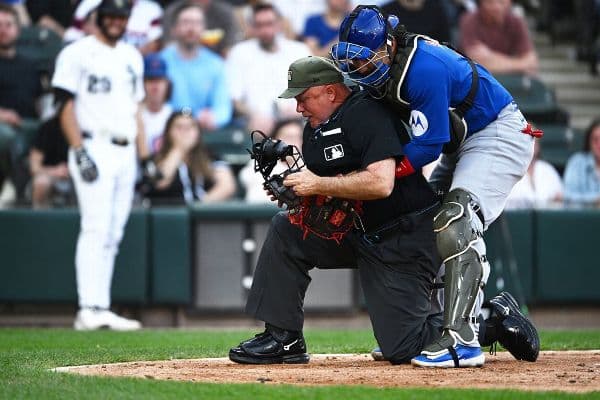
The impact was immediate and visible to everyone in the stadium. O'Nora instantly dropped to one knee as the play went dead. Cubs catcher Miguel Amaya showed quick sportsmanship, wrapping his arms around the umpire to stabilize him before helping him back to his feet. The game was briefly halted as the gravity of the situation became apparent to both dugouts.
Immediate Medical Attention and Exit
As O'Nora struggled to regain his bearings, a White Sox athletic trainer rushed from the home dugout to provide assistance. The medical staff spent several minutes evaluating O'Nora, specifically checking his mouth, jaw, and neck for signs of serious trauma or concussion symptoms. While O'Nora was able to stand, the decision was quickly made for him to depart the game for further evaluation in the clubhouse.
Injuries to home plate umpires are a sober reminder of the physical risks officials face every time they step behind the dish. Even with modern high-tech carbon-fiber masks and throat guards, the sheer force of a 90+ mph foul tip can cause significant damage. The Brian O'Nora injury on Saturday added to a history of similar incidents for the veteran official, who has previously missed time due to head trauma and foul ball strikes throughout his long career.
Umpire Rotation and Game Continuation
Following O'Nora's exit, the game was delayed as the remaining three umpires reorganized to cover the field. Per MLB protocol, the crew shifted their positions to ensure the game could proceed safely and accurately. Erich Bacchus, who began the night stationed at second base, moved behind the plate to take over the ball-and-strike duties.
The game continued with a three-man crew, leaving the bases with less coverage than the standard four-man alignment. This shift requires the remaining umpires to cover more ground and adjust their angles for close plays at first, second, and third base. Despite the logistical challenge, the transition was handled professionally, a testament to the versatility required of modern MLB officiating crews.
The Resiliency of Brian O'Nora
Brian O'Nora is one of the most experienced officials in the game today. Having made his MLB debut in 1992 and joining the full-time staff in 2000, O'Nora has called some of the biggest games in baseball history, including the 2012 World Series and multiple All-Star Games. His presence behind the plate brings a level of consistency that players and managers respect.
This is not the first time O'Nora has dealt with the hazards of the job. In past seasons, he has been sidelined by similar foul ball incidents in San Francisco and Boston. His ability to return to the field after such physical setbacks is a point of pride among the umpiring community. Fans and players alike are hopeful that this latest Brian O'Nora injury proves to be minor and that he can return to his crew in short order.
Safety for MLB Officials
The incident on Saturday night will likely reignite discussions regarding umpire safety and the equipment used to protect them. While the league has made strides in mask technology and chest protector design, the neck remains a vulnerable area for those positioned directly behind the catcher. As pitch velocities continue to rise across the league, the margin for error for officials—and the potential for injury—only increases.
For now, the focus remains on O'Nora's recovery. The Cubs-White Sox game eventually resumed its competitive pace, but the fourth-inning scare served as a stark reminder that in the game of baseball, everyone on the diamond is in the line of fire.
Sources & Original Reporting