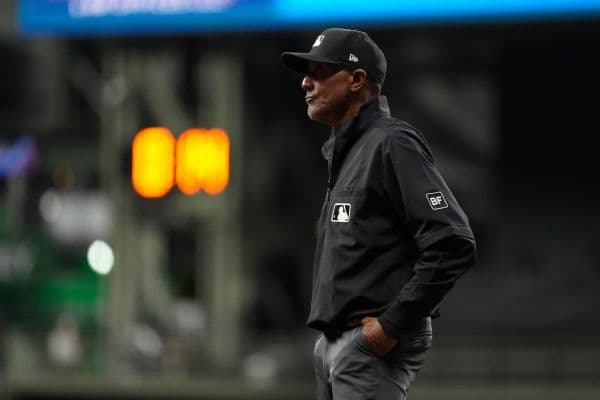
In the high-stakes environment of Major League Baseball, consistency is the gold standard for officiating. However, veteran umpire C.B. Bucknor has found himself under an intense microscope following a series of high-profile errors that have drawn the ire of fans and players alike. The latest C.B. Bucknor missed call occurred during Tuesday’s matchup between the Milwaukee Brewers and the Tampa Bay Rays, further fueling the national debate over officiating accuracy and the implementation of new tracking technology in the sport.
The incident, which took place at first base, was not just a simple safe-or-out judgment but a technical ruling that left the Brewers dugout searching for answers. While missed calls are an inherent part of the human element in baseball, the timing of this particular error is significant. It follows a weekend where Bucknor recorded the poorest performance metrics among all umpires evaluated under MLB’s new Automated Ball-Strike (ABS) System. For a league striving for perfection through technology, the accumulation of these errors has become a focal point of frustration during the early stages of the season.
The Play at First Base: Anatomy of a Review
The specific moment of contention occurred during Tuesday’s contest and involved Brewers infielder Jake Bauers. In what should have been a routine play, the speed of the game and the positioning of the official led to a ruling that nearly cost the Brewers a base runner and a significant momentum shift.
The Jake Bauers Out Ruling
As Bauers sprinted toward first base, Bucknor ruled the runner out, not because he was beaten by the throw, but because Bucknor alleged that Bauers had failed to touch the bag entirely. This specific type of "missed bag" call is rare and usually requires a clear line of sight. The Brewers dugout immediately signaled for a challenge, confident that their runner had indeed made contact with the base.
Upon formal video review, the evidence was undeniable. High-definition replays showed Bauers’ foot clearly making contact with the corner of the bag before the defense could record the out. The call was overturned, and Bauers was rightfully placed back on base. While the replay system worked as intended to correct the mistake, the fact that such a definitive action was misjudged by a veteran official has raised questions about the current state of field umpiring.
A Pattern of Inconsistency and the ABS System
To understand why this C.B. Bucknor missed call is generating so much traction in the sports world, one must look at the data released just days prior to the Brewers-Rays game. Major League Baseball has been utilizing the ABS System to track umpire accuracy behind the plate with unprecedented precision. This data is no longer just for internal league use; it has become a benchmark for public accountability.
Bottom of the Rankings in Performance Metrics
According to recent performance reports, Bucknor’s work behind the plate last weekend was ranked at the bottom of the league. The ABS data provides an objective comparison between an umpire's live calls and the actual flight path of the ball through the strike zone. When an official consistently deviates from the established zone, it creates an environment of unpredictability for both pitchers and hitters.
The transition from a poor weekend behind the plate to a high-profile overturned call at first base suggests a broader struggle with the speed and precision required at the elite level. In a sport where every win and loss can impact postseason eligibility, the margin for these types of recurring errors is shrinking.
The Growing Pressure for Umpiring Accountability
The recurring issues involving Bucknor highlight a larger conversation within MLB regarding the potential for a full transition to automated officiating. While the league currently uses a hybrid approach—relying on human officials with the backup of a challenge system—many advocates are calling for a more direct implementation of technology to ensure the integrity of every play.
Challenges and the Future of Officiating
- The Cost of Delays: Every time a call like the one on Jake Bauers is made incorrectly, the game must be halted for a video review, impacting the league's goal of a faster pace of play.
- Statistical Outliers: Umpires are evaluated on a seasonal basis, and consistent underperformance can lead to a loss of prestigious postseason assignments.
- Player Confidence: When players lose faith in an official's ability to track the bag or the strike zone, the psychological tension on the field increases, often leading to ejections and further delays.
For the Milwaukee Brewers and Tampa Bay Rays, the game remained a competitive battle, but the shadow of the officiating hung over the diamond. As the season progresses, the league will likely face increased pressure to address Bucknor’s recent performance to ensure that the focus remains on the athletes and the competition rather than the men in blue. For now, every close play involving Bucknor will be viewed through a lens of skepticism by fans and analysts alike.
Sources & Original Reporting


