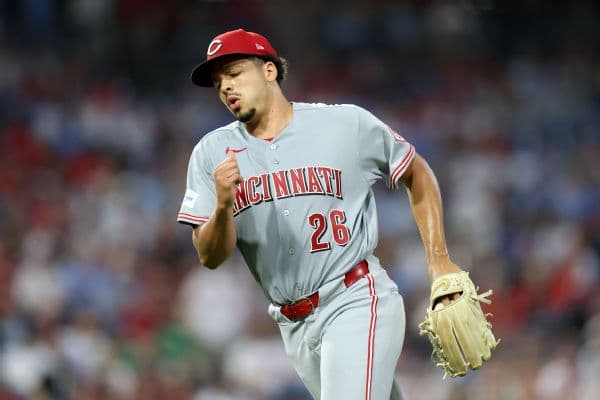
In a display of both elite talent and physical resilience, Cincinnati Reds starter Chase Burns turned in one of the most memorable performances of the young season. On a night where the radar gun was working overtime, Burns showcased why he is quickly becoming a household name in Major League Baseball, leading the Reds to a 4-1 victory over the Philadelphia Phillies. However, the story of the night wasn't just his arm—it was his ability to literally shake off a triple-digit projectile from one of the game's most feared power hitters.
A Masterclass on the Mound for Chase Burns
From the first pitch, Chase Burns appeared to be in total command of his arsenal. Facing a potent Phillies lineup, the young right-hander carved through hitters with surgical precision. Burns logged six full innings, allowing the Reds' bullpen to remain fresh while he dismantled the opposition's timing. By the time his night was finished, Burns had racked up nine strikeouts, a testament to his high-velocity heater and devastating secondary pitches.
This performance was more than just a single-game highlight; it was a statistical milestone. With his six innings of work, Burns successfully lowered his season ERA to a staggering 1.83. In a league where offensive numbers are often inflated, maintaining an ERA under 2.00 is a feat reserved for the elite. His ability to limit damage and maintain high strikeout totals has become the backbone of the Reds' rotation strategy this year.
The 108.8 MPH Scare: Shaking Off the Sting
The atmosphere at the ballpark shifted from excitement to collective concern during a high-stakes encounter with Phillies superstar Bryce Harper. Known for his elite exit velocity, Harper connected on a pitch that sent a screaming line drive directly back toward the mound. The ball was clocked at a terrifying 108.8 mph, leaving Burns with almost no time to react.
The liner struck Chase Burns on the backside/lower body, a blow that echoed throughout the stadium. For a moment, the Reds' dugout held its breath as the medical staff prepared to rush onto the field. However, in a show of remarkable toughness, Burns didn't just stay in the game—he appeared largely unfazed after the initial sting subsided. Shaking off the impact of a 108.8 mph projectile is no small task, yet Burns remained focused on the task at hand, finishing his outing without letting the incident rattle his composure.
Cincinnati Reds Secure the 4-1 Victory
While Burns was the undisputed star of the evening, the Cincinnati Reds provided the necessary support to ensure his efforts resulted in a win. The 4-1 final score reflected a balanced attack and a lockdown defensive performance. The Reds' offense capitalized on key opportunities, providing Burns with enough of a cushion to pitch aggressively against the heart of the Philadelphia order.
The victory is a significant one for Cincinnati, as it reinforces the team's ability to compete against top-tier National League contenders. When a starting pitcher provides six innings of one-run ball (or less) while striking out nine, the path to victory becomes significantly clearer. The Reds' relief corps followed Burns' lead, shuting the door on any potential Phillies comeback in the late innings.
By the Numbers: Chase Burns' Dominant Outing
To truly understand the impact of Burns' night, one must look at the efficiency and power he displayed throughout the contest. Here are the key statistics from his start:
- Innings Pitched: 6.0
- Strikeouts: 9
- Season ERA: 1.83
- Max Exit Velocity Absorbed: 108.8 mph
- Final Score: Reds 4, Phillies 1
As the season progresses, the health and consistency of Chase Burns will be the primary storyline for the Reds. If he can continue to combine this level of strikeout production with the grit he showed after the Harper liner, Cincinnati may have found the ace they need to make a deep postseason run. For now, the Reds and their fans can breathe a sigh of relief that their rising star is not only talented but incredibly durable.
Sources & Original Reporting