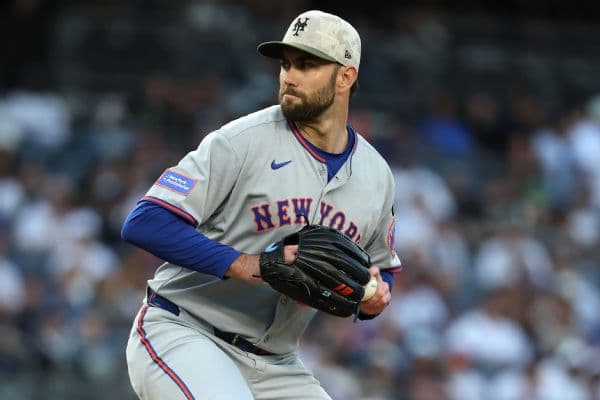
The grind of a Major League Baseball season often comes down to a war of attrition, and the Chicago Cubs have decided they can no longer afford to wait for internal reinforcements. In a move designed to stabilize a reeling pitching staff, the North Siders have finalized the David Peterson trade with the New York Mets, bringing the veteran left-hander to Wrigley Field. While trade discussions often simmer for weeks, Cubs President of Baseball Operations Jed Hoyer made it clear that the recent wave of injuries within the organization turned a standard inquiry into a high-priority acquisition.
Jed Hoyer on the Urgency of the David Peterson Trade
The primary driver behind this mid-season move was simple: health. The Cubs’ starting rotation has been decimated by a series of injuries that have forced the front office to look externally for solutions. Speaking to the media following the announcement, Jed Hoyer was transparent about the team's situation. He noted that the David Peterson trade was accelerated by the immediate need for reliable, healthy arms capable of taking the mound every five days.
"The injuries we've dealt with lately created a level of urgency," Hoyer explained. "You never want to be in a position where you're forcing young players into roles they aren't ready for or overtaxing your bullpen. Acquiring David Peterson gives us a professional who can slot directly into the rotation and provide the stability we’ve been missing over the last few weeks."
The Price of Stability: Sending Cole Mathis to New York
To secure the veteran southpaw, the Cubs had to dip into their depth of position players. As part of the deal, Chicago sent infield prospect Cole Mathis to the New York Mets. Mathis, who has shown significant promise in the minor leagues, represents a valuable piece of the Cubs' future, but the immediate crisis at the major league level necessitated the sacrifice.
By moving Mathis, the Cubs are signaling a "win-now" mentality. The front office recognized that without a stable rotation, any lead in the NL Central could evaporate quickly. While parting with a prospect of Mathis' caliber is never easy, the Cubs prioritized the immediate health and viability of their starting five over long-term developmental timelines. The acquisition provides a necessary bridge through the summer months as the team fights for postseason positioning.
Analyzing David Peterson: A Change of Scenery
Peterson, a 30-year-old left-hander, brings a complicated but high-upside profile to Chicago. To understand why the Cubs targeted him, one must look back at his 2025 campaign, where he was named an All-Star. During that season, Peterson proved he could dominate major league lineups and serve as a top-of-the-rotation asset. It is that pedigree that the Cubs are betting on as they look to turn their season around.
All-Star Pedigree
Despite his recent struggles, Peterson’s 2025 success proves his ceiling is high enough to impact a pennant race. The Cubs are hoping that moving away from the pressure of New York will allow the veteran to reset. The organization’s pitching lab has a track record of helping veteran arms regain their velocity and movement, and Peterson is viewed as a prime candidate for a mid-season resurgence.
Rotation Stability and Left-Handed Depth
The veteran's primary goal will be to eat innings and reduce the strain on a heavily taxed Chicago bullpen. Entering this stretch, the Cubs' relievers had been logging excessive high-leverage innings due to short starts from the rotation. Furthermore, adding a southpaw allows the Cubs to better manage divisional rivals with left-heavy lineups. Peterson arrives in Chicago carrying a 6.09 ERA in 2026, but the North Siders believe those numbers are an outlier compared to his career averages.
A Strategic Pivot for the Cubs Front Office
This move marks a shift in strategy for Jed Hoyer. Often criticized for being overly patient or waiting for the "perfect" value deal, the urgency of the current injury situation forced a more aggressive approach. This transaction reflects a realization that the NL Central race is tight, and even a week or two of sub-par pitching could be the difference between a postseason berth and a disappointing October at home.
"We looked at the internal options and realized that to stay where we want to be in the standings, we needed to go outside the organization," Hoyer added. "David was a target for us because of his experience and his competitive nature. He wants the ball, and right now, we need guys who can give us a chance to win every time they step on the rubber."
Looking Ahead: Impact on the NL Central Race
As Peterson prepares to join his new teammates in Chicago, the focus shifts to how quickly he can integrate into the Cubs' pitching program. The team is hopeful that his arrival will provide a morale boost to a clubhouse that has felt the weight of the injury bug. With the roster move now official, the Cubs have addressed their most glaring hole, but the pressure remains on the left-hander to lower that 6.09 ERA and return to his 2025 form.
For the Mets, the trade allows them to acquire a promising young infielder in Cole Mathis while moving a veteran arm that had struggled to find consistency. For the Cubs, it is a calculated risk—one they felt they had to take to keep their postseason dreams alive. Only time will tell if the move can stabilize the North Siders, but for now, Jed Hoyer has delivered the veteran arm the rotation desperately required.
Sources & Original Reporting