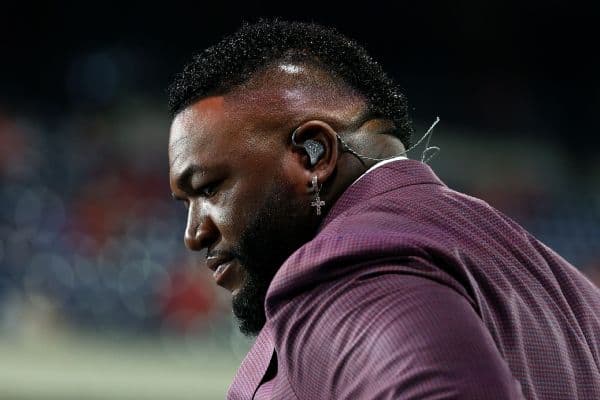
As the 2026 MLB season enters its third month, the Boston Red Sox find themselves in a position that has become all too familiar yet remains deeply unsettling for the Fenway faithful: the bottom of the American League East. While fans have spent the early part of this summer voicing their frustrations regarding the team's performance and roster construction, a new and significant perspective has emerged from within the inner circle of the franchise. Hall of Famer David Ortiz recently shared that Red Sox owner John Henry is acutely aware of the situation and is deeply "worried" about the current direction of the team.
Ortiz, arguably the most beloved figure in the modern history of the franchise, remains a vital presence around the organization. Unlike many former players, the man known as "Big Papi" maintains a direct line of communication with the highest levels of leadership. In a recent discussion regarding the state of the club, Ortiz made it clear that the frustration felt in the stands is being mirrored in the owner's suite. As the team struggles to find its footing in a hyper-competitive division, the pressure to pivot toward a winning strategy is reaching a boiling point.
A Rare Glimpse into the Mindset of Red Sox Owner John Henry
For several years, the narrative surrounding the Boston front office has been defined by a perceived sense of detachment. Since the high-profile departures of franchise cornerstones and shifts in front-office leadership, critics have questioned whether the Fenway Sports Group (FSG) remained as committed to the Red Sox as they are to their sprawling portfolio of global sports assets. However, Ortiz’s recent comments provide a different narrative, suggesting that Red Sox owner John Henry is far from indifferent to the team's last-place standing.
"He’s worried," Ortiz stated during a recent media appearance, as reported by ESPN. Ortiz elaborated that his personal conversations with Henry revealed an owner who is troubled by the team's inability to climb out of the divisional basement. For a franchise that spent the better part of two decades as the gold standard for success in Major League Baseball, the current stretch of mediocrity is a significant departure from the expectations established during the championship years of the early 21st century.
David Ortiz as the Bridge to Ownership
The role David Ortiz plays within the organization cannot be overstated. He is more than a legendary slugger; he serves as a vital bridge between the players, the fans, and the ownership group. Because Ortiz speaks with the authority of a three-time World Series champion, his insights into Henry's mindset carry immense weight. When Ortiz publicly acknowledges that the owner is concerned, it serves as a signal to the market and the fanbase that the status quo is no longer acceptable to the man who signs the checks.
Analyzing the Struggles of the 2026 Campaign
The 2026 season has been a difficult journey for Boston. While the roster features several promising young talents, the team has lacked the consistency required to navigate the gauntlet of the American League East. In a division where the New York Yankees and Baltimore Orioles continue to set a high bar, any prolonged slump can result in a quick descent to the bottom of the standings. The Red Sox have found themselves on the wrong end of that reality this June.
The statistics reflect a team that is often competitive but lacks the finishing power to close out games against elite opposition. Ortiz’s revelation suggests that the ownership group recognizes these deficiencies. The "worry" expressed by Henry likely stems from the realization that the current trajectory requires more than just internal development; it requires a strategic shift in how the roster is reinforced.
Addressing Starting Pitching Depth
One of the primary concerns for the Red Sox as they move deeper into the 2026 season is the stability of the starting rotation. While there have been individual standout performances, the lack of veteran depth has forced the team to rely heavily on unproven arms during critical divisional stretches. To alleviate the owner's concerns and move out of last place, the front office will likely need to explore the trade market for a frontline starter who can provide much-needed innings and leadership.
Enhancing Bullpen Reliability
In addition to the rotation, the bullpen has faced significant hurdles in high-leverage situations. Late-inning collapses have cost the Red Sox valuable ground in the standings, contributing to the overall sense of unease within the organization. Strengthening the relief corps with experienced arms will be a necessity if the team hopes to turn the tide before the summer heat truly sets in.
The Implications for the Upcoming Trade Deadline
The fact that Red Sox owner John Henry is reportedly worried sets the stage for a pivotal trade deadline. In previous seasons, the organization has occasionally taken a conservative approach, focusing on long-term sustainability over immediate upgrades. However, an owner who is concerned about a last-place finish may be more inclined to authorize the aggressive moves necessary to salvage the season.
As the July deadline approaches, the baseball world will be watching to see if Henry’s worry translates into action. The Red Sox have the prospect capital and the financial flexibility to make significant moves, but it remains to be seen if they will pull the trigger on the type of high-impact trades that David Ortiz once thrived on. For now, the Hall of Famer has made one thing certain: the leadership in Boston is fully aware that the current state of the team is not good enough.
Whether this internal concern leads to a mid-season resurgence or a major off-season overhaul remains the biggest question facing the franchise. But with Ortiz acting as a vocal advocate for the fans' frustrations, the pressure on the Red Sox to return to their winning ways has never been higher.
Sources & Original Reporting