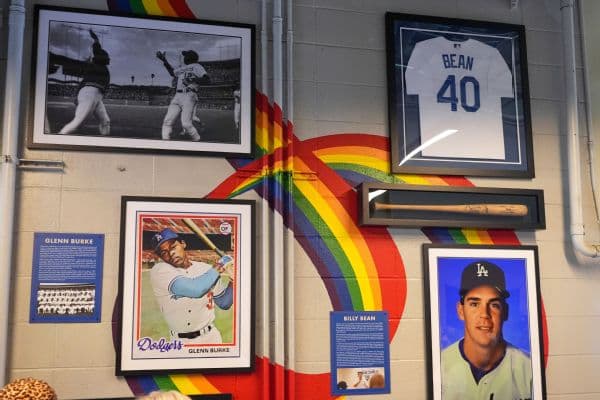
The Los Angeles Dodgers have long been a franchise defined by breaking barriers and fostering a culture of inclusion. From the historic debut of Jackie Robinson to the global impact of Fernandomania, the team has frequently stood at the intersection of sports and social progress. On Friday, the organization added a new chapter to this storied legacy as the Los Angeles Dodgers honor Glenn Burke and Billy Bean with the unveiling of a permanent display at Dodger Stadium. This exhibit serves as a lasting tribute to the first two Major League Baseball players to identify as gay, ensuring their contributions to the game and the LGBTQ+ community are recognized by generations of fans to come.
The unveiling took place ahead of the team's annual Pride Night, drawing attention to the often-overlooked history of LGBTQ+ athletes in professional baseball. Located in a prominent area of the stadium, the display features artifacts, photographs, and narrative panels detailing the lives and careers of both Burke and Bean. By institutionalizing their stories within the stadium’s architecture, the Dodgers are sending a clear message about the importance of representation and the team's commitment to honoring all who have worn the Dodger blue.
The Pioneer: Glenn Burke and the Birth of the High Five
Glenn Burke’s impact on baseball culture extends far beyond his courage as a gay man; he is also widely credited with inventing the "high five" alongside teammate Dusty Baker in 1977. Burke played for the Dodgers from 1976 to 1978, appearing in the 1977 World Series as a dynamic outfielder. While he was open about his sexuality with his teammates and management, the social climate of the 1970s kept his personal life out of the public eye. Despite the immense pressure of the era, Burke’s vibrant personality and athletic prowess made him a beloved figure in the clubhouse.
The new display highlights his journey, from his standout multi-sport success in high school to his time on the diamond at Chavez Ravine. It also addresses the difficulties he faced, including his eventual trade to the Oakland Athletics, which historians and former teammates have often cited as a reaction to his sexual orientation. By including these details, the Dodgers are providing a transparent look at the challenges Burke navigated while remaining a dedicated professional athlete. Burke passed away in 1995, but his legacy as a trailblazer continues to resonate throughout the sport.
Billy Bean: From the Field to the Front Office
Billy Bean, who played for the Dodgers in 1989, represents another pivotal figure in the fight for LGBTQ+ visibility in sports. Unlike Burke, Bean did not come out until after his playing career ended, a decision influenced by the intense pressure and perceived lack of support for gay athletes during the 1980s and 90s. Bean’s career spanned several teams, including the Tigers and Padres, but his time in Los Angeles remains a significant part of his journey. After sharing his story publicly in 1999, Bean dedicated his life to making the sport more welcoming for others.
The Los Angeles Dodgers honor Glenn Burke and Billy Bean by showcasing Bean's transition from a player living in secrecy to a global advocate for inclusion. Bean eventually returned to Major League Baseball in an official capacity, serving as the league's first Ambassador for Inclusion and later as a Senior Vice President. His work has been instrumental in developing educational programs and support systems for players, staff, and fans across the league. The display at Dodger Stadium honors both his playing days and his transformative work as an executive, illustrating the full scope of his impact on the game.
A Permanent Home for LGBTQ+ History
The decision to create a permanent installation rather than a temporary event-based acknowledgment is a significant step for the Dodgers. It places Burke and Bean alongside other franchise legends, acknowledging that their struggles and triumphs are an essential part of the team's history. The permanent nature of the exhibit ensures that the conversation regarding inclusion remains a year-round priority rather than a seasonal focus.
- The display features historical photographs from the 1970s and 1980s.
- Biographical sketches provide context for the era in which each man played.
- The exhibit is located in a high-traffic area to maximize fan engagement.
- It serves as an educational resource for younger fans learning about MLB history.
As the Los Angeles Dodgers honor Glenn Burke and Billy Bean, they are also honoring the progress of the league as a whole. Major League Baseball has made significant strides in recent years to foster a more inclusive environment, and the Dodgers have frequently been at the forefront of these efforts. This display stands as a physical manifestation of that progress, offering a space for reflection on how far the game has come and the work that remains to be done.
The Los Angeles Dodgers continue to set the standard for how professional sports teams can engage with their history and their community. By honoring Glenn Burke and Billy Bean, the organization acknowledges the past while looking toward a more inclusive future. Fans visiting Dodger Stadium will now have the opportunity to learn about these two trailblazers, ensuring that the names Burke and Bean remain synonymous with courage, progress, and the enduring spirit of Dodger baseball.
Sources & Original Reporting