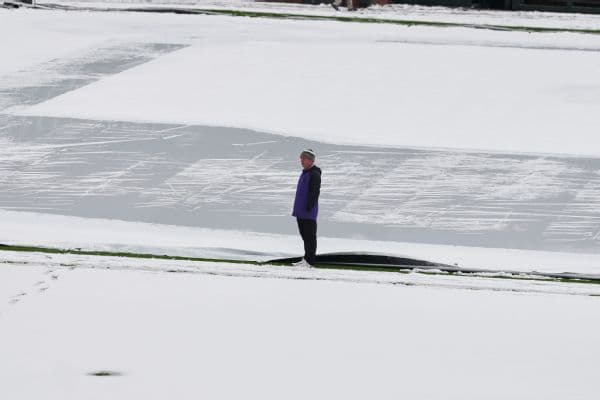
Baseball is often synonymous with the warmth of spring and the heat of summer, but the Los Angeles Dodgers and Colorado Rockies were reminded on Friday that Mother Nature has her own schedule. A significant Dodgers-Rockies snow storm greeted both clubs as they arrived at Coors Field, covering the grass and dirt in a thick, white blanket of three inches of snow just as their four-game series was set to begin.
Winter Wonderland at Coors Field
While the calendar says mid-April, the scenery in Denver looked more like a postcard from December. The storm, which moved through the region early Friday, left stadium officials and ground crews working overtime to manage the accumulation. For the Dodgers, traveling from the sunny confines of Southern California, the shift in climate was particularly jarring as they prepared for a frigid start to their road trip.
The Dodgers-Rockies snow storm didn't just affect the visual aesthetic of the park; it fundamentally altered the preparations for the opening game of this four-game set. With temperatures hovering near freezing, the challenge for players extends beyond the opponent on the other side of the diamond. Grip, ball flight, and player safety become paramount concerns when the mercury drops this low and the field is subjected to heavy moisture.
The Logistics of a Snow-Covered Diamond
Managing three inches of snow is no small feat for a Major League grounds crew. At Coors Field, the staff is well-versed in the volatile weather patterns of the Rocky Mountains, but a mid-April storm of this magnitude still requires a massive mobilization of resources. Crews worked throughout the morning to clear the tarp and the surrounding warning tracks to ensure the playing surface remained viable for the scheduled evening matchup.
The logistics of playing through a Dodgers-Rockies snow storm involve more than just clearing the field. The stadium must also ensure that the stands, concourses, and dugouts are safe for fans and staff. The presence of snow often leads to a "wait-and-see" approach regarding batting practice, with teams frequently opting for indoor cages to avoid the biting cold and damp conditions before first pitch.
Physical Challenges for Players in Frigid Conditions
For the athletes on the field, the cold weather introduces a variety of physical hurdles. Pitchers, in particular, struggle to maintain the necessary feel for the baseball. The leather becomes slick, and the lack of blood flow to the fingertips can make it difficult to execute high-spin breaking balls. This often leads to an increase in fastballs and a reliance on grit over finesse.
Hitters face their own set of challenges. The "sting" of a wooden bat on a cold night is a sensation every ballplayer dreads. When a pitch is fouled off or hit off the end of the bat in sub-40-degree weather, the vibrations can be momentarily paralyzing. Furthermore, the risk of soft-tissue injuries—such as strained hamstrings or calves—increases significantly when players are forced to sprint in freezing temperatures after sitting in a heated dugout.
- Temperature Impact: Cold air is denser, which can physically limit the distance a fly ball travels compared to a standard summer night in Denver.
- Player Safety: Extra emphasis is placed on warming up and staying active between innings to prevent muscle tightness.
- Equipment: Players often utilize hand warmers, balaclavas, and extra layers under their jerseys to combat the chill.
Historical Context of Snow Games in Denver
The Dodgers-Rockies snow storm is far from the first time the elements have played a starring role at Coors Field. Since its opening in 1995, the stadium has hosted several memorable games played in falling snow. The high altitude of Denver (5,280 feet) makes it susceptible to late-spring and early-fall storms that would be unheard of in most other MLB markets.
For the Colorado Rockies, these conditions are part of their home-field identity. While visiting teams like the Dodgers must quickly adapt to the thin air and cold temperatures, the Rockies pride themselves on their ability to remain focused regardless of the forecast. This four-game series represents a critical early-season test for both clubs as they navigate the divisional standings while battling the unpredictable mountain climate.
Looking Ahead: The Series Outlook
As the series progresses, both teams will be keeping a close eye on the local weather radar. While the initial three inches of snow provided a dramatic start to the weekend, the lingering moisture and cold temperatures are expected to remain factors throughout the four-game set. For the Dodgers, the goal is to secure wins and leave Denver healthy. For the Rockies, the snow provides a unique opportunity to catch a powerhouse opponent off guard in a winter-like environment.
Fans planning to attend the remaining games at Coors Field are encouraged to dress in heavy layers and prepare for a true test of endurance. Despite the frosty conditions, the rivalry between these National League West foes continues to burn bright, even under a blanket of April snow.
Sources & Original Reporting


