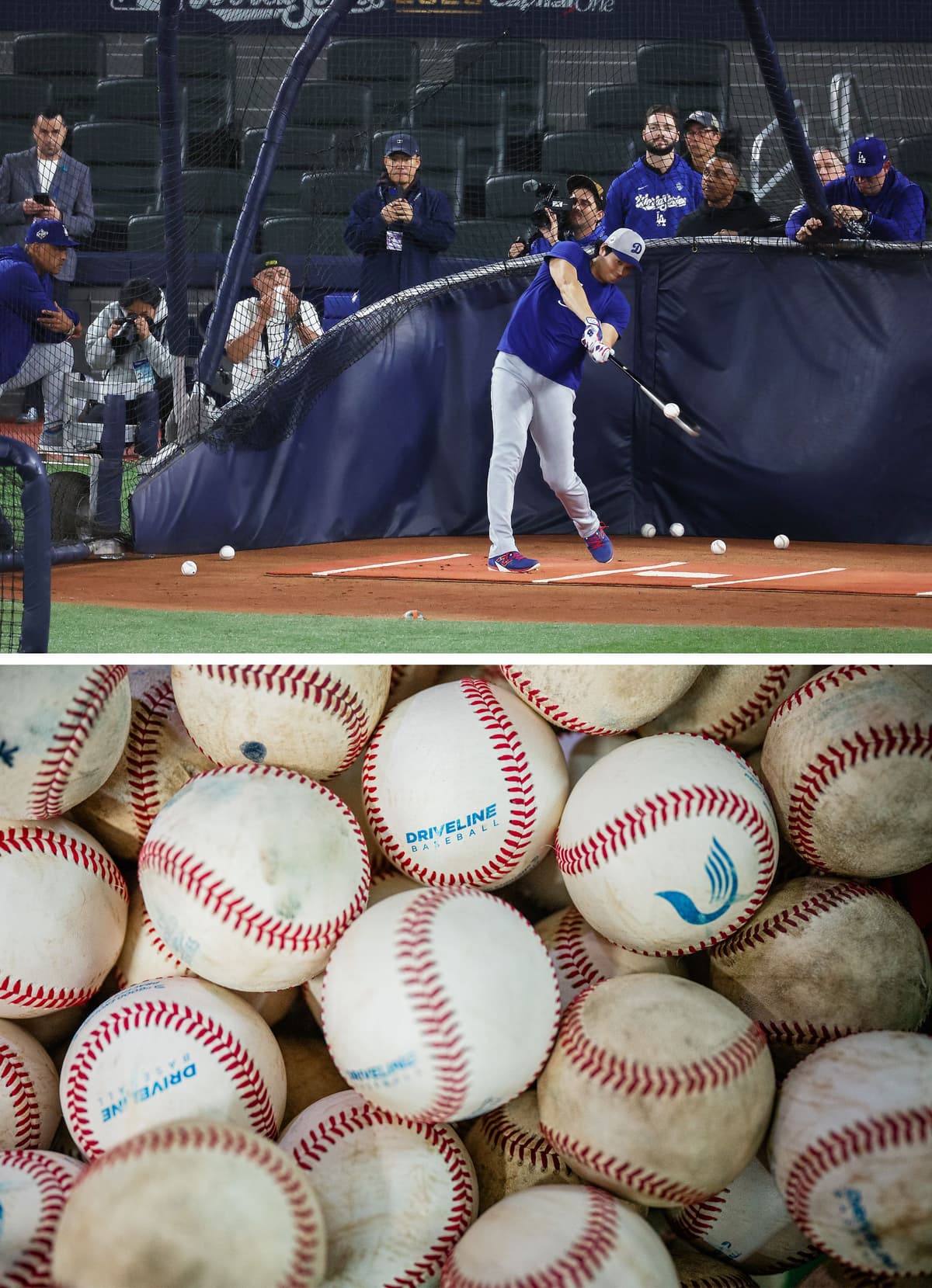
In the quiet heat of Scottsdale, Arizona, the future of Major League Baseball isn’t being decided on a diamond, but inside a high-tech warehouse filled with sensors, high-speed cameras, and the rhythmic crack of wood meeting leather. This is the Driveline Baseball hitting lab, a facility that has become the unofficial R&D center for the world’s best ballplayers. As we look toward the 2026 season, the integration of biomechanics and data-driven swing design has moved from the fringes of the sport to its very core.
The Science of the Perfect Swing
The Driveline Baseball hitting lab operates on a simple but profound premise: you cannot improve what you cannot measure. During a recent two-day MLB training session, the level of scrutiny applied to every movement was staggering. Players are outfitted with motion-capture suits and K-Vests that track the kinematic sequence of a swing—the precise order in which energy moves from the ground, through the legs, into the torso, and finally out through the arms and bat.
For the modern hitter, the goal is no longer just "making contact." The lab focuses on three primary pillars of offensive production:
- Bat Speed: Increasing the raw velocity of the barrel to decrease a pitcher's margin for error.
- Bat Path: Ensuring the barrel stays in the hitting zone as long as possible to maximize the window for contact.
- Smash Factor: A metric that measures the efficiency of energy transfer from the bat to the ball, essentially quantifying how "squared up" a hit truly is.
Shohei Ohtani and the Pursuit of Perfection
When discussing the pinnacle of modern hitting, the conversation begins and ends with Shohei Ohtani. While Ohtani is already a generational talent, his presence in the orbit of advanced analytics facilities like Driveline underscores a vital trend in MLB: the best players are often the ones most obsessed with marginal gains. Ohtani’s swing is a marvel of efficiency, and the data gathered in labs like these helps explain how he maintains elite bat speed while covering every quadrant of the strike zone.
The 2026 outlook for the league suggests that more veterans will follow Ohtani’s lead. The days of "swinging until it feels right" are being replaced by sessions where a hitter makes three swings, checks a tablet to see his vertical bat angle, and adjusts his lead-arm positioning by a fraction of an inch before the next rep.
Edgar Quero and the White Sox Pipeline
While established stars use the lab to maintain their edge, prospects like Edgar Quero of the Chicago White Sox use it to bridge the gap to the Big Leagues. Quero, one of the most highly-touted catching prospects in the game, spent time in the Scottsdale facility refining his approach against high-velocity simulation. In the Driveline Baseball hitting lab, hitters can face "virtual" versions of MLB pitchers, where machines mimic the exact release point, spin rate, and movement profiles of the league’s most dangerous arms.
For a player like Quero, the 2026 season represents a potential breakout year. By diagnosing flaws in his swing plane now, he can enter Spring Training with a swing that is scientifically optimized to handle the 100-mph heaters that have become commonplace in the American League Central. The lab provides a safe environment to fail, experiment, and ultimately rebuild a swing without the pressure of a box score.
Why the Data Revolution is Necessary for MLB 2026
The urgency behind this technological arms race is driven by the dominance of modern pitching. With the average fastball velocity continuing to climb and the proliferation of "sweeper" sliders, hitters are statistically at a disadvantage. The 2026 landscape will likely see even more specialized pitching roles, meaning hitters will have fewer opportunities to see the same arm twice in a game.
To counter this, Driveline’s methodology emphasizes "intent-based training." By training at speeds and intensities that exceed game conditions, hitters find that the actual game slows down. When you’ve spent your offseason tracking 105-mph simulated pitches in a lab, a 98-mph fastball in July feels manageable.
The Road to 2026
As the session in Scottsdale concluded, the takeaway was clear: the gap between the "haves" and "have-nots" in MLB will increasingly be defined by who embraces this technology. The Driveline Baseball hitting lab isn't just a place to hit balls into a net; it is a laboratory where the next decade of baseball history is being written. For players like Shohei Ohtani and Edgar Quero, the data provided here is the roadmap to success in an increasingly difficult game. As we approach the 2026 season, expect the league-wide offensive numbers to reflect the hard work currently being done in the dark, under the watchful eye of high-speed cameras and biomechanists.
Sources & Original Reporting