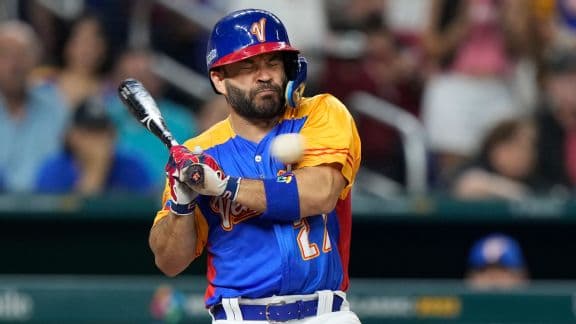
As the 2026 World Baseball Classic (WBC) kicks off, fantasy baseball managers are facing a familiar dilemma: should you avoid drafting players who are competing on the international stage? The fear of the "WBC Hangover"—the idea that the high-intensity tournament leads to early-season fatigue or injury—has long been a topic of debate in draft rooms. However, historical data suggests that the impact of the tournament is far from uniform across different positions.
ESPN’s Tristan H. Cockcroft recently analyzed the history of the WBC to determine if fantasy managers should truly be afraid. By looking at performance trends from previous tournaments in 2006, 2009, 2013, 2017, and 2023, a clear pattern emerges. While some players thrive on the early competition, others—particularly starting pitchers—carry a significantly higher level of risk into the fantasy baseball season.
The Hitter Advantage: Why the WBC Sharpens Timing
Contrary to the narrative of fatigue, participating in the WBC often serves as a performance accelerator for hitters. In a study of over 160 qualifying hitter-seasons, nearly 65% of players improved their OPS (On-base Plus Slugging) during the year they participated in the WBC compared to the previous season. On average, these hitters saw an OPS increase of +.018, while the rest of the league remained relatively flat.
The reason for this boost is largely attributed to the "competitive reps" argument. While other players are taking low-stakes at-bats in Spring Training, WBC participants are facing elite pitching in high-leverage situations. This intensity helps hitters lock in their timing and plate discipline much faster. Data shows that the positive effect is strongest in April and May, with participants outperforming their own full-season averages by approximately +.012 OPS in the opening month of the regular season.
Key Hitter Takeaways:
- Target elite bats: Don't shy away from stars like Aaron Judge, Juan Soto, or Shohei Ohtani just because they are playing in the WBC.
- Early-season value: WBC hitters often provide a head start in cumulative categories like home runs and RBI during the first few weeks of the season.
- The Trea Turner Example: While Turner struggled later in 2023, his WBC performance was legendary, and he initially carried that momentum into a strong opening month.
The Pitcher Warning: High Risk for Starters
While hitters benefit from the early ramp-up, the outlook for pitchers is considerably more concerning for fantasy baseball managers. The data reveals that only 42.3% of pitchers improved their ERA in WBC years. For starting pitchers specifically, the average ERA rose by 0.58—nearly double the typical year-to-year variance.
The primary issue for pitchers is the physical toll of reaching maximum velocity and high-stress workloads in early March. Most pitchers spend the spring gradually building up their arm strength; the WBC forces them to skip those steps and pitch at 100% intensity before their bodies are fully conditioned. This can lead to "dead arm" periods in May or, in the worst-case scenarios, significant injuries later in the summer.
Shohei Ohtani’s 2023 season serves as a cautionary tale. After winning the WBC MVP and leading Japan to a title, Ohtani delivered elite production for months before ultimately suffering a torn UCL in August. While it’s impossible to pin the injury solely on the WBC, the added high-intensity innings certainly didn't help.
Relievers: The Safe Middle Ground
Interestingly, relief pitchers do not seem to share the same level of risk as starters. Because relievers are accustomed to high-intensity, short-burst outings, the WBC format aligns more closely with their standard regular-season usage. Historical data shows that relievers participating in the WBC saw only a marginal ERA increase of +0.18, which is nearly in line with league-wide averages. If you are looking to draft a closer like Emmanuel Clase, their participation in the tournament should not be a major deterrent.
Strategic Draft Tips for 2026
When preparing for your fantasy baseball draft, Cockcroft suggests a balanced approach rather than a total boycott of WBC participants. Here are the essential strategies to keep in mind:
- Discount the Starters: If two starting pitchers are ranked similarly, but one is participating in the WBC, lean toward the player who stayed in Spring Training. The risk of an early-season ERA blow-up is statistically higher for the WBC participant.
- Prioritize WBC Hitters: Look for value in hitters who might fall in drafts due to "fatigue" concerns. These players are often the most prepared for Opening Day.
- Watch the Insurance News: Keep an eye on players like José Altuve or Francisco Lindor who may face insurance-related hurdles. If a player is ruled out of the WBC due to insurance issues, it often signals a pre-existing injury concern that should also worry fantasy managers.
- Positional Eligibility: Remember that performance in the WBC does not count toward MLB statistical totals, but it can be a great scouting tool for young prospects or international stars who haven't yet established themselves in the majors.
In summary, the WBC isn't a reason to cross a player off your draft board entirely. Instead, use the data to adjust your valuations. Be aggressive with hitters who are getting an early start on their timing, but exercise extreme caution with starting pitchers who are pushing their arms to the limit before the snow has even melted.
Sources & Original Reporting