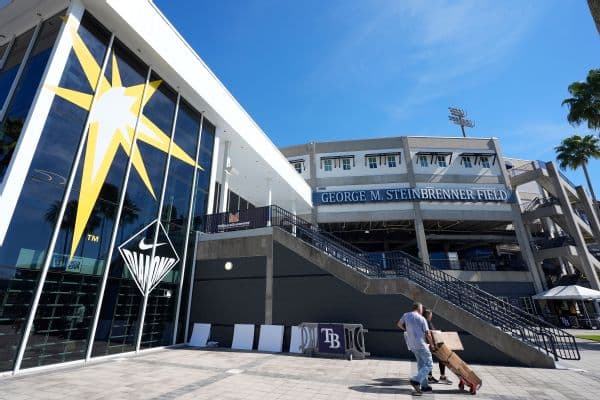
The long-standing saga regarding the future of the Tampa Bay Rays stadium took a significant step forward on Tuesday. In a move that provides a major boost to the franchise’s long-term stability in the region, Florida Governor Ron DeSantis and MLB Commissioner Rob Manfred both voiced their public support for a proposed new ballpark located in Tampa.
The endorsements come at a critical juncture for the Rays, who have spent years navigating the complexities of stadium negotiations, site selections, and local political hurdles. While the public backing from the state’s highest executive and the league’s top official is a milestone, the proposal still faces a road paved with unanswered questions regarding the financial and logistical specifics of the project.
A Unified Front for a New Tampa Bay Rays Stadium
During a Tuesday appearance, both Governor DeSantis and Commissioner Manfred made it clear that they view a new Tampa Bay Rays stadium in Tampa as the preferred path forward for the organization. This alignment of state and league leadership is a powerful signal to local stakeholders and potential private partners that the momentum is shifting toward a concrete solution on the Tampa side of the bay.
Commissioner Manfred has been vocal for years about the necessity of a modern facility to ensure the Rays can remain competitive and financially viable in the modern MLB landscape. His support on Tuesday reinforces the league's commitment to keeping the team in the Florida market, provided a suitable stadium agreement can be reached. Governor DeSantis’s support, meanwhile, adds a layer of political weight to the project, though the extent of state-level involvement remains to be seen.
The Importance of a Tampa Location
For over a decade, the primary debate surrounding the Rays has been whether the team should remain in St. Petersburg or relocate to a more central location in Tampa. The current proposal discussed by DeSantis and Manfred focuses specifically on the Tampa side, which many analysts believe would solve the team’s chronic attendance issues by placing the ballpark closer to the region’s corporate center and a larger portion of the population base.
While the Rays have seen incredible success on the field over the last several seasons, Tropicana Field in St. Petersburg has frequently ranked near the bottom of the league in average attendance. A move to Tampa is widely seen as the most effective way to tap into the local business community and make the games more accessible to fans living in Hillsborough County and beyond.
Key Details and Financial Specifics Remain Unclear
Despite the high-level endorsements, the path to a groundbreaking remains speculative in terms of the finer details. During the discussions on Tuesday, few specifics were offered regarding the total cost of the project or the proposed timeline for construction. Historically, stadium projects of this magnitude in Florida have required a complex mix of private investment and public funding, often leading to intense debate among taxpayers and local officials.
The lack of a defined price tag or a target opening date suggests that while the political will is present, the technical and financial frameworks are still being negotiated. For a Tampa Bay Rays stadium to become a reality, the team will need to present a comprehensive plan that addresses:
- The total projected cost of the facility and surrounding infrastructure.
- The percentage of funding provided by the Rays' ownership group.
- The specific location within Tampa and how it integrates into the city's urban planning.
- A firm timeline that aligns with the expiration of the team's current lease.
The Looming Deadline at Tropicana Field
The urgency for a new Tampa Bay Rays stadium is driven by the team's current lease at Tropicana Field, which is set to expire following the 2027 season. With the clock ticking, the franchise is under pressure to secure a deal that allows for several years of construction. The endorsement from Manfred is particularly notable, as the Commissioner has previously hinted that the Rays' future in the region depends on a permanent stadium solution being finalized sooner rather than later.
By shifting the focus toward Tampa with the Governor’s blessing, the Rays may be looking to streamline the approval process. However, the transition from "support" to "shovels in the ground" will require navigating the fiscal realities of stadium construction in a post-pandemic economic environment.
What This Means for the Future of MLB in Florida
The support from DeSantis and Manfred is a clear indicator that MLB views the Tampa Bay market as a vital part of its footprint. By backing a Tampa-based solution, the league is signaling its desire to see the Rays thrive in a facility that matches the caliber of the product they put on the field. As the conversation moves from general support to specific planning, the sports world will be watching closely to see how the funding gaps are filled and when the first blueprints for the new home of the Rays will be unveiled.
Sources & Original Reporting

