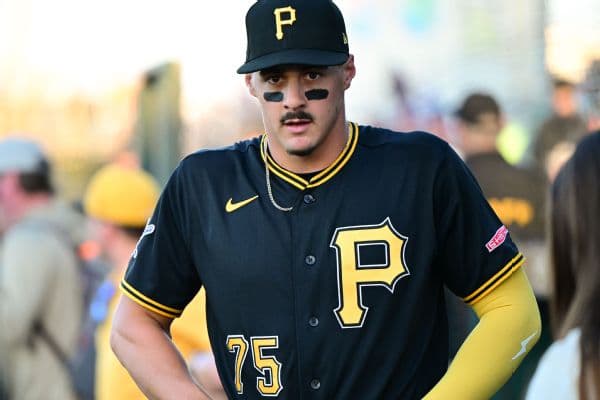
The Pittsburgh Pirates’ youth movement is preparing to regain one of its most exciting components. The club announced on Tuesday night that rookie shortstop Konnor Griffin has officially started a Konnor Griffin rehab assignment with the Double-A Altoona Curve. Griffin, who has been sidelined with a forearm strain, is taking the first major step toward returning to the Pirates' active roster.
Griffin’s progression to live game action is a welcome sight for a Pittsburgh organization that has carefully managed his development since he joined the professional ranks. After being sidelined by the injury earlier this season, the 20-year-old infielder is now tasked with proving his health and timing against Double-A pitching before returning to the Major League level.
The Significance of the Konnor Griffin Rehab Assignment
The decision to send Griffin to Altoona for this Konnor Griffin rehab assignment indicates that the Pirates are looking for high-level competition to test his recovery. Forearm strains are often treated with extreme caution, especially for players with Griffin’s explosive arm strength and high-velocity swing. By placing him in Double-A, the front office can monitor his defensive range and throwing mechanics in a controlled but competitive environment.
According to the club's announcement, the shortstop was cleared for game activity following a successful period of strength training and light throwing. While the Pirates have not specified the exact length of the rehab stint, these assignments typically last between one and two weeks for position players, depending on how the player’s body responds to consecutive days of play.
From 2024 Draft Pick to MLB Rookie
Konnor Griffin’s rise through the Pirates' system has been a focal point for fans since he was selected 9th overall in the 2024 MLB Draft. Entering the 2026 season as one of the league's most anticipated rookies, Griffin’s path to the 40-man roster was accelerated by his rare combination of power and speed. Standing 6-foot-4, the Mississippi native transitioned quickly from a top prep prospect to a legitimate Major League contributor.
Before the forearm strain halted his momentum, Griffin was beginning to showcase why scouts labeled him a "five-tool" talent. His ability to impact the game both at the plate and as a premium defender at shortstop has made him a cornerstone of the Pirates' long-term plans. His status as a rookie in 2026 reflects a player who has successfully navigated the minor league ladder in just under two years, a testament to his high ceiling and professional maturity.
Impact on the Pirates' Roster and Future
The Pirates are currently balancing the development of several high-profile young players. Alongside Griffin, the team has been managing the workload of other young stars like Jared Jones. The synchronization of these talents is critical for a Pittsburgh team looking to establish consistency in the National League Central.
While Griffin is in Altoona, the Pirates will be looking for specific milestones:
- Arm Strength: Ensuring no lingering discomfort when making deep throws from the hole at shortstop.
- Bat Speed: Verifying that the forearm strain hasn't sapped his ability to turn on high-velocity fastballs.
- Baserunning: Testing his elite speed in game situations to ensure total lower and upper body synchronization.
What’s Next for the Pirates and Griffin?
As the Konnor Griffin rehab assignment continues with the Altoona Curve, the Pirates' coaching staff will receive daily reports on his status. If he remains symptom-free through the first several games, a return to PNC Park could be on the horizon before the end of the month. For a team building around a core of young, athletic talent, getting Griffin back to full health is the top priority for the remainder of the summer.
Fans in Altoona will have a front-row seat to one of the game's brightest young stars as he works his way back. For the Pittsburgh faithful, Griffin’s return marks the next chapter in what they hope will be a transformative era for the franchise.
Sources & Original Reporting