As the Los Angeles Dodgers 2026 season gets into full swing this April, the narrative surrounding the ballclub remains as polarized as ever. Following an opening week that saw the team take the field on March 26, the focus has already shifted from the excitement of Opening Day to the grueling reality of the next six months. For a franchise that has defined itself by regular-season dominance, the central question remains: what does this 162-game stretch actually mean for a team whose only true metric of success is a World Series trophy? While the lights of October are the ultimate destination, the journey through the spring and summer will dictate whether this star-studded roster can survive the physical and mental toll of the campaign.
The Core Pillars: Managing an Aging Powerhouse
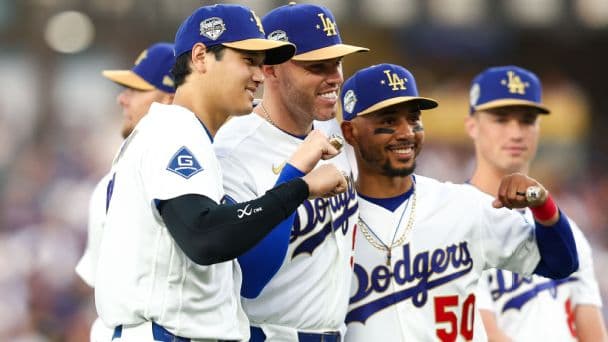
The foundation of the Los Angeles Dodgers 2026 season rests on the shoulders of three future Hall of Famers: Shohei Ohtani, Mookie Betts, and Freddie Freeman. However, the reality of 2026 is that this core is moving further into their 30s. While their production remains elite, the regular season is no longer just about statistical accumulation; it is about preservation. Manager Dave Roberts faces the delicate task of balancing the pursuit of another NL West title with the physiological needs of his aging superstars.
Ohtani continues to be the sun around which the Dodgers' universe orbits. His presence in the lineup provides a psychological edge, but as the season enters its second week, the team is already implementing a meticulous strategy to ensure his longevity. The challenge for the Dodgers is to ignore the external pressure of daily highlights and focus on the internal metrics of health and efficiency. The "Big Three" are the engine, but even the most powerful engines require careful maintenance over a long distance.
A Rotation Built for Postseason Dominance
The Dodgers' front office has constructed a pitching staff that looks more like an All-Star roster than a standard rotation. With Tyler Glasnow, Yoshinobu Yamamoto, and Blake Snell leading the charge, the team possesses the raw stuff to dismantle any lineup in baseball. However, the Los Angeles Dodgers 2026 season will be defined by the availability of these arms rather than just their velocity.
Glasnow and Snell bring immense strikeout potential but also come with historical durability concerns. Yamamoto, now a seasoned veteran of the MLB schedule, is expected to provide the bulk of the innings, but even his workload must be managed with an eye toward the playoffs. The strategy is clear: the Dodgers aren't looking for three 200-inning workhorses; they are looking for three healthy, dominant starters to take the mound in Game 1, 2, and 3 of the Division Series. The regular season serves as the laboratory where this pitching chemistry is perfected.
Fact vs. Fiction: Navigating the 2026 Narrative
To understand the true trajectory of the Dodgers, one must separate the media myths from the clubhouse realities. The 2026 campaign is often viewed through a lens of inevitability, but the internal perspective is far more nuanced.
Fiction: The Regular Season Record is the Ultimate Success Metric
There is a common misconception that the Dodgers must win 110 games to prove they are the best team in baseball. The fiction here is that a historic win total correlates directly with postseason hardware. In reality, the Los Angeles Dodgers 2026 season is about "peak performance timing." The team has learned from past early exits that entering October with the best record is secondary to entering October with a healthy, rested roster. A 95-win season with a fully healthy Blake Snell and Freddie Freeman is infinitely more valuable than a 110-win season where the stars are running on empty.
Fact: Pitching Health is the Only True Variable
While the lineup gets the headlines, the fact remains that the Dodgers' season lives and dies with the training table. The depth of the rotation is impressive, but it is also fragile. The success of the next six months depends entirely on the medical staff’s ability to navigate minor strains and fatigue. If Glasnow and Yamamoto can reach the finish line without significant time on the IL, the Dodgers are the favorites. If the rotation thins out by August, no amount of offensive production from Ohtani can bridge the gap in a short series.
Fiction: An Aging Lineup Means Declining Production
Critics often point to the age of Betts and Freeman as a sign of an impending cliff. The fiction is that these players will suddenly lose their utility. On the contrary, the Dodgers have optimized their approach to include strategic rest and advanced recovery data. These athletes are not just aging; they are evolving. Their veteran experience allows them to make adjustments that younger players cannot, making them more dangerous in high-leverage situations even if their raw physical tools see a slight natural decline.
The Road Ahead: April through September
As we move through the early stages of April, the Dodgers are not just playing for wins; they are playing for position. The 2026 season will be a test of organizational depth. Beyond the headliners, the contributions of the supporting cast will be vital in giving the stars the "load management" days they require. The goal is to create a sustainable rhythm that carries the team through the dog days of August without a burnout.
Ultimately, the Los Angeles Dodgers 2026 season is a six-month preparation for a one-month sprint. By focusing on the facts of health and strategic rest while ignoring the fiction of regular-season records, the Dodgers are positioning themselves to finally align their summer excellence with autumnal glory. With Ohtani, Betts, and a powerhouse rotation, the pieces are in place; now, it is simply a matter of execution and endurance.
Sources & Original Reporting