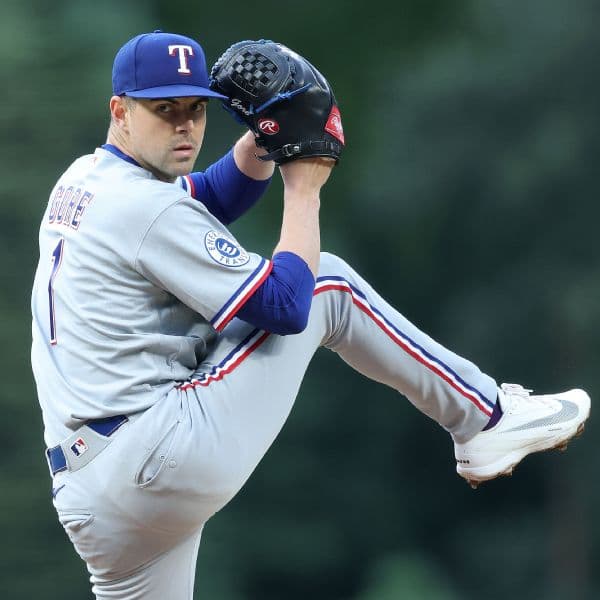
The Texas Rangers faced a significant scare on Monday night at Coors Field when starting pitcher MacKenzie Gore was forced to exit the game after completing just one inning of work. The team later announced that the left-hander is dealing with muscle tightness in his back, an issue that immediately raised concerns for a Rangers rotation that has been searching for consistency as the season progresses.
Early Exit at Coors Field
The MacKenzie Gore injury occurred during the opening game of a critical road series against the Colorado Rockies. Gore, who has been a vital part of the Rangers' starting unit, appeared to navigate the first inning without immediate outward signs of distress. However, as the team prepared to take the field for the bottom of the second inning, the training staff and coaching personnel determined that Gore could not continue.
While the specific pitch or movement that triggered the tightness has not been disclosed, the decision to pull a starter after only one inning and 15-20 pitches is almost always a precautionary measure designed to prevent a more serious strain or tear. For a pitcher like Gore, whose delivery relies on significant rotational force and flexibility, back tightness can be particularly disruptive to both command and velocity.
Impact on the Rangers’ Rotation
Losing a starter early in a game is a nightmare scenario for any manager, but it is especially taxing at high-altitude venues like Coors Field, where the ball carries and pitchers often tire more quickly. The MacKenzie Gore injury forced the Texas bullpen into an emergency long-relief situation, putting immediate pressure on the middle relief corps to eat up innings and keep the game within reach.
The Rangers have leaned heavily on Gore this season to provide quality starts and high strikeout numbers. Prior to Monday's exit, Gore had been showing signs of finding his rhythm, making this setback particularly poorly timed. If the back tightness necessitates a stint on the 15-day Injured List, the Rangers will likely look to their Triple-A affiliate or consider a spot-start approach to fill the void in the rotation.
The Nature of Back Tightness in Pitchers
Back injuries are notoriously fickle for MLB pitchers. Unlike a direct trauma injury, "tightness" can range from a minor cramp that resolves with 48 hours of rest to a symptom of a deeper muscular imbalance or disc issue. The Rangers' medical team will likely conduct a battery of tests, including potential imaging, to ensure that the tightness is not masking a more significant strain.
- Immediate Treatment: Typically involves ice, anti-inflammatory medication, and light stretching.
- Recovery Timeline: If it is simple tightness, Gore might only miss one turn in the rotation. If it is a strain, he could be out for 3-6 weeks.
- Risk Factors: High-velocity lefties often put immense strain on the lower and mid-back during their follow-through.
Looking Ahead: Next Steps for Texas
The Rangers are expected to provide a more detailed update following further evaluation on Tuesday. In the meantime, the focus shifts to how the team manages the roster. With the MacKenzie Gore injury potentially sidelining a key arm, the front office may need to make a corresponding roster move to bring up a fresh arm from the minors to protect a taxed bullpen.
For fans and fantasy managers alike, the status of MacKenzie Gore remains the top story in Arlington. His ability to bounce back quickly will be a major factor in whether the Rangers can maintain their position in the standings during this grueling stretch of the schedule. We will continue to monitor the situation as more information becomes available from the Texas clubhouse.
Sources & Original Reporting