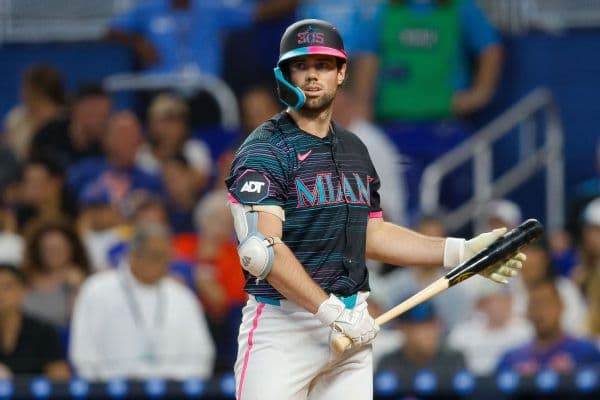
Spring training is often defined by the optimism of fresh starts and the intensity of roster battles, but for the Miami Marlins, the 2026 campaign has dealt a significant blow before the first official pitch of the regular season. The club announced Monday that Graham Pauley, who was a primary contender for the starting third base job, has been shut down for the remainder of the season due to right forearm tightness. The Graham Pauley injury represents a major setback for a Miami roster that is heavily focused on developing its young core under second-year manager Clayton McCullough.
Pauley, a versatile infielder known for his offensive upside and left-handed bat, was expected to be a central figure in the Marlins' infield rotation this year. Instead, the focus now shifts entirely to his long-term health and a rehabilitation process that will keep him off the field until 2027. For a Marlins organization looking to evaluate its long-term pieces during this rebuilding phase, losing a high-ceiling prospect for an entire year is a difficult reality to navigate during the final weeks of February.
Understanding the Graham Pauley Injury
The decision to shut down Graham Pauley follows reports of persistent right forearm tightness during early spring activities in Jupiter. While the Marlins have not yet disclosed whether the injury will require surgical intervention, such as Tommy John surgery or a brace procedure, the "shut down for the season" designation indicates a recovery timeline that extends through the entirety of 2026. Forearm issues are particularly sensitive for infielders, as the stress of throwing across the diamond from the "hot corner" requires maximum arm integrity and explosive strength.
By opting for a full shutdown now, the Marlins' medical staff and front office aim to protect Pauley’s long-term career prospects rather than risking a more catastrophic injury by attempting to play through the discomfort. The goal is to have the 24-year-old fully recovered and ready to compete for a roster spot in time for the 2027 season. However, missing a full year of development at this stage of his career is a significant hurdle for Pauley’s progression in the major leagues, especially as he was looking to establish himself as an everyday contributor.
Impact on the Marlins' Third Base Competition
Before the injury news broke, the battle for the starting third base spot was one of the most intriguing storylines in the Marlins' camp. With Graham Pauley now officially out of the mix, the path has been cleared for other players to secure a permanent role in the starting lineup, fundamentally changing the team's defensive dynamic for the 2026 season.
Connor Norby Takes the Lead
Connor Norby now stands as the undisputed frontrunner for the starting job at third base. Norby, who was acquired from the Baltimore Orioles in the 2024 trade that sent Trevor Rogers to the American League, has been a standout performer since arriving in the Marlins organization. His ability to hit for both power and average makes him a natural fit for the middle of the order. Last season, Norby demonstrated that he belongs at the big-league level, and this unfortunate opening provides him with the opportunity to cement himself as a cornerstone of the Miami infield for years to come.
Clayton McCullough’s Depth and Utility Options
With Pauley sidelined, manager Clayton McCullough will have to lean more heavily on his remaining depth to fill out the bench and provide coverage across the diamond. McCullough, who took over the managerial duties at the start of the 2025 season, has emphasized versatility and athleticism in his lineup construction. Several players are expected to see increased opportunities following the Graham Pauley injury:
- Xavier Edwards: His elite contact skills and defensive versatility make him a vital asset. While primarily a middle infielder, Edwards’ ability to get on base will be even more critical with Pauley’s bat missing from the lineup.
- Vidal Bruján: Known for his elite speed and ability to play almost any position on the field, Bruján’s value as a super-utility player increases significantly. He provides McCullough with a reliable late-inning option and a potential spot-starter at the corners.
- Otto Lopez: Lopez provides a steady glove and could see a larger role as a defensive replacement or a platoon option at third base to help ease the workload on Norby.
A Key Piece of the Marlins' Rebuild
Graham Pauley’s journey to Miami was a key part of President of Baseball Operations Peter Bendix's strategy to stockpile young, controllable talent. He was acquired from the San Diego Padres in July 2024 as part of the blockbuster trade that sent closer Tanner Scott and reliever Bryan Hoeing to the West Coast. At the time of the deal, Pauley was highly regarded for his advanced approach at the plate and his ability to drive the ball to all fields.
For Bendix and the Marlins' front office, Pauley was exactly the type of player they wanted to build around: a high-contact hitter with defensive flexibility and a pedigree from a winning organization. Losing a full year of evaluation on such a player is a blow to the front office’s timeline, as they must now wait until 2027 to see if Pauley can translate his minor league success into a consistent major league career.
Looking Ahead to the 2026 Season
While the Graham Pauley injury is a disappointing start to the spring, the Marlins remain focused on their broader goal of developing a competitive young core under Clayton McCullough. The spotlight will now intensify on Connor Norby to see if he can handle the everyday rigors of third base and provide the offensive spark the team needs in the absence of Pauley's left-handed power.
Miami will likely monitor the waiver wire and the trade market as other teams trim their rosters toward the end of spring training, seeking to add veteran depth to an infield that has suddenly become much thinner. For Pauley, the long road to recovery begins immediately, with the hope that he can return to full strength and reclaim his place in the Marlins' future plans by next spring.
Sources & Original Reporting