The 2026 Major League Baseball season is officially underway, and as the first few weeks of play conclude, the league’s statistical leaderboards are beginning to take shape. For fans and analysts alike, this is the time of year defined by the small sample size—a period where a single hot week can inflate a batting average and a rough outing can send an ERA skyrocketing. Understanding MLB 2026 early-season stats requires a discerning eye to separate legitimate tactical improvements from mere statistical noise. As we look at the numbers coming out of the Houston Astros, Boston Red Sox, and New York Mets clubhouses, certain trends are demanding our attention.
MLB 2026 Early-Season Stats: Sorting Fact from Fiction
In the early stages of any season, the most critical question is sustainability. History tells us that league-wide averages and individual walk rates often fluctuate wildly in April before stabilizing in May. However, the data emerging from the 2026 campaign suggests that some teams have made fundamental shifts in their approach. The Houston Astros, for instance, have shown a significant deviation in their collective plate discipline. While early-season walk rates can be finicky, the consistency with which their lineup is working deep counts suggests a philosophy change that could persist throughout the summer.
Similarly, the New York Mets and Boston Red Sox are finding themselves under the microscope. For the Mets, the focus has been on their pitching staff's ability to limit hard contact, a metric that often stabilizes faster than traditional ERA. Meanwhile, the Red Sox are navigating a high-variance start that has seen their offensive output swing between extremes. Analysts are currently monitoring several key metrics across these clubs:
- Hard-Hit Rate: A focus for the Mets' rotation to ensure early success isn't just luck.
- Chase Rate: A key indicator for the Red Sox hitters as they face elite breaking balls.
- Zone Contact Percentage: How the Astros are turning discipline into production.
Mason Miller and the Power of the Strikeout
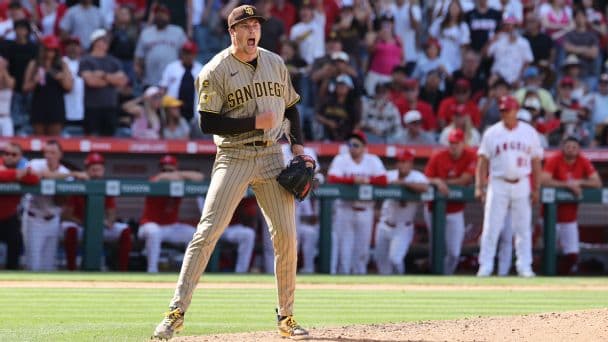
When discussing individual dominance in the early going, few names carry as much weight as Mason Miller. Now a cornerstone for the San Diego Padres, the flame-throwing right-hander has continued to defy traditional scouting reports with a combination of elite velocity and improved command. In the realm of MLB 2026 early-season stats, Miller’s strikeout-to-walk ratio is perhaps the most impressive figure on the board. Unlike batting averages, which can be heavily influenced by BABIP (Batting Average on Balls In Play), a high strikeout rate is generally a reliable indicator of a pitcher's true talent level.
Miller’s ability to generate swings and misses in high-leverage situations has made him a focal point for the Padres and their divisional rivals. As the league adjusts to his arsenal, the longevity of his current run will depend on his secondary offerings. For now, the numbers suggest that Miller is not just riding a wave of good fortune but is actively evolving into one of the most feared arms in the game.
The Emergence of Young Stars in 2026
The 2026 season has also served as a platform for rising stars to make their mark. The statistical output from the newest generation of talent indicates that the learning curve for elite prospects is shortening significantly.
Cam Smith and the Houston Astros
Cam Smith has quickly become a household name for the Houston Astros, putting up numbers that challenge the typical expectations for young hitters. Early-season success for rookies is often met with skepticism, but Smith’s underlying metrics—such as exit velocity and barrel percentage—indicate that his production is backed by elite physical tools. As a key part of the Astros' revamped lineup, scouts are watching to see how he handles the inevitable adjustments that pitchers will make as the season progresses. His ability to maintain a high average while playing for a high-profile contender like Houston marks him as a legitimate Rookie of the Year candidate.
Jose Soriano and the Los Angeles Angels
On the mound, Jose Soriano of the Los Angeles Angels is another athlete whose early-season data is turning heads. Soriano has shown a marked improvement in his walk rate, a statistic that has historically been his Achilles' heel. If Soriano can maintain this newfound control, he transforms from a high-upside project into a legitimate top-of-the-rotation starter. The Angels' success in 2026 may very well hinge on whether Soriano’s early-season efficiency is a permanent leap forward or a temporary hot streak.
League-Wide Trends: Walk Rates and Averages
Beyond individual performances, the broader landscape of Major League Baseball is shifting. We are seeing a league-wide emphasis on walk rates and on-base percentage as teams move away from a pure "power at all costs" approach. This shift is reflected in the early-season numbers, where several teams are showing a collective increase in pitches seen per plate appearance. For the San Diego Padres and other contenders, the ability to tire out opposing bullpens early in a series is becoming a primary objective.
As we move into the second month of the season, the "trust factor" of these stats will increase. For now, the MLB 2026 early-season stats provide a roadmap of what to watch. Whether it is the Astros' discipline, Mason Miller’s heat, or the arrival of stars like Cam Smith, the numbers are telling a story of a league in transition. Fans should keep a close eye on the stabilization of these metrics as the sample sizes grow and the true contenders begin to separate themselves from the pack.
Sources & Original Reporting


