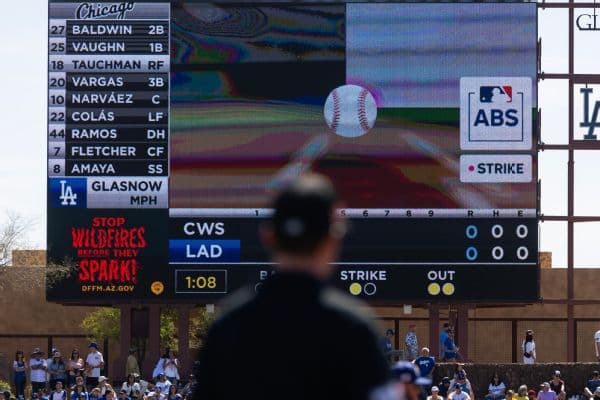
The future of Major League Baseball has officially arrived, and it comes with a digital footprint. After years of testing in the minor leagues and rigorous debate among traditionalists and progressives alike, the MLB Automated Ball-Strike System (ABS) has made its highly anticipated regular-season debut. As the first games of the 162-game marathon unfolded, the focus shifted from the players on the field to the technology monitoring the zone. The initial feedback from the dugouts suggests that while the game has fundamentally changed, the reception is overwhelmingly positive.
A New Era for the MLB Automated Ball-Strike System
For decades, the strike zone was a matter of human interpretation, a subjective space that varied from umpire to umpire and even inning to inning. With the implementation of the MLB Automated Ball-Strike System, that subjectivity is being replaced by precision. The transition to a tech-integrated officiating model is perhaps the most significant structural change to the sport since the introduction of the pitch clock. Managers and players alike entered the season with a mix of curiosity and caution, but the first results indicate a smoother transition than many anticipated.
The system, often referred to as "robot umps" in popular culture, aims to provide a consistent, uniform strike zone for every hitter and pitcher, regardless of the venue or the officiating crew. By utilizing high-speed cameras and tracking software, the ABS system communicates the call to the home plate umpire in real-time, ensuring that the "human element" no longer dictates the outcome of a borderline 3-2 count.
Alex Cora: "It’s a Different Ballgame"
Boston Red Sox manager Alex Cora was among the first to offer a public assessment of the system following his team’s opening contest. Cora, known for his deep tactical understanding of the game, acknowledged that the technology has immediate and profound effects on how a game is managed and played. Following the Red Sox's first game of the season, Cora noted that the MLB Automated Ball-Strike System makes it "a different ballgame."
Cora’s comments highlight a shift in strategy. Without the ability to "frame" pitches—a skill where catchers subtly move their mitts to make balls look like strikes—the value of certain defensive archetypes may shift. For Cora and the Red Sox, the focus now turns to pure execution. If a pitcher hits the zone, it’s a strike; if they miss, there is no longer a veteran catcher there to steal a strike from the opposition. This transparency allows managers to better evaluate their pitchers' command without the noise of officiating variance.
Player Perspectives: From Trevor Story to Garrett Crochet
The impact of the ABS system isn't just felt by the managers; it is fundamentally altering the approach of the athletes on the field. Several key players have already begun to adjust to the new reality of the digital strike zone:
- Trevor Story: The veteran infielder faces a zone that is now predictable. For a hitter like Story, knowing that a high fastball will be called consistently allows for a more disciplined approach at the plate.
- Garrett Crochet: As a power pitcher, Crochet relies on precision and velocity. The ABS system ensures that his high-velocity offerings are tracked accurately, preventing him from losing out on strikes that might be too fast for the human eye to consistently judge at the edges of the zone.
- Jarren Duran: For a dynamic player like Duran, the consistency of the zone means more opportunities to get on base. If the zone is tighter and more accurate, a player with Duran's speed can capitalize on more walks and deep counts.
- Roman Anthony: As one of the top prospects in the game, Anthony is entering a league that looks very different from the one he grew up watching. His development will be shaped by a strike zone that never moves, potentially accelerating the learning curve for young hitters.
The Consistency Factor and the Road Ahead
The primary argument in favor of the MLB Automated Ball-Strike System has always been consistency. In the past, a pitcher might lose their rhythm if a clear strike was called a ball, leading to a cascade of errors or a forced change in strategy. Early reports from the first games of the season suggest that the "frustration factor" regarding officiating has plummeted. When a call is made by a computer, there is no one to argue with, which has the secondary benefit of keeping the game moving and keeping players focused on the next pitch.
However, the transition isn't without its quirks. The "tech-zone" can sometimes call strikes on pitches that graze the very top or bottom of the vertical zone—pitches that human umpires traditionally called balls. Players are having to recalibrate their internal maps of the strike zone to account for these "micro-strikes" that the ABS system catches with ease.
Conclusion: A Successful Launch
While we are only at the beginning of the 162-game journey, the debut of the MLB Automated Ball-Strike System appears to be a success. With managers like Alex Cora embracing the change and pitchers like Garrett Crochet seeing the benefits of an objective zone, the league seems poised to move forward into a more tech-forward era. There will undoubtedly be growing pains as the season progresses, but for now, the message from the clubhouse is clear: the game is different, but the accuracy is welcome.
Sources & Original Reporting


