As the calendar flips from April to May, the 2026 Major League Baseball season is no longer a small sample size of outliers; it is a developing narrative. The first month of play has provided a wealth of MLB early season takeaways that suggest the power balance in both the American and National Leagues might be shifting in unexpected ways. From the struggles of perennial high-spenders to the technical nuances of the new Automated Ball-Strike (ABS) system, the league is undergoing a significant transformation.
The Crisis of the High Rollers: Money Can’t Buy Wins
Perhaps the most jarring of our MLB early season takeaways is the continued underperformance of the league’s most expensive rosters. Teams like the Houston Astros, New York Mets, and Toronto Blue Jays entered the season with championship aspirations and payrolls to match. However, as of May 1, these clubs are finding themselves mired in the bottom half of their respective divisions.
The Houston Astros, in particular, have struggled to find consistency in their starting rotation. Despite a top-tier payroll, injuries and age seem to be catching up with their veteran core. Similarly, the Toronto Blue Jays have faced a stagnant offense that has failed to support a relatively solid pitching staff. For these organizations, the pressure is mounting; a poor April can be dismissed as a slow start, but a poor May often signals a lost season. The front offices in New York and Houston are already facing questions about whether their current windows of contention are beginning to slam shut.
The ABS Challenge System: Lessons from the Robot Umpires
One of the most talked-about storylines of 2026 has been the integration of the Automated Ball-Strike (ABS) challenge system. While not yet fully automated for every pitch in every stadium, the "challenge" model has fundamentally changed the late-inning dynamics of the game. Players and managers are still learning the tactical nuances of when to trigger a review.
Early data suggests that the ABS system is rewarding hitters with elite plate discipline while punishing pitchers who rely on "framing" at the edges of the zone. Catchers who were once valued primarily for their ability to steal strikes are seeing their defensive metrics shift toward blocking and throwing. The "human element" remains, but it is being governed by a digital yardstick that leaves little room for the traditionalist’s argument. The takeaway so far? The strike zone is more consistent than ever, but the game’s rhythm is still adjusting to the stop-and-start nature of the challenge process.
Surprise Contenders and the Youth Movement
While the big spenders struggle, several small-to-mid-market teams are flourishing. The Cleveland Guardians and Milwaukee Brewers have utilized their deep farm systems to bypass the need for massive free-agent splashes. The Baltimore Orioles continue to look like the gold standard for roster construction, with their young core of Gunnar Henderson and Adley Rutschman leading the charge in the AL East.
In the National League, the Arizona Diamondbacks have proven that their recent postseason success was no fluke. By emphasizing speed and defensive versatility, they are putting immense pressure on opposing pitchers. These teams are proving that in the modern MLB, athleticism and cost-controlled talent are often more valuable than aging superstars on massive contracts.
Navigating the Early-Season Injury Bug
No discussion of MLB early season takeaways would be complete without addressing the impact of injuries. The Atlanta Braves and Los Angeles Dodgers have both had to navigate significant hits to their pitching depth. While these teams have the depth to survive short-term absences, the sheer volume of arm injuries across the league remains a major concern for MLB officials.
The Minnesota Twins and Seattle Mariners have also dealt with key losses to their starting lineups, forcing them to rely on bench depth earlier than anticipated. How these teams manage their workloads in May will likely determine their standing when the All-Star break arrives. For now, the focus remains on internal development and finding ways to win games while the stars are in the trainer's room.
What to Watch for in May
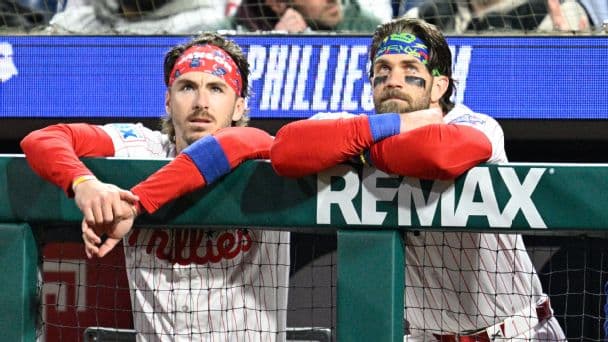
As we move into the second month of the season, several questions remain. Will the Chicago White Sox or Colorado Rockies find a way to become competitive, or are they headed for a fire sale at the trade deadline? Can the Philadelphia Phillies and New York Yankees maintain their early momentum to stay atop their divisions? The transition to May is often where the pretenders are separated from the contenders, and if the first month was any indication, we are in for one of the most unpredictable seasons in recent memory.
Sources & Original Reporting


