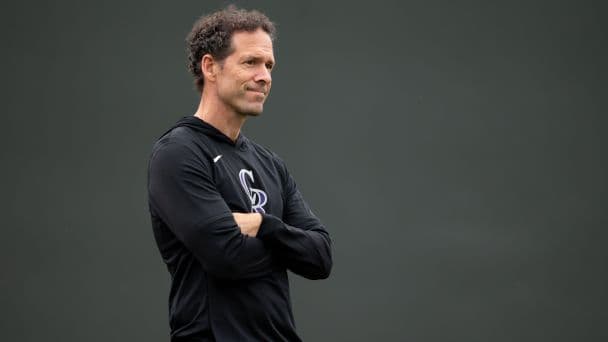
The landscape of Major League Baseball shifted significantly this week with the announcement that one of the most influential minds in modern sports history is returning to the diamond. Tasked with one of the most daunting challenges in professional sports, the Paul DePodesta Colorado Rockies era is officially underway, signaling a massive shift in how the franchise intends to compete in the NL West. After a decade-long stint in the NFL with the Cleveland Browns, DePodesta is stepping back into a front office role to solve the 'Coors Field puzzle' that has perplexed executives for thirty years.
The Return of a Baseball Visionary
Paul DePodesta is perhaps best known to the general public as the analytical wizard portrayed in the book and film Moneyball. During his time with the Oakland Athletics, he helped pioneer the use of advanced metrics to find value where other teams saw none. Since then, his career has taken him through the front offices of the Los Angeles Dodgers and the New York Mets before he made a high-profile jump to the NFL. In Cleveland, he served as the Chief Strategy Officer, helping to modernize a franchise that had long been mired in losing seasons.
His return to MLB is not just a homecoming; it is a calculated move to address what many consider the most difficult organizational rebuild in the sport. The Paul DePodesta Colorado Rockies partnership represents a collision between high-level analytical strategy and the unique physical realities of playing baseball at 5,280 feet above sea level. DePodesta has never been one to shy away from complex systems, and the Rockies offer the ultimate test of his philosophies.
Solving the Coors Field Equation
Any discussion regarding the Colorado Rockies must begin and end with the environment at Coors Field. The thin air in Denver creates a two-fold problem that has historically crippled the team’s ability to sustain success. First, there is the physical movement of the ball: breaking pitches do not break as sharply, and fly balls travel significantly further. Second, there is the physiological toll on players, specifically the 'Coors Field Hangover' that affects hitters and pitchers when they travel back to sea level.
DePodesta’s primary objective will be to move beyond the excuses of altitude and develop a proprietary system for player acquisition and development that accounts for these variables. This likely includes:
- Pitching Profiles: Identifying pitchers whose repertoires are less dependent on atmospheric resistance, focusing on high-velocity fastballs and specialized movement patterns that translate to altitude.
- Recovery Science: Utilizing his experience from the NFL to implement cutting-edge sports science to help players recover from the unique physical strain of playing in Denver.
- Batted Ball Optimization: Building an offense that maximizes the massive outfield gaps at Coors Field while maintaining a competitive approach on the road.
A Cultural Shift for the Rockies
Historically, the Colorado Rockies front office has been viewed as one of the more conservative and insular groups in Major League Baseball. While other teams embraced the analytical revolution of the 2010s, the Rockies often relied on traditional scouting and internal promotions. By bringing in DePodesta, owner Dick Monfort is signaling a willingness to break from tradition.
DePodesta brings a 'process-over-results' mentality that is essential for a team that plays in a high-variance environment. In his previous roles, he has been credited with restructuring how organizations share information between the scouting, coaching, and medical departments. For the Paul DePodesta Colorado Rockies project to work, this level of organizational alignment will be the first priority. The goal is to create a 'Rockies Way' of playing baseball that turns the altitude from a disadvantage into a weapon that visiting teams are unprepared to handle.
The Road to 2026 and Beyond
Success will not happen overnight. The Rockies are currently situated in a division featuring the deep-pocketed Los Angeles Dodgers and the talent-rich San Diego Padres. DePodesta’s strategy will likely focus on long-term sustainability rather than quick fixes in free agency. Fans should expect a heavy emphasis on the amateur draft and international signings, with an eye toward building a roster that is physically and strategically built for the Mile High City.
The 2026 season is being viewed as a pivotal marker for this new regime. By then, DePodesta’s influence on the minor league system and the team’s scouting infrastructure should begin to bear fruit. If he can successfully navigate the unique challenges of Denver, DePodesta will cement his legacy as one of the greatest architects in the history of the game. For the Rockies, it is a gamble on intelligence and innovation—a necessary step for a franchise looking to finally reach the mountain top.
Sources & Original Reporting