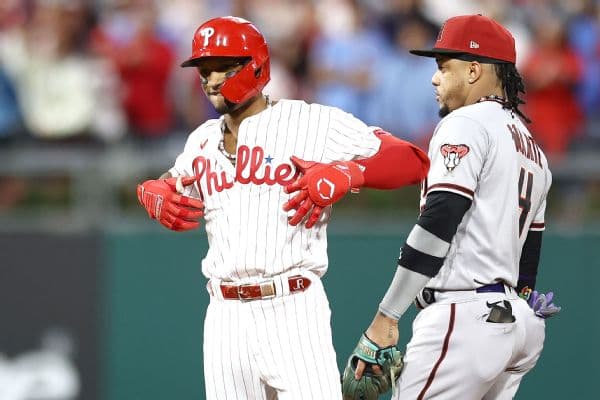
The Philadelphia Phillies’ plans for the upcoming season have been met with a significant hurdle as reports surface regarding a potential disciplinary action against one of their key young players. According to multiple reports, including coverage from ESPN, Phillies outfielder Johan Rojas is currently contesting a possible 80-game suspension after allegedly testing positive for a performance-enhancing substance. The news comes as a major blow to a Philadelphia team that has relied heavily on the young outfielder's elite defensive capabilities to anchor their center field.
Understanding the Johan Rojas Drug Suspension Case
The Johan Rojas drug suspension stems from a reported positive test under Major League Baseball’s Joint Drug Prevention and Treatment Program. While the specific substance involved has not been publicly identified, the standard penalty for a first-time positive test for a performance-enhancing drug (PED) is an 80-game ban. This would effectively sideline Rojas for half of a standard MLB regular season, significantly impacting the Phillies' roster construction and defensive alignment as they prepare for another deep postseason run.
Rojas, who has established himself as one of the premier defensive center fielders in the National League, is not accepting the ruling without a challenge. By contesting the suspension, Rojas will enter an appeals process where the case will be heard by an independent arbitrator. During this period, the player typically remains eligible to participate in team activities, including spring training and regular-season games, until a final decision is rendered. However, the cloud of a looming suspension creates a layer of uncertainty for the front office and coaching staff.
The Impact on the Philadelphia Phillies Outfield
For the Philadelphia Phillies, the potential loss of Johan Rojas represents a significant tactical challenge. Since his debut, Rojas has been a revelation in center field, providing the kind of range and arm strength that allows the team to play more offensively-minded players in the corner outfield spots. His presence has been a safety net for a pitching staff that relies on high-level fly-ball pursuit. If the suspension is upheld, the Phillies must reconsider their daily lineup.
Brandon Marsh and Defensive Shifts
While Brandon Marsh has played center field extensively in the past, the Phillies have often preferred him in a corner spot when Rojas is active to maximize overall team defense. If Rojas is sidelined for 80 games, Marsh would likely become the primary everyday center fielder. While Marsh is an above-average defender, moving him to center creates a vacancy in left field, potentially forcing the Phillies to sacrifice defensive efficiency in favor of offensive production.
Internal Depth and Minor League Options
The team may need to rely more heavily on utility players or minor league prospects to bridge the gap during the first half of the season. This puts additional pressure on the Phillies' developmental system to produce a viable replacement who can handle the vast dimensions of Citizens Bank Park's outfield. Without Rojas, the team loses its most dynamic defensive weapon, which could lead to an increase in extra-base hits allowed by the pitching staff.
Potential Moves in the Trade Market
Depending on the timing of the appeal's resolution, the front office may be forced to explore external acquisitions to maintain their status as World Series contenders. President of Baseball Operations Dave Dombrowski is known for being aggressive, and if the Johan Rojas drug suspension is upheld, the Phillies might look for a veteran center fielder via trade or the remaining free-agent pool to ensure they do not lose ground in a highly competitive NL East.
Rojas’s Rise and the Stakes of the Appeal
Johan Rojas’s journey to the major leagues was marked by a rapid ascent through the Phillies' system, primarily fueled by his "plus-plus" defensive tools. While his offensive game has remained a work in progress, his ability to take away extra-base hits in the gaps made him an indispensable part of the roster during the 2023 and 2024 seasons. A suspension of this magnitude would not only halt his development but also carries a heavy postseason penalty.
Under MLB rules, any player who serves a PED-related suspension during the regular season is automatically disqualified from participating in the postseason that same year. For a Phillies team that has championship aspirations, losing Rojas for the playoffs would be a devastating blow to their late-inning defensive replacements and overall roster flexibility. This makes the outcome of the appeal critical for both the player’s career trajectory and the team's October outlook.
MLB’s Joint Drug Prevention and Treatment Program
Major League Baseball maintains one of the strictest drug testing policies in professional sports. The Joint Drug Prevention and Treatment Program was designed to ensure a level playing field and protect the integrity of the game. Under the current collective bargaining agreement, the penalties for PED use are clear: 80 games for a first offense, 162 games (a full season) for a second offense, and a lifetime ban for a third.
To successfully overturn or reduce a suspension, a player generally must prove that the positive test was the result of a contaminated product or that there were significant procedural errors in the testing process. As the Johan Rojas drug suspension case moves toward arbitration, the Phillies and their fans are left in a state of flux. The organization will have to balance supporting their young outfielder with the practical reality of preparing for a season where he may be absent for three months.
Sources & Original Reporting