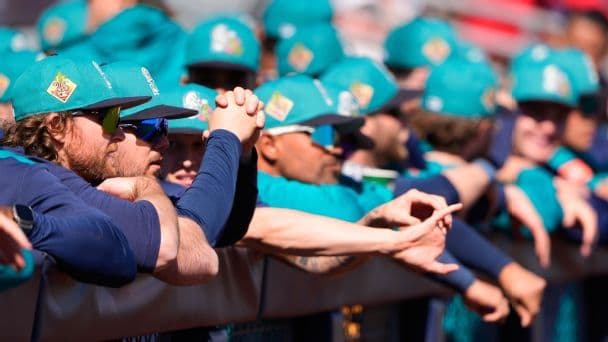
The atmosphere at the Peoria Sports Complex is noticeably different this March. Usually, the Seattle Mariners' spring home is a whirlwind of star power, anchored by the presence of franchise cornerstones and high-priced veterans. However, with the 2026 World Baseball Classic (WBC) in full swing, the vibe has shifted from a high-energy blockbuster to a focused, instructional clinic. As the game’s biggest names represent their home countries on the global stage, the Mariners are left to navigate a unique version of spring training that balances development with the anxiety of watching their stars from afar.
The Void in Peoria: Life Without the Stars
When the World Baseball Classic Spring Training impact hits a clubhouse, the silence is often the first thing people notice. For the Seattle Mariners, the absence of players like Julio Rodríguez and Luis Castillo creates a literal and figurative void. Their lockers, usually surrounded by media and teammates, sit empty, serving as a constant reminder that the team’s core is playing high-stakes baseball thousands of miles away.
For manager Scott Servais and his coaching staff, the challenge is maintaining the standard of a championship-caliber team without the actual roster that will take the field on Opening Day. The daily rhythm of camp changes; the loud music and veteran banter are replaced by the sounds of younger players trying to find their footing. It is a period of transition where the focus shifts from refining established stars to evaluating the depth that will inevitably be needed over a 162-game season.
Opportunity for the Next Generation
While the absence of superstars can be a logistical headache for the front office, it provides an unprecedented opportunity for non-roster invitees and top prospects. In a typical spring training, a young outfielder might get one or two plate appearances before being subbed out for a veteran. With the stars away at the WBC, those same prospects are now playing seven to nine innings, facing big-league pitching, and getting coached by the primary staff.
The Mariners have used this time to get a closer look at their rising talent. Players who would normally be relegated to back-field drills are now starting in Cactus League games. This "forced" exposure allows the coaching staff to see how prospects handle the pressure of a stadium environment and how they adapt to major-league scouting reports. It is a silver lining that could pay dividends in June or July when the inevitable injury bug hits the big-league roster.
The High-Stakes Balancing Act: Managing Injury Risks
Perhaps the most stressful aspect for the Mariners’ organization is the lack of control over their players' workloads. In Peoria, every pitch and every swing is monitored by high-tech sensors and a specialized medical staff. At the World Baseball Classic, the intensity is ramped up to mid-season levels, and the Mariners' staff can only watch from the dugout monitors.
The team remains in constant contact with the training staffs of the various national teams, but the risk of injury is a looming shadow. Seeing a star player dive for a ball or throw 98 mph in early March is enough to make any MLB executive uneasy. The Mariners have implemented a rigorous check-in protocol, ensuring that their players are adhering to their prescribed conditioning programs even while competing for national pride. The goal is to ensure that when these stars return to Arizona, they are ready to transition back into the MLB routine without missing a beat.
Maintaining the Mariners' Culture from Afar
Despite the physical distance, the Mariners are working hard to keep their WBC participants connected to the home base. Coaches often text players after big games, and video of the stars' international performances is frequently played in the Peoria clubhouse. This keeps the remaining players motivated and serves as a reminder of the level of talent that will soon be returning to the fold.
As the 2026 World Baseball Classic nears its conclusion, the focus in Mariners camp will slowly shift back to cohesion. But for now, the "quiet" in Peoria is being put to good use, building the foundation of depth that the Mariners hope will lead them to a deep postseason run later this year. The impact of the WBC is felt in every corner of the facility, proving that even when the stars are away, the work never stops.
Sources & Original Reporting


