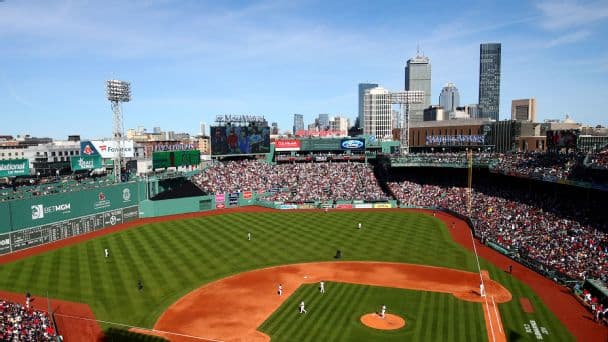
In a sport defined by its deep sense of history and tradition, nothing connects fans to the past quite like the cathedrals of the game. While modern sports often prioritize sleek glass and high-tech amenities, Major League Baseball remains anchored by several iconic venues that have stood for over a century. If you have ever wondered what is the oldest MLB stadium, the answer takes us back to the early 20th century, long before the era of retractable roofs and LED ribbon boards.
The Jewel Box Era: Fenway Park and Wrigley Field
When discussing the oldest MLB stadium, the conversation begins and ends with Fenway Park. Opening its doors on April 20, 1912, the home of the Boston Red Sox is the undisputed elder statesman of professional baseball. Fenway is famous for its quirky dimensions, most notably the "Green Monster" in left field, which was originally built to keep non-paying spectators from watching the game from nearby buildings. Its cramped concourses and manual scoreboard serve as a living museum for the sport.
Just two years behind Fenway is Wrigley Field, the legendary home of the Chicago Cubs. Established in 1914 (originally as Weeghman Park), Wrigley is the only other remaining stadium from the "Jewel Box" era of ballpark construction. Known for its ivy-covered brick walls and the neighborhood rooftops that overlook the field, Wrigley Field remains a pilgrimage site for baseball purists who value the intimate atmosphere of a classic ballpark.
Mid-Century Classics and the Sacramento Transition
After the construction of Wrigley Field, there was a significant nearly 50-year gap in the timeline of current MLB venues. This era saw the rise of modernism and the eventual shift toward multi-purpose facilities. However, the landscape of 2026 looks different than it did just a few years ago, particularly regarding the Athletics.
Dodger Stadium (1962)
Unlike the cramped urban footprints of Fenway and Wrigley, Dodger Stadium was built into the hillside of Chavez Ravine. Offering sweeping views and a mid-century modern aesthetic that has aged remarkably well, it remains the largest stadium in MLB by seating capacity and the third-oldest overall.
Angel Stadium (1966)
Home of the Los Angeles Angels, this venue has undergone several massive renovations to maintain its status as a top-tier venue. Originally built to house both the Angels and the NFL's Rams, it was converted back to a baseball-first configuration in the late 1990s.
Sutter Health Park (2000/2025)
Following the relocation of the Athletics from the Oakland Coliseum after the 2024 season, the team currently calls Sutter Health Park in Sacramento home. While the stadium originally opened in 2000 for Triple-A play, it entered the MLB rotation in 2025 as a temporary home for the A's. In the chronological ranking of physical structures, it slots into the turn-of-the-century building boom.
The Retro-Classic Revolution
The late 1980s and early 1990s marked a major transition point for MLB architecture. This era saw the introduction of the first modern domed and retractable-roof stadiums, such as the Rogers Centre (1989) in Toronto and Tropicana Field (1990) in St. Petersburg. However, the most significant shift came with the "retro-classic" movement.
This revolution began in 1992 with the opening of Oriole Park at Camden Yards. This venue changed the industry by moving away from symmetrical concrete bowls in favor of downtown ballparks that incorporated local architecture and historical charm. Following Baltimore's lead, the late 1990s and early 2000s saw a massive building boom for teams like the Cleveland Guardians, Colorado Rockies, and San Francisco Giants.
The Modern Guard: Retractable Roofs and Entertainment Districts
As we look at the newest additions to the league, the focus has shifted toward fan experience, climate control, and integrated real estate developments.
Truist Park (2017)
The Atlanta Braves moved to the suburbs to create a venue that integrated a massive "Battery" entertainment district directly adjacent to the stadium. This model has since become the blueprint for teams looking to maximize year-round revenue.
Globe Life Field (2020)
At the opposite end of the spectrum from Fenway Park is Globe Life Field, the home of the Texas Rangers. Featuring a massive retractable roof to combat the Texas heat and a fully climate-controlled interior, it represents the pinnacle of modern sports engineering and is currently the newest stadium in Major League Baseball.
What is the Oldest MLB Stadium? The Complete 2026 Chronological List
To understand the evolution of the game, here is the complete ranking of all 30 active MLB stadiums as of the 2026 season, ordered by the year they originally opened:
- 1912: Fenway Park (Boston Red Sox)
- 1914: Wrigley Field (Chicago Cubs)
- 1962: Dodger Stadium (Los Angeles Dodgers)
- 1966: Angel Stadium (Los Angeles Angels)
- 1973: Kauffman Stadium (Kansas City Royals)
- 1989: Rogers Centre (Toronto Blue Jays)
- 1990: Tropicana Field (Tampa Bay Rays)
- 1991: Guaranteed Rate Field (Chicago White Sox)
- 1992: Oriole Park at Camden Yards (Baltimore Orioles)
- 1994: Progressive Field (Cleveland Guardians)
- 1995: Coors Field (Colorado Rockies)
- 1998: Chase Field (Arizona Diamondbacks)
- 1999: T-Mobile Park (Seattle Mariners)
- 2000: Oracle Park (San Francisco Giants)
- 2000: Comerica Park (Detroit Tigers)
- 2000: Minute Maid Park (Houston Astros)
- 2000: Sutter Health Park (Athletics)
- 2001: American Family Field (Milwaukee Brewers)
- 2001: PNC Park (Pittsburgh Pirates)
- 2003: Great American Ball Park (Cincinnati Reds)
- 2004: Citizens Bank Park (Philadelphia Phillies)
- 2004: Petco Park (San Diego Padres)
- 2006: Busch Stadium (St. Louis Cardinals)
- 2008: Nationals Park (Washington Nationals)
- 2009: Yankee Stadium (New York Yankees)
- 2009: Citi Field (New York Mets)
- 2010: Target Field (Minnesota Twins)
- 2012: loanDepot park (Miami Marlins)
- 2017: Truist Park (Atlanta Braves)
- 2020: Globe Life Field (Texas Rangers)
While the newest stadiums offer incredible technology, there is a reason fans still flock to the historic sites in Boston and Chicago. Whether it is the history of the New York Yankees visiting Fenway or the timeless feel of a day game at Wrigley, these venues remain the soul of the sport.
Sources & Original Reporting
- ESPN APIWhat is the oldest MLB stadium?