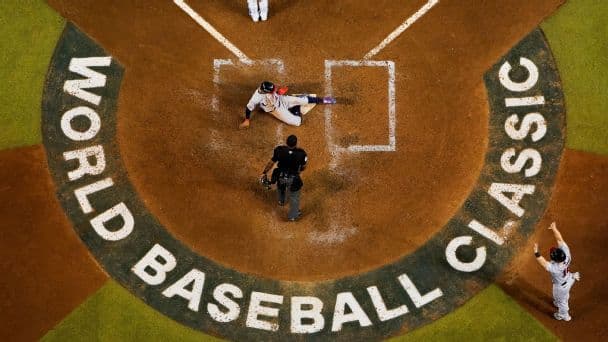
When the lights shine brightest on the international stage, World Baseball Classic history is written in the dirt and the grass of stadiums across the globe. Since its inception in 2006, the World Baseball Classic (WBC) has transformed from a bold experiment into the premier international baseball tournament, pitting the world’s best professional players against one another in a quest for national pride. For fans of the MLB and global baseball alike, the tournament offers a unique intensity that often rivals the World Series.
The Champions: A Legacy of Global Dominance
In the relatively short span of World Baseball Classic history, the tournament has seen a select group of nations rise to the top. Japan remains the undisputed powerhouse of the event, having secured three titles in the five iterations of the tournament held to date. Their technical precision and deep pitching rotations have set the standard for international play.
- 2006: Japan (Defeated Cuba)
- 2009: Japan (Defeated South Korea)
- 2013: Dominican Republic (Defeated Puerto Rico)
- 2017: United States (Defeated Puerto Rico)
- 2023: Japan (Defeated United States)
The 2013 tournament saw the Dominican Republic make history by becoming the first—and so far only—team to finish the tournament with a perfect 8-0 record. Meanwhile, the United States finally climbed the mountain in 2017, behind a dominant performance from Marcus Stroman and a roster filled with MLB All-Stars, proving that the birthplace of baseball could still hold its own against the world’s best.
Individual Excellence: The WBC MVPs
While the WBC is a team-oriented battle for national glory, individual brilliance has often defined the outcome of the tournament. The list of MVPs reads like a who’s-who of baseball legends. Daisuke Matsuzaka holds a unique place in history as the only player to win the MVP award twice, leading Japan to back-to-back titles in 2006 and 2009.
In 2013, Robinson Canó put on a hitting clinic for the Dominican Republic, batting .469 with two home runs and six RBIs. In 2017, Marcus Stroman took home the honors for Team USA after nearly tossing a no-hitter in the championship game against Puerto Rico. Most recently, in 2023, Shohei Ohtani cemented his status as a global icon by winning the MVP after a tournament that culminated in a historic strikeout of his MLB teammate, Mike Trout, to clinch the title for Japan.
The Evolution of the Tournament Format
The structure of the World Baseball Classic has evolved to accommodate more talent and higher stakes. Originally featuring 16 teams, the field expanded to 20 teams for the 2023 edition, allowing emerging baseball nations like Great Britain and the Czech Republic to showcase their growth. This expansion has enriched the World Baseball Classic history by introducing new rivalries and unexpected upsets.
The tournament utilizes a round-robin pool play format followed by single-elimination knockout rounds. One of the most unique aspects of the WBC is its strict pitch-count rules and “mercy rules,” which are designed to protect MLB pitchers during the early stages of the professional season while maintaining the competitive integrity of the games.
Statistical Milestones and Iconic Moments
Beyond the trophies, the WBC has produced statistics that highlight the global nature of the sport. Players like Frederich Cepeda of Cuba have become legends within the context of the tournament; Cepeda holds several all-time records, including most hits (32), most runs scored (19), and most doubles (8) in WBC history. On the power side, the Netherlands’ Wladimir Balentien set a single-tournament record in 2017 with 16 hits and 12 RBIs.
The 2023 finale remains perhaps the most viewed game in the history of the sport, with millions tuning in to see the Ohtani vs. Trout showdown. That moment alone served as a testament to how far the tournament has come since its humble beginnings in 2006. As the baseball world looks toward 2026, the legacy of the WBC continues to grow, promising more unforgettable chapters in the annals of international sports history.
Sources & Original Reporting