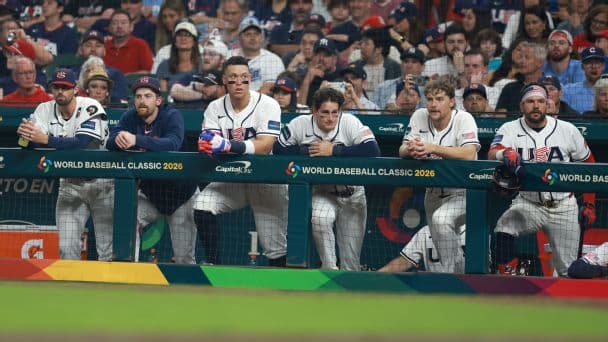
The 2026 World Baseball Classic has reached a critical juncture for the defending finalists, and the tension is palpable. After a series of unpredictable results in group play, the United States finds itself in a position no powerhouse wants to occupy: waiting on the results of others. As the opening round concludes, understanding the World Baseball Classic tiebreaker scenarios is essential for fans and analysts alike who are trying to determine if Team USA will continue its title defense or suffer an early exit.
The Current State of Play for Team USA
Following recent performances on the diamond, Team USA’s fate is no longer entirely within its own control. In the high-stakes environment of the World Baseball Classic (WBC), the margin for error is razor-thin. With the group stage utilizing a round-robin format, the top two teams from each pool advance to the quarterfinals. However, when multiple teams finish with identical win-loss records, the tournament transitions from simple wins and losses to a complex mathematical evaluation of efficiency and defense.
For the United States, the path forward is clouded by the performance of their divisional rivals. Depending on the final scores of the remaining pool games, the U.S. could find themselves in a two-way or even a three-way tie. Because the tournament moves quickly, there is no room for a "tiebreaker game" on the schedule; instead, the World Baseball Classic tiebreaker scenarios rely on established statistical hierarchies to crown the advancing teams.
Breaking Down the World Baseball Classic Tiebreaker Scenarios
The World Baseball Classic uses a specific set of criteria to break deadlocks in the standings. These rules are designed to reward defensive excellence and efficiency, ensuring that every run scored and every out recorded carries weight throughout the tournament. Here is the order of operations for breaking a tie in the 2026 WBC:
- Head-to-Head Record: The first tiebreaker is simple. If two teams are tied, the winner of the game played between those two teams earns the higher seed.
- Lowest Quotient of Runs Allowed: If three or more teams are tied and the head-to-head records are circular (Team A beat B, B beat C, C beat A), the tournament looks at the number of runs allowed divided by the number of defensive outs recorded in the games played between the tied teams.
- Lowest Quotient of Runs Allowed (All Games): If a tie persists, the same calculation is applied to all games played within the pool, not just those between the tied participants.
- Highest Batting Average: In the unlikely event that teams remain tied after the runs-allowed calculations, the team with the highest collective batting average in the games between tied teams advances.
- Drawing of Lots: The final resort is a random draw conducted by World Baseball Classic, Inc.
The Math Behind the U.S. Quarterfinal Hopes
For Team USA, the most likely path to the quarterfinals involves the "Runs Allowed per Defensive Out" calculation. This is often referred to as the "defensive quotient." To improve their standing in this metric, the U.S. coaching staff and pitching rotation have had to focus on limiting damage even in games where the outcome seemed decided. Every run surrendered in the late innings of a blowout or a close loss could potentially be the difference between advancing to the knockout stage in Miami or being sent home early.
If the U.S. ends up in a three-way tie at 3-1 or 2-2, the focus shifts entirely to the scoreboard of the games they have already completed. Fans should keep a close eye on the total number of innings played. Because the denominator in the tiebreaker equation is defensive outs, a team that plays extra-inning games and prevents scoring has a mathematical advantage over a team that gives up runs in a standard nine-inning affair.
What Needs to Happen Next
The immediate future for the United States depends on the remaining matchups in their specific pool. To avoid the complexities of the World Baseball Classic tiebreaker scenarios, the U.S. ideally needed to win out. Since that is no longer an option, they require specific teams to lose, or to lose by specific margins, to ensure their defensive quotient remains the best among the tied group.
Managers often face difficult decisions in these scenarios, such as whether to burn a high-leverage reliever in a game they are losing just to prevent one additional run from scoring. In the WBC, that single run can be the tiebreaking factor that determines a nation's standing. As the final games of the round-robin stage conclude, the eyes of the baseball world will be on the official scorecards to see which teams have done enough to earn their spot in the quarterfinals.
Looking Ahead to the Quarterfinals
Should the United States navigate these tiebreaker waters successfully, they will move on to the single-elimination quarterfinals. At that stage, the math disappears, and the tournament returns to a standard "win and move on" format. However, the lessons learned during this stressful pool play period—particularly regarding the importance of pitching depth and run prevention—will likely shape how the U.S. manages its roster in the knockout rounds.
The 2026 World Baseball Classic continues to prove that every pitch matters, not just for the outcome of the game at hand, but for the survival of a national program in the world's premier international baseball tournament.
Sources & Original Reporting