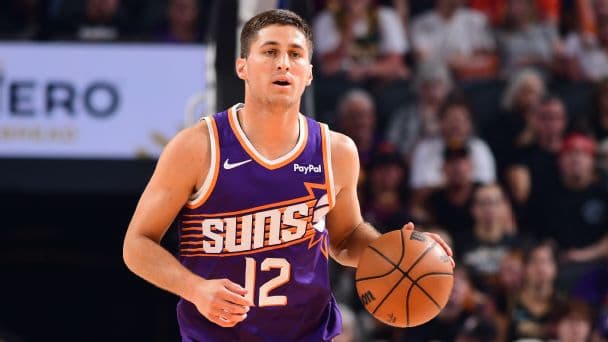
The 2026 NBA free agency period has officially arrived, bringing with it the usual whirlwind of negotiations, blockbuster extensions, and strategic roster building. As teams across the league look to balance their salary caps with championship aspirations, the Phoenix Suns have emerged as one of the first teams to solidify their secondary unit. One of the most notable early moves involves the return of Collin Gillespie, a move that has drawn significant attention from analysts looking to assign early 2026 NBA free agency grades.
For the Suns, this offseason isn't just about chasing superstars; it's about the marginal gains that turn a playoff contender into a champion. By securing Gillespie, Phoenix is signaling a commitment to continuity and high-IQ basketball in their backcourt rotation. As the front office navigates the complexities of the luxury tax and roster limits, these types of signings become the bedrock of a sustainable winning culture.
Analyzing the Phoenix Suns' Early Offseason Strategy
The Phoenix Suns entered the 2026 offseason with a clear objective: maintain the explosive scoring power of their starting lineup while fortifying the bench with reliable playmakers. The decision to bring back Collin Gillespie is a move rooted in that very reliability. In an era where backcourt depth can be the difference between a deep playoff run and an early exit, Gillespie provides the Suns with a steady hand.
Known for his collegiate pedigree and his ability to run an offense without committing high-turnover errors, Gillespie has carved out a specific niche in the NBA. He isn't just a backup; he is a functional piece of the Suns' offensive machine who understands how to space the floor for the team's primary options. Grading this move requires looking at the Phoenix Suns' current depth chart. With heavy investments in their primary scoring options, the front office needed a cost-effective solution that wouldn't sacrifice on-court production.
Grading the Collin Gillespie Deal
The consensus among league insiders is that the Gillespie signing is a high-value move for Phoenix. When we look at the 2026 NBA free agency grades for the Suns, this deal stands out for its efficiency. Analysts typically look at three main factors when grading these types of extensions:
- Financial Flexibility: How the contract impacts the team's ability to make future moves under the current cap.
- Roster Fit: Whether the player complements the existing stars and fits the coaching staff's system.
- Market Value: Whether the team secured the player at a fair price relative to other available free agents.
Gillespie fits this mold perfectly. He is a "floor general" in the truest sense, capable of facilitating for the Suns' elite shooters while remaining a threat from beyond the arc himself. Analysts grading the deal have pointed to his chemistry with the existing core as a primary reason for the positive marks. By securing a player who already understands the playbook, the Suns avoid the "integration period" that often plagues teams that overhaul their entire bench during the summer.
The 2026 NBA Free Agency Landscape
The 2026 NBA free agency cycle is being viewed through a lens of "value-added" signings. Unlike previous years where massive cap spikes led to inflated contracts, the current landscape rewards teams that find efficiency. The grades being handed out for offseason signings and extensions reflect a team's ability to navigate the collective bargaining agreement while maintaining a competitive edge.
Beyond the desert, the league is seeing a flurry of activity as teams attempt to keep pace with the evolving power dynamics of the Western Conference. The Suns' move to lock in Gillespie early serves as a defensive maneuver against other teams looking to poach reliable backup point guards. It also allows the Phoenix front office to turn their attention toward other needs, such as wing depth and interior defense, with the knowledge that their backcourt rotation is largely set.
Impact on the Suns' Depth Chart
As the 2026 offseason progresses, the Suns' depth chart is beginning to take a clear shape. The retention of key role players like Gillespie suggests that the coaching staff values players who can execute complex defensive schemes and maintain the offensive pace when the starters are resting. This strategy is vital for a team like Phoenix, which relies on high-octane offensive output to overwhelm opponents.
While the Collin Gillespie deal might not grab the same headlines as a max-contract signing, it is exactly the kind of move that wins games in February and March. As more grades are released for other teams, the narrative of the 2026 offseason will continue to evolve, but the early indications suggest that Phoenix is focused, disciplined, and ready to compete at the highest level. Fans and analysts alike will be watching closely to see if this continuity pays off when the quest for a Larry O'Brien Trophy resumes in the fall.
Sources & Original Reporting