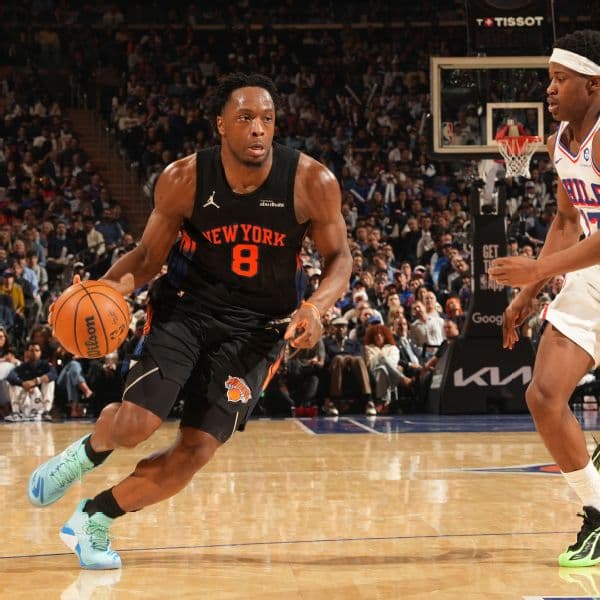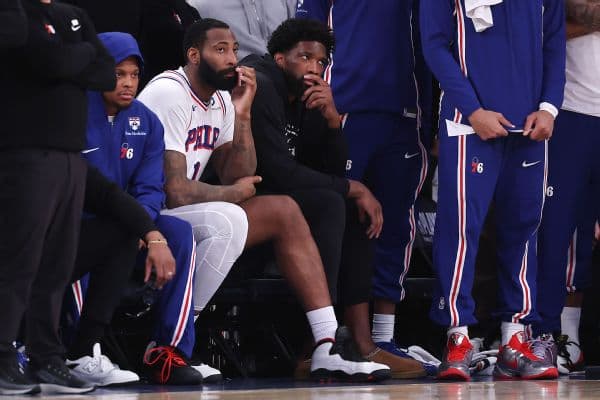
The margin for error in the NBA playoffs is famously razor-thin, and the Philadelphia 76ers learned that lesson in the most painful way possible during Game 2 of their semifinal series against the New York Knicks. Despite holding their own for much of the contest, a devastating 76ers late scoring drought ultimately doomed the team, resulting in a 108-102 loss at Madison Square Garden.
With the series now shifting back to Philadelphia, the 76ers find themselves in a daunting 0-2 hole. The narrative of the game was defined not just by the final score, but by a catastrophic stretch in the fourth quarter where the Philadelphia offense completely vanished. For a team with championship aspirations, the inability to find the bottom of the net when it mattered most has raised urgent questions about their late-game execution.
The Anatomy of the 76ers Late Scoring Drought
In high-stakes playoff basketball, every possession is magnified. For the Philadelphia 76ers, those possessions became increasingly empty as the clock wound down in the fourth quarter. The 76ers late scoring drought lasted nearly six full minutes—a lifetime in a professional basketball game—during which the team failed to record a single field goal.
This offensive paralysis allowed the New York Knicks to erase whatever momentum Philadelphia had built. Going scoreless for such an extended period in the closing stages of a playoff game is almost always a death sentence. The drought wasn't just a matter of missed shots; it was a breakdown in rhythm that saw the 76ers struggle to create high-quality looks against a physical and disciplined Knicks defense. By the time Philadelphia finally snapped the streak, the damage had been done, and the Knicks had seized control of the scoreboard and the arena's energy.
Knicks Capitalize on Philadelphia’s Offensive Struggles
The New York Knicks are a team built on grit and defensive intensity, and they leaned heavily into those traits as the 76ers faltered. While Philadelphia struggled to buy a basket, the Knicks remained composed, chip-ping away at the lead and eventually building their own cushion. The 108-102 final score reflects a game that was within reach for Philadelphia, making the six-minute silence even more difficult to swallow.
New York’s ability to maintain offensive pressure while simultaneously locking down the 76ers' primary options proved to be the difference-maker. In the playoffs, the team that can execute in the "clutch"—the final five minutes of a close game—usually comes out on top. In Game 2, the Knicks were that team, while the 76ers were left searching for answers that never came.
The Impact of a 0-2 Series Deficit
History is not on the side of teams that fall behind 0-2 in a best-of-seven series. While it is not an impossible mountain to climb, the 76ers now face the immense pressure of having to win both of their upcoming home games just to even the score. The psychological weight of the 76ers late scoring drought may linger as the team prepares for Game 3.
To turn the tide, Philadelphia will need to address the stagnant play that plagued them in the fourth quarter. Whether it was fatigue, defensive adjustments by the Knicks, or a lack of secondary playmaking, the 76ers cannot afford another multi-minute lapse if they hope to extend their season. The semifinal stage demands 48 minutes of focused basketball, and as Game 2 proved, 42 minutes simply isn't enough.
Looking Ahead to Game 3 in Philadelphia
The series now moves to the Wells Fargo Center, where the 76ers will have the benefit of their home crowd. However, home-court advantage only goes so far if the offensive execution remains inconsistent. The 108-102 loss is a stark reminder that the Knicks are a resilient opponent that will punish any sign of weakness.
For Philadelphia, the focus must be on sustaining offensive flow through the final whistle. The 76ers late scoring drought in Game 2 served as a wake-up call. If they can find a way to navigate the Knicks' defensive pressure in the closing minutes, they still have a chance to make this a competitive series. If not, their stay in the NBA semifinals could be shorter than anyone in Philadelphia anticipated.
Sources & Original Reporting