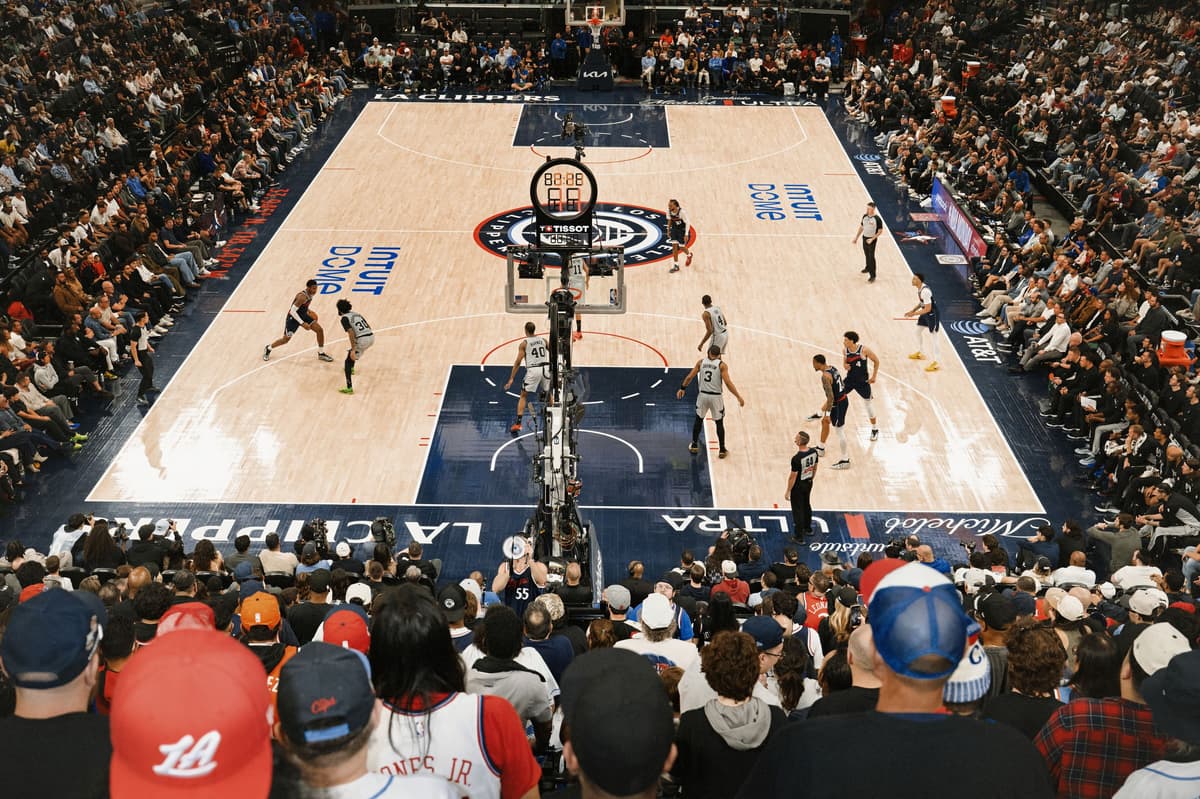
The move to a new arena is often about luxury suites and updated amenities, but for the LA Clippers, the transition to the Intuit Dome was about something far more visceral: intimidation. At the heart of Steve Ballmer’s $2 billion basketball mecca sits "The Wall," a massive, 51-row section of 4,500 fans designed specifically to turn the home-court advantage into a psychological weapon. This isn't just a seating chart; it is a meticulously engineered environment intended to create chaos for every visiting team that steps onto the hardwood and make the Intuit Dome Wall a household name in sports psychology.
The Architecture of Intimidation: 51 Rows of Chaos
The Intuit Dome Wall is a feat of sports engineering that prioritizes sound and sightlines over traditional arena comfort. Rising at a steep 32-degree incline, the section places fans directly on top of the action, creating a vertical wave of noise that funnels toward the court. Unlike standard NBA arenas where the lower bowl is often interrupted by luxury boxes or mid-level suites, The Wall is a continuous, unbroken mass of humanity that looms over the baseline.
Engineering the Vertical Advantage
The primary goal of this design is to disrupt the opposition, particularly during high-leverage moments. Because the section is located directly behind the basket the visiting team shoots at for the second half, the 4,500 fans act as a living, breathing distraction. The proximity is so intense that players have noted the feeling of the crowd "leaning" into the game, a sensation rarely felt in the cavernous multi-purpose arenas shared by other NBA franchises. The steepness ensures that every single fan, from the first row to the 51st, has a clear view of the rim, allowing for synchronized movements that can rattle even the most seasoned veterans.
The Rules of The Wall: Curating a Hardcore Atmosphere
To ensure the Intuit Dome Wall maintains its intended atmosphere, the Clippers have implemented strict rules for those seated in the section. This is not a place for casual spectators or fans of the visiting team. To sit in The Wall, fans must adhere to a specific code of conduct designed to maximize home-team support and minimize any outside interference.
The Mandate for Active Participation
- No Opposing Gear: Fans are strictly prohibited from wearing jerseys or apparel of the opposing team. If you are in The Wall, you are there for the Clippers.
- Active Participation: The section is designed for fans who intend to stand, cheer, and remain engaged for the duration of the 48-minute contest. Sitting quietly is not an option.
- The Chuckmark Certification: To gain access to certain sections of The Wall, fans must be "verified" through the Clippers' loyalty program, ensuring that the loudest and most dedicated supporters are the ones closest to the floor.
By curating the crowd, the Clippers have effectively turned a portion of their fan base into active participants in the game’s outcome. It is a departure from the typical "corporate" feel of modern NBA arenas, leaning instead into a collegiate or European soccer-style atmosphere where the crowd is an extension of the team itself.
Psychological Warfare and Real-Time Impact
The impact of the Intuit Dome Wall is not just anecdotal; it is designed to affect the game in real time. When an opposing player steps to the free-throw line, they aren't just looking at a hoop—they are looking at a wall of 4,500 fans coordinated in their efforts to distract. The sheer volume generated by the acoustic design of the dome, combined with the visual noise of thousands of waving arms, creates a high-pressure environment that tests the focus of the NBA's elite.
Disrupting the Charity Stripe
The psychological warfare extends to the very timing of the fan interactions. Fans in The Wall are encouraged to be at their most disruptive when the visiting team is at the free-throw line. The visual of 51 rows of people moving in unison creates a dizzying effect behind the backboard. This level of crowd coordination is virtually unmatched in the professional ranks, moving beyond simple noise and into the realm of visual interference.
The Human Element vs. High-Tech
While the Intuit Dome features advanced technology like the Halo Board—a double-sided 4K display that spans nearly an acre—the human element of The Wall remains the arena's most disruptive feature. Steve Ballmer’s vision was to create a "basketball heaven," but for opponents, it often feels more like a gauntlet. The technology serves to enhance the experience, but the raw energy of the 4,500 fans provides the actual competitive edge.
Redefining the Fan Experience in the NBA
The LA Clippers have long lived in the shadow of their co-tenants at Crypto.com Arena, but the Intuit Dome represents a definitive break from the past. The Wall is the centerpiece of this new identity. By focusing on the "hardcore" fan experience, the organization is betting that a more intense environment will lead to better results on the court and a stronger bond with the community.
As the NBA continues to evolve, the Intuit Dome Wall serves as a blueprint for how teams can use architecture and community-building to reclaim the home-court advantage. It turns the act of watching a game into an act of participation, proving that in the right environment, 4,500 dedicated fans can indeed turn a professional basketball game into pure chaos for the opposition.
Sources & Original Reporting