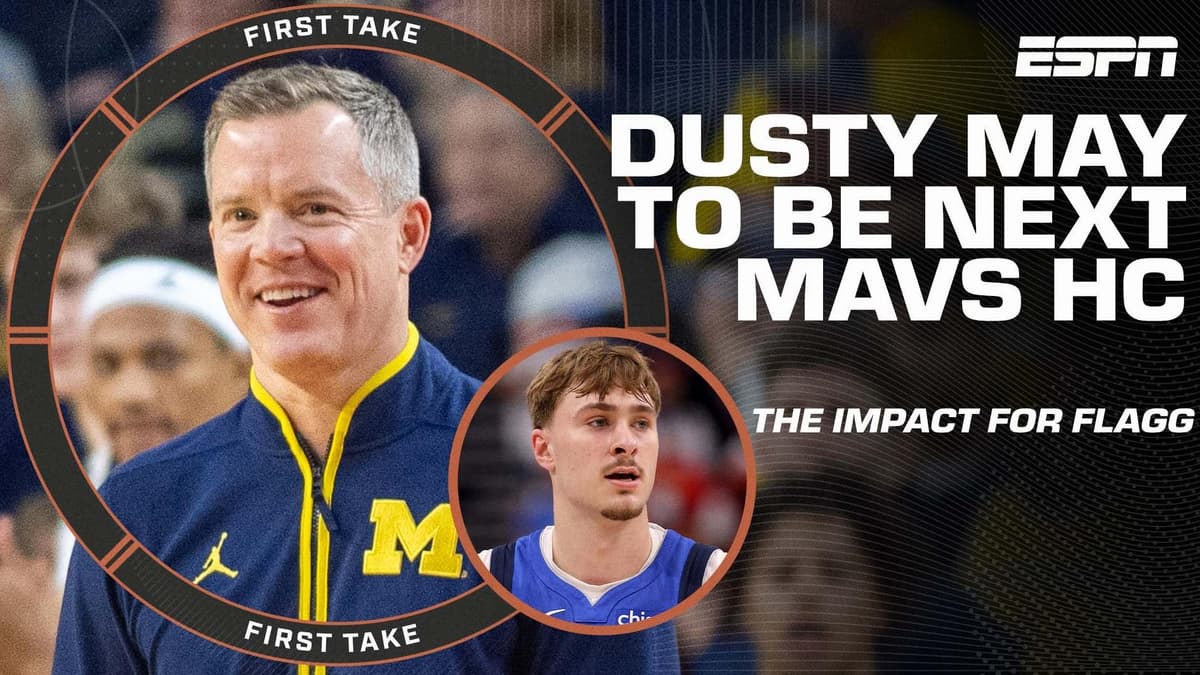
The traditional wall between college basketball and the NBA has long been fortified by cautionary tales. For every successful transition, there are a dozen stories of legendary college tacticians who found the professional game’s pace, ego management, and grueling schedule insurmountable. However, Dusty May is currently positioned to shatter those long-standing perceptions. Fresh off a remarkable national title run and a high-profile move to the Michigan Wolverines, May is being heralded as the potential blueprint for a new era of coaching mobility between the NCAA and the NBA.
The Dusty May Effect: A New Era of Coaching Transitions
In the modern basketball landscape, the Dusty May NBA jump is no longer a matter of "if," but "when." May’s trajectory has been nothing short of meteoric. After leading Florida Atlantic to a historic Final Four and subsequently guiding the University of Michigan back to the pinnacle of college basketball with a national title, his name has become synonymous with adaptable, pro-style coaching. Unlike the rigid disciplinarians of the past, May employs a fluid, analytical approach that mirrors the modern NBA offensive explosion.
What sets May apart is his ability to recruit and develop talent that fits a specific, high-octane system. His offensive philosophy emphasizes spacing, quick decision-making, and three-point volume—tenets that are the bread and butter of the current NBA. By proving that these concepts can win at the highest level of the college game, May has effectively auditioned for professional front offices on the biggest stage possible.
Why the Dallas Mavericks and NBA Scouts are Watching
The connection between May and the professional ranks has intensified recently, with the Dallas Mavericks frequently cited as a team keeping a close eye on his methodology. The Mavericks, a franchise that has consistently looked for innovative ways to maximize elite talent like Luka Dončić, recognize the value of May’s tactical flexibility. The "signing" of May to the Michigan program was seen by many as a final stepping stone before an inevitable leap to an NBA bench.
Industry insiders suggest that May’s appeal to teams like the Mavericks lies in his communication style. The modern NBA requires a coach who can act as a partner to superstars rather than a traditional authority figure. May has demonstrated an innate ability to connect with players in the NIL era—a landscape that increasingly resembles the professional environment in terms of player empowerment and financial stakes. This experience makes the Dusty May NBA jump seem less like a gamble and more like a logical progression.
Breaking the "College Coach" Stigma
Historically, the jump from college to the NBA has been fraught with failure. Names like Rick Pitino, John Calipari, and more recently, John Beilein, serve as reminders that success in March doesn't always translate to wins in the winter. The stigma suggests that college coaches struggle with the lack of practice time in the NBA and the shift from being the program's "face" to being a piece of a larger organizational puzzle.
However, Dusty May represents a departure from the "program builder" archetype. He is viewed more as a "tactical architect." His focus on data-driven rotations and efficiency metrics aligns perfectly with the front-office philosophies of the Dallas Mavericks and other forward-thinking NBA franchises. By focusing on the technical aspects of the game rather than the cult of personality, May avoids the pitfalls that have trapped his predecessors.
- Adaptability: May has shown he can win with mid-major talent and high-major blue-chippers alike.
- Pro-Style Offense: His systems prioritize the 3-point shot and transition efficiency.
- Player Management: His success in the transfer portal era mirrors the management of NBA free agency.
The Future of the NBA-College Pipeline
If May successfully makes the transition, it could signal a massive shift in how NBA teams scout coaching talent. For decades, the league has recycled the same pool of assistants and former head coaches. A successful Dusty May NBA jump would validate the idea that the college game is a viable laboratory for professional innovation. It would encourage NBA owners to look toward the NCAA not just for the next superstar player, but for the next great strategic mind.
As the Michigan Wolverines continue to thrive under his leadership, the noise surrounding May’s professional future will only grow louder. Whether he stays to build a dynasty in Ann Arbor or takes his talents to a team like the Dallas Mavericks, one thing is certain: Dusty May has already changed the conversation about what a college coach can be in the modern era of basketball.
Sources & Original Reporting