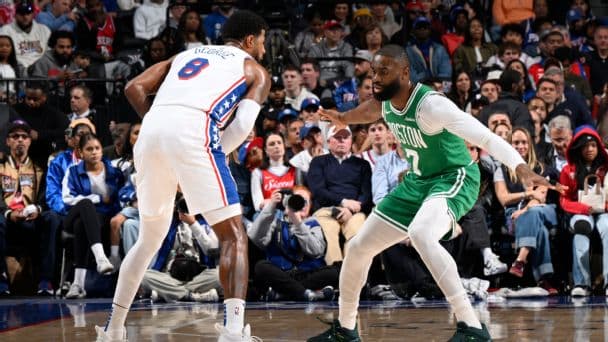
The NBA landscape shifted on its axis this week as two Eastern Conference titans completed a deal that will be discussed for years to come. In a move that caught the basketball world off guard in the opening days of the 2026 offseason, the Boston Celtics and Philadelphia 76ers agreed to a massive swap involving two of the league's premier wings. As the dust settles on this monumental deal, it is time to look at the Brown-George trade grades and determine which franchise came out on top as we look ahead to the 2026-27 season.
The Terms of the 2026 Blockbuster Deal
The trade is straightforward in its primary components but complex in its long-term implications for the Atlantic Division. The Boston Celtics have sent five-time All-Star and 2024 Finals MVP Jaylen Brown to the Philadelphia 76ers. In return, the Celtics received veteran star Paul George along with a significant package of future draft picks. This rare star-for-star swap between bitter rivals marks a radical change in strategy for both front offices as they look to maximize their respective championship windows in an increasingly competitive Eastern Conference.
Philadelphia 76ers: Securing a Long-Term Pillar
For the Philadelphia 76ers, this move is a definitive bet on explosive two-way talent and athletic longevity. By acquiring Jaylen Brown, the 76ers are bringing in a player who is still in the heart of his physical prime at 29 years old. Brown’s ability to create his own shot, defend multiple positions, and excel in high-pressure playoff moments makes him an ideal fit for a team that has struggled to find consistent perimeter scoring in the postseason.
The Fit with Embiid and Maxey
The 76ers receive a Grade: A- for this move. The trio of Tyrese Maxey, Jaylen Brown, and Joel Embiid provides Philadelphia with a terrifying balance of speed, perimeter shooting, and interior dominance. Brown’s championship pedigree is an intangible asset that a Philadelphia team hungry for a deep run desperately needs. By securing Brown, they have a cornerstone who can grow alongside Maxey for the next half-decade, effectively extending their window of contention well beyond the current era. The only downside is the loss of draft capital, but for a team in "win-now" mode, that is a necessary sacrifice.
Boston Celtics: Veteran Savvy and Future Flexibility
The Boston Celtics’ decision to move Jaylen Brown two years after their 18th championship is a bold gambit by Brad Stevens. By bringing in Paul George, the Celtics are prioritizing elite spacing and veteran playmaking. George, though significantly older than Brown at 36 years old, remains one of the most efficient high-volume shooters and versatile defenders in the league. His ability to operate as a secondary or tertiary playmaker next to Jayson Tatum could theoretically unlock new layers of the Celtics' offense.
The Paul George Factor
The Celtics receive a Grade: B+. Paul George is a seamless fit in Joe Mazzulla’s system, which prizes "five-out" spacing and defensive versatility. However, the move is not without substantial risk. At 36, George’s injury history and age-related decline are valid concerns for a team that previously enjoyed the durability of the younger Brown. The addition of draft picks is the critical component here; those assets allow the Celtics to remain aggressive in the trade market or replenish the roster with young talent during the 2026-27 season and beyond.
Analyzing the Brown-George Trade Grades: The Verdict
When comparing the Brown-George trade grades, the winner often depends on the timeline being evaluated. In the immediate 2026-27 season, both teams have reasons to be optimistic. George’s fit in Boston’s offensive scheme could be lethal, while Brown gives the 76ers a transition threat and a secondary rim-attacker they have lacked in previous seasons.
Timeline and Longevity
Philadelphia holds the clear advantage in terms of the future. Jaylen Brown is seven years younger than Paul George and has been remarkably durable throughout his career. While George is still an elite producer, the 76ers have effectively reset their timeline, pairing 25-year-old Maxey with 29-year-old Brown to ensure they remain relevant even as Embiid enters the later stages of his career.
Draft Capital and Flexibility
Boston wins the flexibility battle. By recouping draft picks in this deal, the Celtics have the ammunition to make further moves. If the George experiment doesn't yield a championship in the next year or two, they have the assets to pivot. They are betting that George’s veteran presence can lead to a more disciplined half-court offense than the one Brown sometimes provided.
Final Thoughts on the Blockbuster
Ultimately, this trade is a rare "win-win" on paper, though Philadelphia likely holds the slight edge due to the age gap between the two stars. The 76ers have secured a five-time All-Star who is a perfect stylistic match for their existing core. Boston, meanwhile, has doubled down on their championship pursuit by adding one of the most skilled veterans in the game while restocking their cupboard of picks. As the 2026-27 season approaches, all eyes will be on the first meeting between these rivals to see how Brown looks in a 76ers uniform and how George integrates with the reigning Eastern Conference powers.
Sources & Original Reporting