The Golden State Warriors’ ambitious and often controversial "two-timelines" era officially reached its conclusion on Feb. 4. In a move that felt as much like a relief as it did a roster adjustment, the franchise finalized a Jonathan Kuminga trade, sending the former lottery pick to the Atlanta Hawks. What was once envisioned as a seamless transition from the legendary core of Stephen Curry and Draymond Green to a new generation of stars ended instead with a protracted and "ugly" split that highlighted the inherent friction between developing youth and chasing championships.
The Roots of the Friction in Golden State
The tension surrounding Jonathan Kuminga’s tenure in the Bay Area was rarely a secret. Drafted seventh overall in 2021, Kuminga arrived with the physical tools of an All-Star but joined a team with a rigid, high-IQ system that demands immediate discipline. Over the course of nearly four seasons, the disconnect between Kuminga’s desire for a consistent role and head coach Steve Kerr’s reliance on veteran reliability became the defining narrative of the team’s locker room dynamics.
Reports throughout the 2023-24 and 2024-25 seasons suggested that Kuminga often felt sidelined during critical moments. Despite flashes of brilliance where he looked like the team's second-best scoring option, his playing time remained volatile. This inconsistency led to public and private frustrations, eventually making a Jonathan Kuminga trade feel like an inevitability rather than a possibility.
The Veteran Core and the Championship Standard
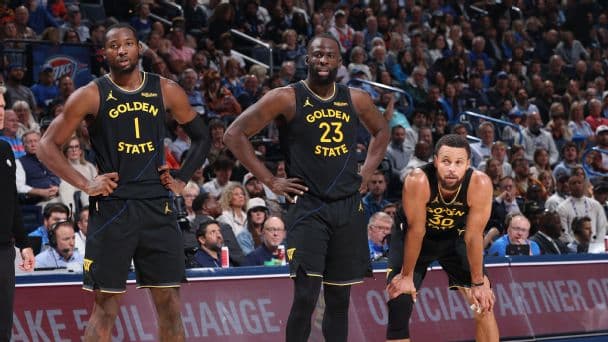
For Stephen Curry and Draymond Green, the priority has always remained clear: maximizing the remaining years of their championship window. The "two-timelines" strategy—attempting to win titles while simultaneously developing high-lottery picks like Kuminga and James Wiseman—placed an immense strain on the veterans. While Curry remained a supportive teammate publicly, the internal pressure to consolidate assets for proven talent was a constant undercurrent.
The Warriors’ front office spent months exploring various avenues to upgrade the roster around Curry. Names like Jimmy Butler III and Kristaps Porzingis were frequently linked to Golden State in trade rumors as the team looked for established stars who could provide the spacing and defensive versatility required for another deep playoff run. The decision to finally move Kuminga signifies a pivot toward a more traditional roster construction, prioritizing fit and experience over raw potential.
Why the Atlanta Hawks Made the Move
For the Atlanta Hawks, acquiring Kuminga represents a high-upside gamble on a player who is still just 22 years old. In Atlanta, Kuminga is expected to receive the consistent minutes and offensive touches that were unavailable behind the Warriors' established hierarchy. The Hawks are betting that a change of scenery and a more defined role will allow Kuminga to tap into the elite athleticism and rim-pressure capabilities that made him a top-10 pick.
The split from Golden State was described as "ugly" not because of a single event, but because of the cumulative weight of unmet expectations. Kuminga’s camp had long signaled a desire for a situation where his growth was a priority, while the Warriors needed a player who could master the nuances of their complex motion offense immediately.
The End of an Era for the Warriors
The Jonathan Kuminga trade serves as the final post-mortem for the Warriors' attempt to bridge two different eras of basketball. With James Wiseman previously traded and Kuminga now in Atlanta, the franchise has effectively doubled down on the present. The focus now shifts entirely to how the remaining roster can support Curry’s quest for a fifth ring.
While Kuminga’s departure marks the end of a difficult chapter, it also provides clarity for both parties. The Warriors can move forward without the daily questions regarding Kuminga’s minutes, and Kuminga receives the fresh start he has sought for over a year. As the NBA landscape shifts following the Feb. 4 deadline, the success of this trade will be measured by whether Kuminga can blossom into a cornerstone in Atlanta and whether Golden State can find the veteran stability they so desperately crave.
Sources & Original Reporting