The wait is finally over for the Madison Square Garden faithful. For the first time since 1973, the New York Knicks are NBA champions. In a definitive Game 5 victory, the Knicks secured the Larry O'Brien Trophy by overcoming a resilient San Antonio Spurs squad, cementing a new era of basketball dominance in the Big Apple. The journey to the 2026 NBA Finals was defined by aggressive roster building, elite defensive identity, and the steady leadership of their superstar backcourt.
A Masterclass in Roster Construction
The Knicks’ path to becoming the New York Knicks NBA champions was no accident. It was the result of a multi-year plan to surround Jalen Brunson with versatile, high-impact talent. The front office’s commitment to building a "two-way" powerhouse was on full display throughout the Finals. By bringing in Karl-Anthony Towns to provide elite spacing and rim protection, and acquiring Mikal Bridges and De'Aaron Fox to bolster the perimeter, New York created a lineup that was virtually impossible to exploit.
The addition of De'Aaron Fox proved to be a masterstroke, as his secondary playmaking and speed allowed Brunson to work off the ball and find easier scoring opportunities. Meanwhile, the defensive backbone provided by OG Anunoby and Bridges ensured that the Knicks could lock down the Spurs' perimeter threats while Towns battled in the paint.
Neutralizing Victor Wembanyama
The biggest challenge of the series was undoubtedly Victor Wembanyama. The Spurs' generational talent put up historic numbers, but the Knicks utilized a collective defensive approach to wear him down. Karl-Anthony Towns took the primary assignment, using his strength and veteran savvy to push Wembanyama off his preferred spots. When Wembanyama did find a rhythm, the Knicks sent timely doubles from OG Anunoby, forcing the young star into difficult passing lanes.
While Wembanyama remained a force, the Knicks’ depth eventually overwhelmed San Antonio. The Spurs relied heavily on their young core, including Stephon Castle and Dylan Harper, who both showed flashes of brilliance. However, the experience and physical physicality of the Knicks’ veteran rotation proved to be the deciding factor in the closing minutes of Game 5.
The Leadership of Jalen Brunson
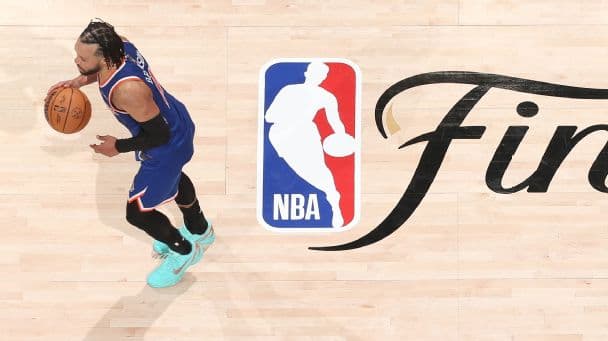
At the heart of this championship run was Jalen Brunson. Throughout the 2026 NBA Finals, Brunson acted as the steady hand for New York, delivering clutch buckets whenever the Spurs threatened to go on a run. His ability to navigate the Spurs' length and finish over Victor Wembanyama in the paint boosted the team's confidence and solidified his status as a New York legend.
Brunson’s synergy with Karl-Anthony Towns was the engine of the offense. The pick-and-roll action between the two forced the Spurs into impossible choices: leave Brunson open for a mid-range jumper or allow Towns to pop for a wide-open three. This offensive versatility allowed the Knicks to maintain a consistent lead and ultimately close out the series on their home floor.
What This Means for the San Antonio Spurs
Despite the loss, the San Antonio Spurs have much to be optimistic about. Reaching the NBA Finals with such a young roster is a testament to the development of Stephon Castle and Dylan Harper. Castle’s defensive tenacity and Harper’s scoring punch provided the perfect complement to Wembanyama. The Spurs are no longer a "team of the future"—they are a powerhouse in the Western Conference that will likely be back on this stage very soon.
The New Era in New York
As the confetti fell at Madison Square Garden, the narrative surrounding the Knicks shifted forever. This championship validates the aggressive trades for Mikal Bridges and Karl-Anthony Towns, proving that the "all-in" move can pay off when executed with a clear vision. The New York Knicks NBA champions title is a reward for a franchise that prioritized chemistry, defense, and star power in equal measure. With the core of Brunson, Towns, and Fox still in their prime, the Knicks have not just ended a drought; they have opened a championship window that could stay open for years to come.
Sources & Original Reporting