In the modern NBA, the sound of the game has changed. While the squeak of sneakers and the swish of the net remain constant, the voices orchestrating the action are more diverse than ever. For many of the league's elite talents, navigating the language of basketball involves a complex cognitive dance between their native tongues and the fast-paced demands of North American professional play. As international players now dominate the MVP conversation, understanding how they process the game linguistically provides a fascinating window into the evolution of the sport.
The Cognitive Map: Thinking Beyond English
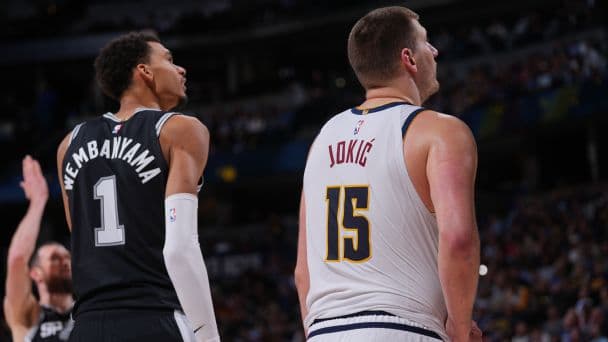
For stars like Victor Wembanyama, Nikola Jokic, and Luka Doncic, the court is a multilingual environment. Research and player interviews suggest that the way an athlete processes information can be deeply tied to their first language. Wembanyama, the San Antonio Spurs' towering phenom, has shared insights into his mental processing, noting that during the heat of competition, his brain often moves beyond traditional linguistic structures. He describes a state of "language-less" thinking where spatial patterns and basketball geometry take precedence over verbal cues, allowing him to react with the fluidity that has defined his young career.
Conversely, three-time MVP Nikola Jokic often operates through a Serbian mental map. While he communicates effectively in English with his Denver Nuggets teammates, his internal processing of complex plays and court vision is rooted in the linguistic structures of his home country. This internal translation happens in fractions of a second, demonstrating the immense cognitive load that international players manage while performing at the highest level of athletic competition.
The Evolution of the Language of Basketball
The language of basketball is not merely about vocabulary; it is about the speed of decision-making. For Giannis Antetokounmpo, the transition from playing in Greece to becoming a global icon in Milwaukee required a total immersion into "Basketball English." This specialized dialect consists of short, punchy commands like "switch," "drop," and "screen" that transcend cultural barriers. However, when the pressure mounts, many players find themselves returning to their roots. Luka Doncic is famously expressive on the court, often utilizing Slovenian or Spanish to vent frustration or engage in psychological warfare with opponents, suggesting that emotional processing remains tethered to a player's first language.
The Learning Curve for New Arrivals
The challenge is perhaps most visible in younger stars like Alperen Sengun of the Houston Rockets. Coming from Turkey, Sengun had to master not only the physical speed of the NBA but also the verbal complexity of NBA playbooks. For international players, the first few seasons are often a double-marathon: learning the nuances of the league's defensive schemes while simultaneously becoming fluent in a secondary language. Coaches have noted that as a player's English improves, their turnover rate often decreases, directly linking linguistic comfort to on-court efficiency.
A Universal Dialect for a Global League
Despite the various native tongues spoken in locker rooms from Toronto to Miami, a universal basketball dialect has emerged. This shared vocabulary allows a Frenchman, a Serb, and a Greek to operate in perfect harmony on a single roster. It is a testament to the intelligence of these athletes that they can bridge these gaps under the intense scrutiny of the shot clock. The ability to translate a coach's instructions from English into a native mental framework—and then back into physical action—is a skill that is often overlooked when evaluating the greatness of international stars.
Conclusion: The Richness of a Multilingual Game
As the NBA continues to expand its global footprint, the language of basketball will only become more nuanced. The influx of international talent hasn't just brought new physical archetypes to the league; it has brought new ways of thinking and communicating. Whether it is Jokic’s Serbian-inspired passing lanes or Wembanyama’s instinctive, non-verbal flow, the diversity of thought is making the game faster, smarter, and more unpredictable than ever before. For the fans watching at home, the brilliance of a no-look pass or a perfectly timed block is a language that requires no translation at all.
Sources & Original Reporting