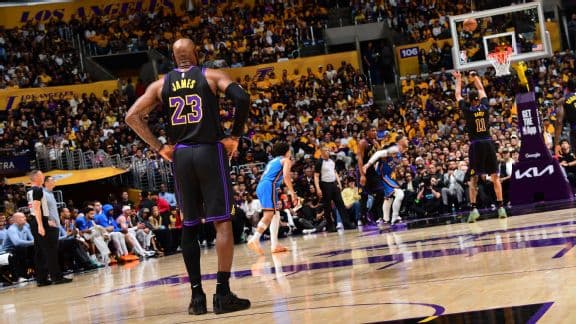
The Los Angeles Lakers' recent postseason run, which saw the team battle into the second round of the Western Conference playoffs, has reignited a familiar conversation across the basketball world. As the 2025-26 season concludes, the LeBron James Lakers future has once again become the focal point of the NBA offseason. While the team’s deep push proved that the pairing still possesses a competitive pulse, the path to a continued partnership is far from a formality. Both the franchise and the player now face an intricate web of financial constraints and legacy-defining decisions.
The Awkward Reality of Mutual Dependency
The current state of the Lakers and LeBron James is best described as an awkward reality. Despite the constant chatter regarding potential moves or the looming specter of retirement, both sides find themselves in a position where they may need each other more than they would care to admit. For LeBron James, Los Angeles offers more than just a basketball court; it is the hub of his business empire, the home of his family, and a global stage that few other markets can replicate. Returning for what would be his record-breaking 24th NBA season requires a situation that balances championship aspirations with these personal priorities.
For the Lakers, the dependency is equally stark. James remains the gravitational force of the organization. Even as he prepares to enter his 24th season, his production on the floor and his influence in the locker room are the primary factors keeping the Lakers relevant in an increasingly crowded Western Conference. Without James, the Lakers face a difficult transition period that the front office is clearly not yet ready to embrace. However, this mutual need does not automatically translate into a smooth negotiation process.
Why the Contract Situation is Not Simple
While the desire for a reunion may exist, the mechanics of making it happen are hindered by the NBA’s increasingly restrictive Collective Bargaining Agreement (CBA). The days of simply handing out a maximum contract without consequence are gone, and the Lakers must navigate a minefield of financial penalties to keep their roster competitive.
The Impact of the Second Apron
The "second apron" of the luxury tax is the most significant hurdle in the LeBron James Lakers future. Under the current CBA, teams that exceed this threshold face draconian penalties that go beyond mere financial fines. These include the inability to use the mid-level exception, restrictions on aggregating salaries in trades, and the potential freezing of future first-round draft picks. If the Lakers sign James to a max extension while maintaining their current core, they risk being hard-capped or severely limited in their ability to improve the roster around him. This creates a paradox: to keep LeBron, the Lakers might have to sacrifice the very tools needed to build a championship team around him.
The Player Option and Leverage
James holds significant leverage through his player option. This allows him to either opt-in for another year or opt-out to become an unrestricted free agent, forcing the Lakers to negotiate a new multi-year deal. For James, this isn't just about the money—it's about the commitment. He needs to see a clear plan from General Manager Rob Pelinka that demonstrates a willingness to push all chips into the middle. The "not simple" part of this equation is that the Lakers must weigh the immediate demands of a legendary player against the long-term health of the franchise.
Building Around the Core and the Rise of the West
To remain a threat to elite teams like the Oklahoma City Thunder, the Lakers know they cannot rely solely on the brilliance of James and Anthony Davis. The development of Austin Reaves has provided a necessary third pillar for the team, offering playmaking and shot-creation that lightens the load on the veteran stars. However, the gap between a second-round exit and a championship remains significant.
The Oklahoma City Thunder and other emerging powerhouses in the West have built deep, versatile rosters that exploit the Lakers' lack of secondary depth. For James to return, he needs assurance that the front office can find the right complementary pieces despite the financial restrictions mentioned above. The Lakers are caught in a delicate balancing act: they must honor the twilight of the greatest career in NBA history while acknowledging that the competitive landscape has shifted toward younger, more athletic rosters.
The High Stakes of the 2026 Offseason
Ultimately, the LeBron James Lakers future will be decided by whether both parties can find a middle ground between financial pragmatism and championship ambition. The second-round exit in 2026 was a proof of concept—it showed that James and Davis are still a formidable duo capable of winning high-stakes games. But it also exposed the thin margin for error that exists when a team is built around a player entering his 24th season.
As the offseason unfolds, the negotiations will be a masterclass in salary cap gymnastics and high-stakes diplomacy. Whether LeBron James pulls on the purple and gold for another year or seeks a new chapter elsewhere, the decision will fundamentally reshape the landscape of the NBA for years to come.
Sources & Original Reporting