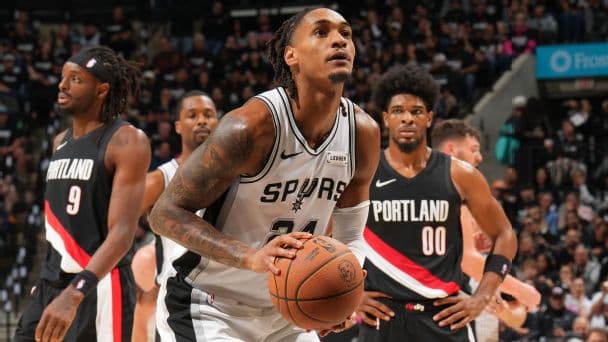
In the high-stakes environment of the 2026 NBA Playoffs, few decisions spark more heated debate among coaches, players, and analysts than the foul up 3 strategy. As the San Antonio Spurs and Portland Trail Blazers navigate a physical and tactically dense postseason series, the question of whether to send an opponent to the charity stripe or risk a game-tying triple has become a defining storyline. ESPN analyst Zach Kram recently conducted an exhaustive study, diving into years of NBA film and interviewing dozens of league insiders to determine if this tactic is a reliable game-winner or a potential clutch-time saboteur.
The Statistical Reality of the Foul Up 3 Strategy
The core philosophy behind the foul up 3 strategy is rooted in risk mitigation. Rather than allowing an opponent to attempt a high-variance three-point shot to tie the game in the waning seconds, the defending team intentionally fouls a ball-handler before they can enter their shooting motion. This forces the trailing team to the free-throw line for two shots, theoretically preventing them from ever getting the opportunity to even the score in a single possession.
According to Kram’s research, the data suggests that fouling is statistically the safer play, yet it remains one of the most nerve-wracking decisions a head coach can make. When a team fouls while up by three points, they effectively eliminate the possibility of a direct tie through a field goal. However, this strategy introduces a volatile set of new variables. These include the risk of a shooting foul being called if the offensive player is quick enough to begin their motion, or the nightmare scenario of an offensive rebound on a missed second free throw. Kram’s study indicates that while the math favors the foul, the human element of execution often bridges the gap between a win and a heartbreaking loss.
Lessons from the Spurs and Trail Blazers Postseason Clash
The ongoing battle between the San Antonio Spurs and the Portland Trail Blazers has provided a masterclass in late-game management. Both teams feature rosters with high basketball IQs and coaching staffs known for their analytical leanings. In recent matchups, we have seen both sides grapple with the precision required for the intentional foul. For the Spurs, a team built on discipline, the emphasis has often been on the exact timing of the contact.
Fouling too early can leave too much time on the clock, allowing the opponent to play the "free throw game" and potentially get another possession. Conversely, fouling too late risks a whistle during a shot attempt, which could result in three free throws or a catastrophic four-point play opportunity. The Trail Blazers have countered this by utilizing their perimeter speed to try and draw fouls while in the act of shooting, specifically to punish teams attempting the foul up 3 strategy. This psychological warfare has added a layer of complexity to the 2026 playoffs, as players must remain hyper-aware of the foul count and the positioning of the officials at all times.
Why Some Coaches Hesitate to Foul
Despite the analytical advantages highlighted in Kram's study, many NBA purists and several coaches remain hesitant to embrace the intentional foul as a universal rule. The hesitation usually stems from three primary concerns regarding the breakdown of execution.
The Continuation Risk
The most immediate danger of the foul up 3 strategy is the referee’s interpretation of the "continuation" rule. If a defender is not surgically precise with their contact, they may foul a player who has already started their upward shooting motion. In the modern NBA, savvy guards are trained to heave the ball toward the rim the moment they feel a defender's reach. This can result in three free throws for the opponent or, in the worst-case scenario, a made basket and an "and-one" opportunity to take the lead.
The Offensive Rebound Trap
By putting the opponent on the line, the defending team voluntarily enters a situation where they must successfully box out. Kram’s film study shows that a missed second free throw followed by an offensive rebound is one of the most common ways the fouling strategy backfires. If the trailing team secures the board, the defense is often scrambled, leading to a wide-open kick-out for a three-pointer or a quick putback. For teams that struggle with defensive rebounding, the "no-foul" approach often feels like the lesser of two evils.
Defensive Confidence and Rhythm
Some coaches prefer to trust their set defense over a manufactured free-throw scenario. They argue that a contested, desperation three-pointer over a 7-foot defender is a lower-percentage shot than the series of events triggered by an intentional foul. There is also the psychological factor: some coaches believe that fouling sends a message of fear to their own players, whereas forcing a tough miss reinforces defensive identity and confidence in the team's ability to get a stop when it matters most.
The Evolution of Late-Game Management
The consensus among the dozens of league personnel spoken to for the study is that the foul up 3 strategy is becoming the modern standard, but its success depends entirely on the personnel on the floor. Teams with elite rebounders and disciplined perimeter defenders are far more likely to execute the maneuver successfully. As the Spurs and Trail Blazers continue their quest for a title, their ability to navigate these closing seconds will likely define their season.
Ultimately, Kram’s analysis concludes that while there is no foolproof method to guarantee a win in the closing seconds, the intentional foul significantly reduces the opponent's mathematical probability of forcing overtime. As the 2026 NBA Playoffs progress, expect to see coaches leaning more heavily on the data, even if it means putting the game in the hands of the officials and the free-throw shooters rather than the defense.
Sources & Original Reporting