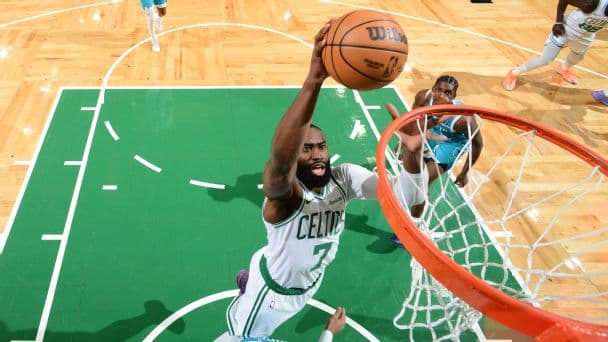
For years, the mantra across NBA front offices and coaching staffs has been simple: play faster. The logic seems bulletproof—more possessions lead to more transition opportunities, and transition opportunities are the most efficient shots in basketball. However, as the league-wide tempo continues to climb, a counterintuitive trend is emerging. According to a deep dive into NBA pace and efficiency by ESPN analyst Zach Kram, the obsession with speed might actually be a trap for teams that lack the foundational half-court execution to back it up.
The Great Acceleration: Why Every Team Wants to Run
The modern NBA is defined by its velocity. Gone are the days of the grinding, isolation-heavy offenses of the early 2000s. Today, coaches preach the importance of "beating the defense down the floor" and "playing in the gaps" before a defense can set. The statistical reasoning is sound: transition plays generally yield a much higher points-per-possession (PPP) than half-court sets, often exceeding 1.2 or 1.3 PPP compared to the league average of roughly 1.1 in the half-court.
The Statistical Appeal of Speed
Teams are hunting for early-clock three-pointers and rim runs to maximize their offensive ceiling. By increasing the number of possessions in a game, more talented teams theoretically allow their skill advantages to manifest over a larger sample size. However, when every team in the league adopts the same "seven seconds or less" mentality, the competitive advantage of speed begins to diminish. This leads to a frantic style of play that doesn't always translate to winning basketball, especially if the personnel isn't equipped to handle high-speed decision-making.
The Pace Paradox: Analyzing NBA Pace and Efficiency
One of the most startling revelations in current NBA analytics is the lack of correlation between playing fast and being a top-tier team. In fact, many of the league’s most dominant forces operate at a more measured tempo. For example, the Boston Celtics and Oklahoma City Thunder—two of the league's elite—don't necessarily lead the league in pace. Instead, they prioritize offensive efficiency and shot quality over raw volume.
The "Empty Calorie" Possession
The data suggests a "Pace Paradox" where speed can actually be a mask for underlying weaknesses. When a team plays fast without the personnel to handle the decision-making required, the result is often "empty calories"—lots of shots, but low-quality looks and frequent errors. Kram’s analysis points out that some of the league's fastest teams are actually among the least efficient because they turn the ball over at higher rates or take contested shots early in the clock just to maintain their tempo.
- Bottom-tier teams: Often play at a high pace to create chaos and mask half-court deficiencies.
- Elite teams: Use pace selectively, understanding when to push and when to execute a set play.
- The Turnover Factor: High-pace play often leads to higher turnover rates, which can negate the benefits of quick scoring by giving the opponent easy transition looks.
The Half-Court Reliability Test
While transition points are the easiest to get, they are also the hardest to rely on when the stakes are highest. The reality of NBA pace and efficiency is that the best offenses are those that can score when the game slows down. If a team hasn't developed the chemistry and tactical depth to run a sophisticated half-court offense, their efficiency craters the moment the fast-break opportunities are taken away by a disciplined defense.
The Denver Nuggets Blueprint
Teams like the Denver Nuggets, led by Nikola Jokic, excel because they can dismantle a set defense in the half-court. Even if their overall pace is league-average or slower, their efficiency remains sky-high because they value every possession. They use the clock to find the best possible shot, rather than the first available shot. This distinction is what separates the perennial contenders from the teams that merely look exciting during the regular season but struggle to produce consistent results.
Playoff Implications: When the Clock Slows Down
The most significant danger of the pace-first mentality appears in the postseason. Historically, NBA playoff games are played at a significantly slower pace than regular-season games. Defenses are more locked in, scouting reports are more detailed, and teams are more willing to commit fouls to stop easy transition baskets. In this environment, the ability to execute in the half-court becomes the primary driver of success.
Adapting to Postseason Intensity
If a team has spent 82 games building an identity solely around speed, they often struggle to pivot when the game becomes a grind. We have seen numerous high-octane regular-season teams flame out in the early rounds because their "speed-first" offense couldn't generate quality looks against a set, disciplined defense. For the league's best, pace is a tool, not a crutch. The teams that find ultimate success are those that can play at any speed the game demands, ensuring that efficiency remains high even when the shot clock is winding down.
Sources & Original Reporting