The NBA postseason has officially arrived, and the opening weekend provided a masterclass in tactical adjustments and statement performances. As the lights got brighter, the league’s biggest stars and most innovative coaches began showing their cards. According to veteran reporter Brian Windhorst, the first few days of action have already revealed critical NBA playoff lessons that will likely dictate the trajectory of the first round and beyond.
From the Los Angeles Lakers digging deep into the history books for a specific LeBron James strategy to the Cleveland Cavaliers unveiling a suffocating new defensive look, the intensity of the playoffs is already at a fever pitch. Whether it is the youth movement in Oklahoma City or the arrival of generational talents like Victor Wembanyama on the big stage, the narrative of the 2026 postseason is beginning to take shape.
The Lakers’ Strategic Pivot: A 25-Year-Old Blueprint
One of the most intriguing NBA playoff lessons from the weekend involves the Los Angeles Lakers and their approach to maximizing LeBron James. Windhorst noted that the Lakers have reached back roughly 25 years to employ a strategy that prioritizes deliberate, half-court execution over the modern league's penchant for transition chaos. This approach is designed to preserve the 41-year-old James’ energy while forcing opponents into a physical, grinding style of play that favors veteran savvy.
By slowing the game down and utilizing James in high-post and isolation sets, the Lakers are essentially daring their opponents—in this case, the high-octane Phoenix Suns—to beat them in a low-possession game. This strategy puts immense pressure on every single possession and allows the Lakers to set their defense, a necessity when facing elite scorers. The success of this "old school" methodology suggests that in the playoffs, pace is often dictated by the team with the most disciplined superstar.
Cleveland’s Defensive Masterclass
In the Eastern Conference, the Cleveland Cavaliers have emerged as a defensive juggernaut with a new scheme that left analysts buzzing. The Cavaliers have shifted away from their standard regular-season rotations in favor of a more aggressive, switching-heavy defense that targets the opponent's primary ball-handlers. This shift was particularly effective in neutralizing the perimeter threats of their opening-round opponents.
The defensive intensity led by Cleveland’s frontcourt has created a ripple effect throughout the roster. By clogging passing lanes and contesting shots at the rim with elite timing, the Cavaliers have sent a clear message: they are no longer just a regular-season success story. Their ability to adapt their defensive identity on the fly is a testament to their coaching staff's preparation and the versatility of their personnel.
Oklahoma City and the Youth Statement
The Oklahoma City Thunder entered the postseason with plenty of questions regarding their lack of collective playoff experience. However, the first weekend provided a definitive answer. The Thunder didn't just win; they controlled the tempo and displayed a level of poise rarely seen in such a young core. The "message" from OKC is simple: the future has arrived earlier than expected.
With a balanced attack and a defensive grit that frustrated veteran opponents, the Thunder proved they are legitimate contenders. Their performance highlighted the importance of roster depth and the fearlessness required to win in April and May. As they move forward, the rest of the Western Conference must account for a team that plays with house money but possesses championship-level talent.
Impact Players: Wembanyama, Ingram, and Kennard
The opening weekend also served as a showcase for individual brilliance across several key matchups. Victor Wembanyama made his highly anticipated playoff debut for the San Antonio Spurs, proving that his defensive gravity is even more impactful in a seven-game series. His ability to alter shots without fouling has become the cornerstone of the Spurs' postseason strategy.
Meanwhile, other notable performances included:
- Brandon Ingram: Displaying elite playmaking and scoring versatility for his squad, showing he can be the primary engine in a high-stakes environment.
- Luke Kennard: Providing essential floor spacing for the Detroit Pistons, reminding the league that elite shooting remains the ultimate playoff equalizer.
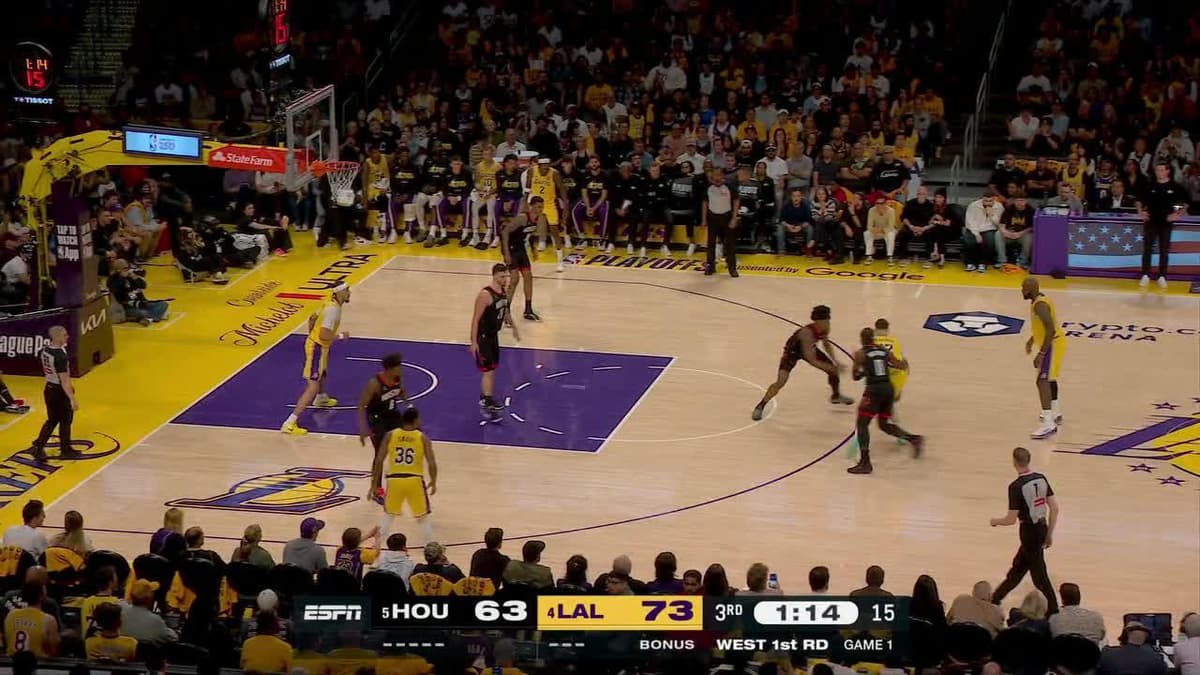
- The Houston Rockets and Toronto Raptors also engaged in a tactical chess match, with both teams leaning heavily on their bench depth to swing momentum during pivotal third-quarter runs.
What These Lessons Mean for Round 1
As the series progress, these initial NBA playoff lessons will serve as the foundation for further adjustments. The Lakers' ability to maintain their slow-burn pace, Cleveland's defensive consistency, and OKC's poise will all be tested as opponents watch the film and attempt to counter. What we learned this weekend is that the 2026 playoffs will be defined by whoever can best balance individual superstar brilliance with rigid, disciplined team systems. With the first games in the books, the road to the Finals is officially wide open.
Sources & Original Reporting