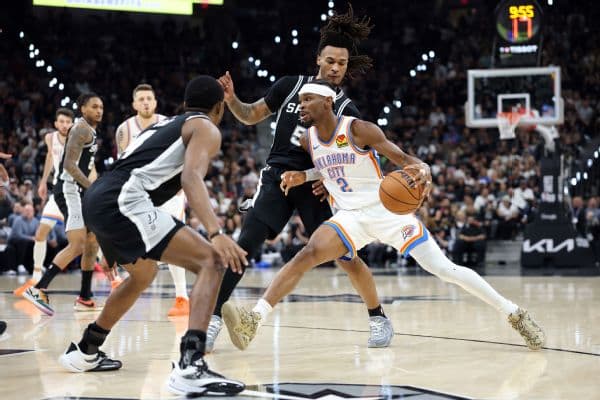
The postseason is a gauntlet where health and timing are just as important as talent, and the Oklahoma City Thunder Game 6 performance was a harsh reminder of that reality. Facing off against the San Antonio Spurs in a high-stakes environment, the Thunder had an opportunity to seize control of the series narrative. Instead, they found themselves struggling to generate any offensive momentum from the opening tip. The result was a disappointing loss that leaves the team searching for answers as they look to keep their season alive amidst mounting pressure.
Jalen Williams Struggles in Return from Hamstring Strain
The most anticipated aspect of the night was the return of Jalen Williams to the starting lineup. After missing time with a hamstring strain, Williams was cleared to play, providing a perceived boost to the Thunder’s depth and defensive versatility. However, it quickly became apparent that the young star was not yet back to full game speed. The physical toll of a hamstring injury often limits a player's ability to create space, explode toward the rim, and maintain lateral quickness—three areas where Williams usually excels for Oklahoma City.
Williams finished the game with only one point, an uncharacteristic stat line that highlighted his lack of rhythm and conditioning. Throughout his time on the court, he struggled to find high-quality looks and appeared hesitant to test his leg in high-traffic situations. For a team that relies on his secondary playmaking and scoring punch to take the pressure off the backcourt, his inability to impact the box score was a significant hurdle that the rest of the roster simply could not overcome. The lack of production from such a vital piece of the rotation forced the Thunder to look elsewhere for offense, with little success.
Analyzing the Oklahoma City Thunder Game 6 Offensive Collapse
While Williams’ health was a major factor, the struggles extended to the team’s leading man and MVP candidate. Shai Gilgeous-Alexander, who has been the engine of the Thunder’s success all year, had one of his most difficult outings of the season. The Spurs' defense focused all their attention on neutralizing him, employing a mix of double-teams and aggressive hedge-and-recover tactics. The strategy paid dividends for San Antonio, as Gilgeous-Alexander finished the night with less than half of his regular-season scoring average.
The lack of scoring from the primary options led to a stagnant half-court offense that struggled to move the ball effectively. Without Gilgeous-Alexander’s usual penetration to break down the first line of defense and without the spacing typically provided by a healthy and active Williams, the Thunder's offense became predictable. The Oklahoma City Thunder Game 6 offensive output was among their lowest of the postseason, illustrating how much they miss their stars playing at an elite level. When the primary engine isn't firing, the secondary systems must step up, but the Thunder found no such relief on this night.
Spurs Defensive Discipline and Execution
The San Antonio Spurs deserve immense credit for their defensive execution and game planning. They identified the Thunder’s weakened state and exploited it throughout the four quarters of play. By forcing the ball out of Gilgeous-Alexander’s hands and daring a returning Williams to prove his health, the Spurs dictated the tempo and the flow of the game. Their ability to turn defensive stops into transition opportunities allowed them to build a lead that the Thunder simply couldn't chip away at.
Key factors in the Spurs' victory included:
- Interior Dominance: The Spurs controlled the restricted area, making every layup attempt difficult and forcing the Thunder into low-percentage floaters.
- Perimeter Pressure: Oklahoma City was forced into several late-clock situations that resulted in forced shots and shot-clock violations.
- Bench Production: While the Thunder starters struggled, the Spurs' second unit provided a spark, outscoring the Oklahoma City reserves by a significant margin.
- Rebounding Edge: San Antonio limited the Thunder's second-chance points, securing the defensive glass with authority.
The Road Ahead for Oklahoma City
The loss in Game 6 puts the Oklahoma City Thunder in a difficult and precarious position. The primary concern moving forward will undoubtedly be the status and health of Jalen Williams. A hamstring strain is a notoriously lingering issue, and his one-point performance suggests he may need more time to regain his form. The coaching staff will likely spend the coming days evaluating whether to adjust his minutes or change the offensive sets to better accommodate his current physical limitations.
For Shai Gilgeous-Alexander, the challenge will be to bounce back from a rare off-night and find ways to beat the specific defensive looks the Spurs are using. As the leader of this young and talented squad, his ability to diagnose the Spurs' defensive traps and facilitate for others will be the deciding factor in the next matchup. The Thunder have proven all season that they can adapt and overcome adversity, but the stakes have never been higher than they are now.
Sources & Original Reporting