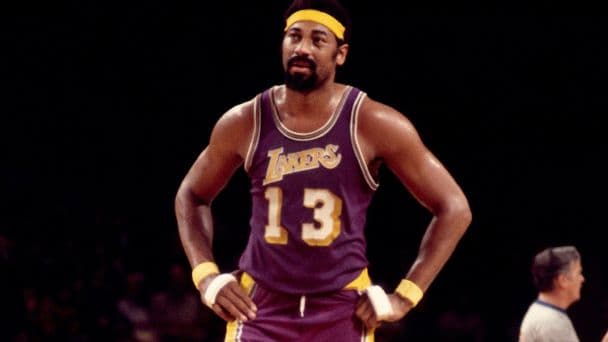
Wilt Chamberlain didn't just play basketball; he redefined the boundaries of the sport. Known as "The Big Dipper," Chamberlain was a force of nature whose statistical achievements often look like typos to the modern observer. When fans and analysts discuss the greatest of all time, the conversation inevitably turns to the sheer volume of Wilt Chamberlain NBA records that still stand today. From his time with the Philadelphia 76ers to his championship years with the Los Angeles Lakers, Chamberlain's career was a masterclass in physical and technical dominance.
The Scoring Machine: Wilt's Most Famous Offensive Milestones
The most famous entry in the book of Wilt Chamberlain NBA records is, without a doubt, his 100-point performance. On March 2, 1962, while playing for the Philadelphia Warriors against the New York Knicks in Hershey, Pennsylvania, Chamberlain achieved the unthinkable. He shot 36-of-63 from the field and 28-of-32 from the free-throw line. To this day, no other player has come within 18 points of that mark, with Kobe Bryant's 81-point game being the closest anyone has reached in the modern era.
However, the 100-point game was merely the pinnacle of a season that defies logic. During the 1961-62 campaign, Chamberlain averaged an astounding 50.4 points per game. To put that in perspective, in the decades since, only a handful of players have even averaged 35 points per game over a full season. His scoring prowess was so immense that he holds the record for the most consecutive games with 30 or more points (65) and the most games with 50 or more points in a single season (45).
Dominance on the Glass: Rebounding Records That May Never Fall
While his scoring often takes center stage, Chamberlain's ability to control the boards was perhaps even more impressive. He remains the NBA's all-time leading rebounder with 23,924 career rebounds. His battle for supremacy with Bill Russell led to some of the most staggering rebounding totals in league history. On November 24, 1960, Chamberlain grabbed a record 55 rebounds in a single game against Russell’s Celtics—a mark that seems truly unbreakable in today’s faster, perimeter-oriented NBA.
Chamberlain's rebounding dominance wasn't just about single games; it was about sustained excellence. He led the league in rebounding 11 times during his 14-season career. His career average of 22.9 rebounds per game is another record that stands as a testament to his physical stature and relentless motor. Whether he was playing for the Philadelphia 76ers or the Los Angeles Lakers, if a ball was in the air, it likely belonged to Wilt.
The Iron Man: Endurance and All-Around Impact
One of the most overlooked aspects of Chamberlain's career was his incredible stamina. During the 1961-62 season, he averaged 48.5 minutes per game. Given that an NBA game is only 48 minutes long, this record was made possible by Chamberlain playing almost every minute of every game, including overtime periods. He rarely sat on the bench, and incredibly, he never fouled out of a game in his entire 1,045-game career.
Chamberlain also sought to prove he was more than just a scorer. In the 1967-68 season, he decided to focus on playmaking and ended up leading the NBA in total assists with 702. He remains the only center in league history to lead the NBA in assists for a season. This versatility is why he holds a total of 72 NBA records, many of which are shared, but the vast majority of which he holds alone.
The Legacy of the Big Dipper
The sheer volume of records held by Chamberlain is so vast that the NBA record book is often jokingly referred to as "The Wilt Chamberlain Autobiography." He holds records for field goal percentage, having once shot 72.7% for an entire season (1972-73), and records for durability, scoring, and rebounding that have survived the eras of Magic Johnson, Michael Jordan, and LeBron James.
As we look back at the history of the Philadelphia 76ers and the Los Angeles Lakers, Chamberlain's jersey hangs in the rafters as a reminder of an era of individual dominance that we will likely never see again. His records aren't just numbers; they are milestones that define the ceiling of human athletic achievement in basketball.
Sources & Original Reporting