The 2026 NFL Draft has officially taken over the city of Pittsburgh, and the opening round delivered the high-stakes drama football fans have come to expect. From the first overall selection to the final pick of the night, teams prioritized blue-chip prospects to anchor their futures. While the quarterback position dominated the early conversation, the first round was defined by a massive run on defensive stalwarts and explosive perimeter playmakers. Our NFL Nation reporters have analyzed the tape to provide the essential pros, cons, and schematic fits for the most impactful selections of the night.
The Top Five: A New Franchise QB and Defensive Dominance
The top of the draft board saw a mix of offensive necessity and defensive firepower. The Las Vegas Raiders finally secured a centerpiece for their offense, while the following four picks focused on elite physical specimens on the defensive side of the ball and a game-changing playmaker for the Cardinals. This opening sequence set the tone for a draft that valued immediate impact players over long-term projects.
1. Las Vegas Raiders: Fernando Mendoza, QB, Indiana
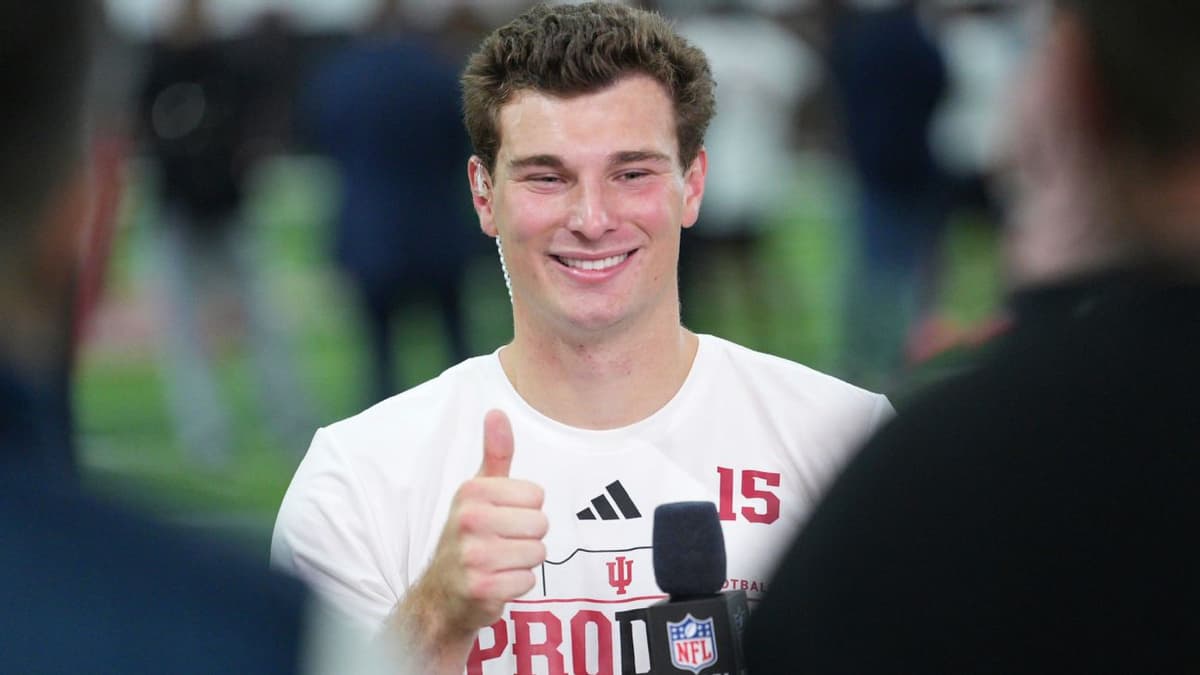
The Raiders used the No. 1 overall pick in the 2026 NFL Draft to select Fernando Mendoza. The Heisman Trophy winner is the high-IQ signal-caller the Silver and Black have sought to lead the franchise under head coach Klint Kubiak. Mendoza arrives in Vegas with a resume built on elite accuracy and a National Championship pedigree.
- Pros: Mendoza is a high-level processor who threw for 3,535 yards and 41 touchdowns last season. His ability to diagnose complex coverages pre-snap makes him a Day 1 starter.
- Cons: Some scouts have expressed concerns regarding his laid-back demeanor and whether his arm strength is truly elite compared to other top-tier prospects.
- Team Fit: He fits perfectly into Kubiak’s system, which prioritizes quick decision-making and intermediate accuracy. Mendoza will likely rely heavily on Brock Bowers as a primary target.
2. New York Jets: David Bailey, EDGE, Texas Tech
At No. 2, the New York Jets selected David Bailey, a physical specimen who recorded 13.5 sacks last year. Bailey provides the Jets with a terrifying pass-rush presence. While there are minor concerns about his frame, his production and motor are undeniable assets for a New York defense looking to remain atop the AFC East. His addition ensures that the Jets' defensive front remains one of the most feared units in the league.
3. Arizona Cardinals: Jeremiyah Love, RB, Notre Dame
The Arizona Cardinals made a bold splash at No. 3 by taking Jeremiyah Love. While drafting a running back this high is rare in the modern era, Love’s 1,372 rushing yards and versatile receiving skills make him a "blue-chip" offensive weapon that the Cardinals felt they couldn't pass up. He provides Kyler Murray with a legitimate three-down threat who can hurt defenses both between the tackles and in the flat.
4. Tennessee Titans: Sonny Styles, LB, Ohio State
The Tennessee Titans addressed their linebacker corps by selecting Sonny Styles. Known for his range and ability to play downhill, Styles is expected to be the quarterback of the Titans' defense for years to come. His versatility allows him to drop into coverage against modern tight ends while remaining a physical force against the run, filling a massive void in the heart of the Tennessee defense.
5. New York Giants: Arvell Reese, EDGE, Ohio State
Rounding out the top five, the New York Giants doubled down on the Ohio State defensive pipeline by selecting Arvell Reese. Reese brings elite length and explosive first-step quickness to a Giants front that desperately needed a consistent edge-rushing threat. His high ceiling makes him one of the most intriguing defensive prospects in the entire class.
Mid-Round Impact: Bolstering the Passing Game
As the first round of the 2026 NFL Draft progressed, teams shifted their focus toward the perimeter. Both the Washington Commanders and New Orleans Saints looked to add dynamic weapons to support their young offenses, recognizing that elite quarterback play requires elite receiving talent.
7. Washington Commanders: Carnell Tate, WR, Ohio State
The Washington Commanders prioritized help for Jayden Daniels at No. 7, selecting Carnell Tate. Tate is a polished route-runner who finished 2025 with nine touchdowns. His ability to create separation makes him the ideal complement to Washington's vertical passing game, providing a reliable target who can win at all three levels of the field.
8. New Orleans Saints: Jordyn Tyson, WR, Arizona State
The New Orleans Saints added explosive playmaker Jordyn Tyson at No. 8. Tyson’s speed and run-after-catch ability provide the Saints with a much-needed spark for a receiving corps currently in transition. He is the type of player who can turn a five-yard slant into a seventy-yard touchdown, a trait the Saints' offense has missed in recent seasons.
25. Chicago Bears: Cashius Howell, EDGE, Texas A&M
One of the more intriguing picks came late in the round when the Chicago Bears selected Cashius Howell. Howell is an athletic freak with an incredible motor, though his "short arms" were a major talking point during the scouting combine. However, his 1.58 10-yard split suggests he has the burst to overcome technical deficiencies at the next level. If the Bears can refine his hand technique, he could become the steal of the first round.
Closing Out the First Round in Pittsburgh
The final pick of the night focused on defensive versatility and high-floor production, a hallmark of winning franchises that look to solidify their secondary before the draft moves into its second day.
32. Seattle Seahawks: Dillon Thieneman, S, Oregon
The Seattle Seahawks concluded the first round by selecting Dillon Thieneman. A production machine, Thieneman accumulated 210 total tackles during his collegiate career. His versatility allows him to play free safety, nickel, or hybrid roles in Mike Macdonald's complex defensive scheme.
- Pros: Thieneman is perhaps the most reliable tackler in this class and possesses an elite football IQ. He rarely misses an assignment and has a natural knack for being around the football.
- Cons: He lacks the "track speed" of elite secondary prospects, leading to questions about his range against top-tier deep threats.
- Team Fit: Seattle has a history of finding stars in the secondary, and Thieneman fits the mold of a high-floor player who can contribute immediately on special teams and in sub-packages.
With Round 1 of the 2026 NFL Draft in the books, the focus now shifts to Day 2, where high-upside prospects like Jadarian Price and Ty Simpson remain available. The depth of this year's class ensures that the middle rounds will be just as pivotal for teams looking to contend this fall. Stay tuned to Sport Syntax as we continue to track every move from the draft floor in Pittsburgh.
Sources & Original Reporting