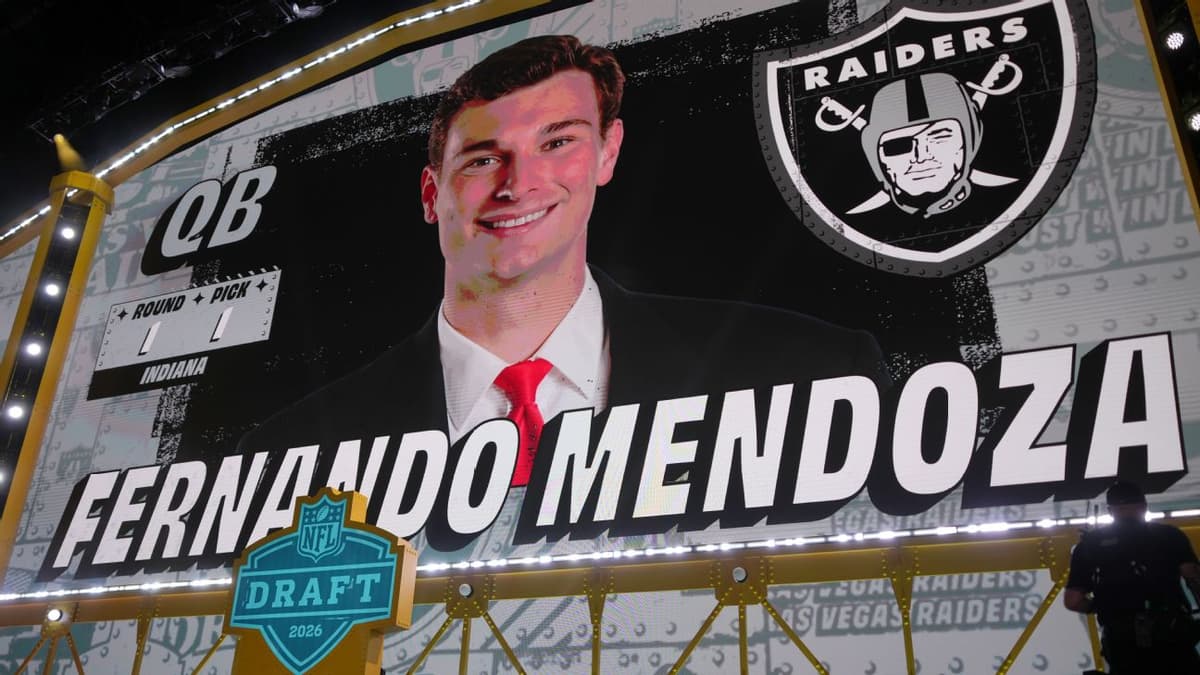
The first night of the 2026 NFL Draft in Pittsburgh delivered exactly the kind of drama fans have come to expect, featuring high-stakes trades, surprising reaches, and a clear shift in power dynamics across the league. From the Las Vegas Raiders finally securing their franchise cornerstone to the New York Jets fortifying both sides of the ball, the landscape of professional football has been irrevocably altered. This analysis dives into the most impactful picks of the 2026 NFL Draft Round 1, evaluating the pros, cons, and immediate fits for these new rookies.
The Top Three: Franchise-Altering Decisions
The draft opened with a flurry of activity that set a clear tone for the night. Teams at the top of the board were not afraid to spend high draft capital on the players they believed could redefine their team identities.
Las Vegas Raiders: Fernando Mendoza, QB, Indiana (No. 1 Overall)
The Las Vegas Raiders made the most anticipated move of the night by selecting Indiana quarterback Fernando Mendoza with the first overall pick. Mendoza arrives in Nevada with an elite resume, including a Heisman Trophy and a National Championship. For a Raiders franchise that has struggled with consistency under center, Mendoza represents a definitive new era.
Pros: Mendoza is widely regarded as the most pro-ready prospect in years. He possesses elite processing speed, a quick release, and the rare ability to remain calm under extreme pressure. His leadership was the driving force behind Indiana's historic season.
Cons: Some scouts have questioned how his success in Indiana's unique offensive system will translate to the NFL. He will need to adjust his timing and footwork to sync with the more complex, pro-style schemes favored in the AFC West.
New York Jets: David Bailey, EDGE, Texas Tech (No. 2 Overall)
The New York Jets continued their commitment to defensive dominance by selecting David Bailey at No. 2. Bailey is a physical marvel with the explosive first step necessary to terrorize opposing quarterbacks in the AFC East.
Pros: Bailey’s length and bend around the edge are unmatched in this class. He has a high motor and the strength to set the edge in the run game, making him a true three-down defender.
Cons: His pass-rush repertoire is still somewhat raw. While he wins on pure athleticism now, he will need to develop more sophisticated hand techniques to beat veteran NFL tackles.
Arizona Cardinals: Jeremiyah Love, RB, Notre Dame (No. 3 Overall)
In one of the biggest surprises of the 2026 NFL Draft Round 1, the Arizona Cardinals took Notre Dame running back Jeremiyah Love at No. 3. This is the highest a running back has been drafted in nearly a decade, signaling a massive shift in Arizona's offensive philosophy.
Pros: Love is a generational talent who can score from anywhere on the field. He is equally dangerous as a pass-catcher out of the backfield as he is between the tackles, providing a versatile weapon for the Cardinals' offense.
Cons: The "con" here is primarily about positional value. Taking a running back in the top three carries immense pressure, and Love will have to produce at an All-Pro level immediately to justify the high selection.
The Ohio State Defensive Surge
As the middle of the first round unfolded, it became clear that the Big Ten—and specifically Ohio State—was the primary provider of defensive talent this year. Three Buckeyes were selected in the top half of the round, each filling a critical need for their new teams.
New York Giants: Arvell Reese, LB, Ohio State
The New York Giants targeted Arvell Reese to be the new heartbeat of their defense. Reese is a versatile linebacker who can transition seamlessly between playing off-ball and rushing from the edge.
Pros: Reese has elite sideline-to-sideline speed, allowing him to track down fast running backs and cover tight ends effectively. His physical presence in the middle of the field is exactly what the Giants' defense lacked last season.
Cons: He occasionally struggles with block shedding when offensive linemen get their hands on him. Improving his hand fighting will be a priority during training camp.
Washington Commanders: Sonny Styles, LB, Ohio State
The Washington Commanders added Sonny Styles, a hybrid safety/linebacker who fits perfectly into Dan Quinn’s defensive vision. Styles provides the kind of flexibility that modern NFL defenses crave.
Pros: His unique build allows him to play in the box to support the run while maintaining the coverage skills of a defensive back. This versatility makes him a nightmare for offensive coordinators to account for in pre-snap reads.
Cons: Because he plays so many roles, he can sometimes over-pursue in the run game, leaving gaps behind him. He will need to improve his discipline at the second level.
Dallas Cowboys: Caleb Downs, S, Ohio State
The Dallas Cowboys executed a trade-up to secure Caleb Downs, the draft's premier safety. Downs is expected to step into a starting role immediately and provide much-needed stability to the Dallas secondary.
Pros: Downs has an incredibly high football IQ and is often described as a "coach on the field." His ball skills and ability to diagnose plays before they happen make him a constant turnover threat.
Cons: While he is a sound tackler, his lack of elite size can occasionally be an issue when meeting larger power backs in the open field.
Trades and Trench Warfare
The latter half of the 2026 NFL Draft Round 1 saw teams focusing on the trenches and making aggressive moves to secure their preferred prospects before Day 1 concluded.
Kansas City Chiefs: Mansoor Delane, CB, LSU (No. 6 Overall)
The Kansas City Chiefs made a rare trade into the top ten to grab LSU cornerback Mansoor Delane. After losing key veterans in free agency, the Chiefs identified Delane as the shutdown corner they needed to maintain their defensive standard.
Pros: Delane has the ideal length and speed for a modern corner. He is aggressive at the catch point and excels in man-to-man coverage.
Cons: His aggressive nature can lead to penalties. He will need to learn the boundaries of NFL officiating to avoid costly pass interference calls.
Cleveland Browns: Spencer Fano, OT, Utah (No. 9 Overall)
The Cleveland Browns focused on protecting the pocket by selecting Utah tackle Spencer Fano. Fano was a mainstay on a tough Utah line and brings that same grit to Cleveland.
Pros: Fano is technically sound with excellent footwork. He rarely gets beat by speed rushes and has the strength to anchor against bull rushes.
Cons: Some analysts believe he may struggle with the elite length of NFL edge rushers, potentially necessitating a move to the interior if he can't adapt his reach.
New York Giants: Francis Mauigoa, OT, Miami (No. 10 Overall)
The New York Giants used their second pick of the night to draft Francis Mauigoa from Miami. Mauigoa is considered the most NFL-ready offensive lineman in the class, possessing a rare combination of size and agility.
Pros: He is a dominant run blocker who can move defenders off the line of scrimmage with ease. His pass protection is equally impressive, making him a Day 1 starter at tackle.
Cons: Mauigoa occasionally plays with a high pad level, which can lead to leverage issues against shorter, powerful defensive ends.
Los Angeles Rams: Ty Simpson, QB, Alabama (No. 13 Overall)
The Los Angeles Rams traded up to No. 13 to select Alabama's Ty Simpson. This move signals the Rams' plan for the future, giving Simpson time to develop behind their current veteran starter.
Pros: Simpson has a high ceiling with a powerful arm and the mobility to extend plays outside the pocket. He is a natural playmaker who fits the Rams' aggressive offensive scheme.
Cons: He needs to work on his consistency and decision-making, particularly when forced off his primary read.
New York Jets: Kenyon Sadiq, TE, Oregon (No. 16 Overall)
Closing out their productive first round, the New York Jets added Oregon tight end Kenyon Sadiq. Sadiq is a modern "move" tight end who functions more like a large wide receiver.
Pros: Sadiq is a mismatch nightmare for linebackers and safeties. His speed and route-running ability make him a vertical threat that will open up the middle of the field for the Jets' offense.
Cons: He is not yet an elite blocker. If the Jets want to use him in heavy sets, he will need to improve his strength and technique at the point of attack.
Sources & Original Reporting