The traditional image of an NFL-ready running back used to be a "bell-cow" who shouldered the entire offensive load for his college program. However, as we look toward the future, the 2026 NFL Draft is signaling a massive shift in how scouts and front offices evaluate the position. The rise of shared backfields is no longer seen as a limitation; instead, it is becoming a blueprint for modern professional success. For years, splitting time was considered a red flag, but today, it is becoming a preferred method of development for the league's next generation of stars.
The Shift in NFL Draft Running Backs Evaluation
In previous decades, a running back who didn't lead his team in every statistical category might have faced questions about his durability or talent. If a player was splitting carries, the assumption was often that he wasn't good enough to hold down the starting job alone. Today, that narrative has been flipped on its head. NFL teams are increasingly looking for NFL Draft running backs who come into the league with "fresh tires"—meaning they haven't been overworked during their collegiate years.
The modern NFL offense relies heavily on a committee approach to keep players healthy throughout a grueling 17-game season. Consequently, scouts are now prioritizing efficiency over volume. A player who can produce explosive plays on 12 to 15 touches is often more attractive than one who grinds out four yards a carry on 30 touches. This evolution is changing the way college programs manage their talent and how that talent is perceived by professional organizations during the scouting process.
The Powerhouses: Notre Dame and Penn State
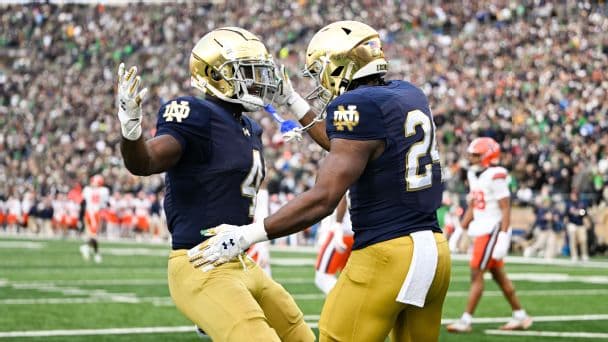
Two programs currently at the forefront of this trend are the Notre Dame Fighting Irish and the Penn State Nittany Lions. Both schools have successfully implemented systems where elite-level prospects share the workload, and the results are speaking for themselves. For the University of Notre Dame, the ability to rotate high-caliber rushers ensures that the offense remains dynamic while protecting the long-term health of their star athletes.
Similarly, at Penn State University, the use of multiple backs has become a hallmark of their offensive identity. By utilizing a "one-two punch" backfield, the Nittany Lions allow their runners to showcase different skill sets—one might be a power runner while the other is a pass-catching threat. For NFL scouts, this provides a clearer picture of how a player might fit into a specific role within a professional rotation. Rather than wondering if a back can handle 300 carries, scouts are looking at how they perform in high-leverage situations and their versatility in the passing game, which are critical components of the modern pro game.
Why "Low Mileage" is the New Premium Stat
One of the most significant factors driving the stock of NFL Draft running backs in shared systems is the concept of career longevity. The running back position has the shortest average career span in the NFL, largely due to the physical toll of the position. By splitting carries in college, prospects are effectively extending their professional earning potential before they even sign their first contract.
- Reduced Injury Risk: Fewer hits in college translate to a lower likelihood of chronic issues entering the league, making the player a more reliable long-term investment.
- Specialization: Shared backfields allow players to develop specialized skills, such as pass blocking and advanced route running, which are essential for modern NFL backs.
- Sustained Explosiveness: Players who aren't exhausted by the fourth quarter of every game tend to show more "pop" on film, a trait that translates well to the high-speed environment of the NFL.
NFL general managers are now more comfortable drafting a player with 400 career collegiate carries than one with 800. The data suggests that the "burnout" rate is significantly lower for those who shared the load, making them a safer investment in the early to middle rounds of the draft. This shift is fundamentally changing the draft board, as players from committee-based systems no longer see their draft stock suffer due to a lack of raw statistical volume.
What This Means for the 2026 NFL Draft Class
As we approach the 2026 NFL Draft, the evaluation process will continue to emphasize efficiency metrics over raw totals. Prospects from programs like Notre Dame and Penn State will likely be among the first off the board because they have proven they can excel within a system that mirrors the NFL's committee approach. They are accustomed to staying mentally sharp even when they aren't on the field for every snap, a psychological hurdle that some "workhorse" backs struggle with at the next level.
The trend of sharing carries is a win-win for the players and the teams. The players enter the league with more physical upside and less wear-and-tear, and the teams get a more durable asset with a higher ceiling for growth. As the NFL Draft running backs market continues to evolve, expect the shared backfield to become the gold standard for elite college programs across the country, as they prepare their athletes for the realities of the professional game.
Sources & Original Reporting