The scouting cycle for professional football never truly sleeps. Even as the current NFL season dominates the headlines, front offices and talent evaluators are already casting their eyes toward the future. Former NFL General Manager Mike Tannenbaum has released his comprehensive roadmap for the 2026 NFL Draft, identifying a specific prospect target for every single round. From established superstars in the Big Ten to developmental gems in the late rounds, Tannenbaum’s list provides a unique glimpse into how a veteran executive builds a draft board focused on longevity, positional value, and elite physical traits.
The Day 1 Anchor: Securing the Secondary
At the top of the board, the 2026 NFL Draft cycle is already being defined by high-impact defensive playmakers who can erase mistakes in the secondary. Tannenbaum highlights Dillon Thieneman as his primary Round 1 target. For a GM like Tannenbaum, a Day 1 pick must represent a foundational piece, and Thieneman fits the bill as a premier safety prospect.
Dillon Thieneman: The Elite Defensive Catalyst
Thieneman has quickly established himself as a blue-chip talent, combining elite range with the physical downhill tackling ability that modern NFL defensive coordinators crave. His ball-hawking instincts make him a safe but high-ceiling investment for any secondary in need of a leader. Beyond the individual talent, Tannenbaum’s analysis suggests that teams like the USC Trojans and Oregon Ducks will once again be central to the first-round conversation. The offensive firepower coming out of the University of Southern California and the University of Oregon continues to set the pace for the league, particularly as NFL offenses move toward more spread-concept, high-velocity systems.
Mid-Round Value: Mining Talent from the Big Ten and ACC
Moving into the middle rounds—specifically Rounds 2 through 4—Tannenbaum shifts his focus toward high-floor players who can contribute immediately on special teams while developing into reliable starters. This is the portion of the draft where championship rosters are filled out with technically sound, battle-tested athletes.
Big Ten and ACC Pipeline: Indiana, Penn State, and Clemson
Tannenbaum points to the Indiana Hoosiers and Penn State Nittany Lions as programs producing the kind of gritty players he favors. The Indiana University program, in particular, has seen a rise in NFL-caliber talent, offering prospects who have been tested against the rigorous competition of the Big Ten. Similarly, the Penn State University pipeline continues to churn out versatile defenders and explosive skill players.
Tannenbaum also keeps a close eye on the Clemson Tigers and Michigan Wolverines. These programs have a storied history of producing defensive linemen and linebackers with the "pro-ready" frame that scouts prioritize. In his breakdown, he emphasizes that the 2026 NFL Draft will be won by teams that can identify the versatile defenders coming out of Clemson University and the University of Michigan, where the defensive schemes often mirror the complexity of the NFL.
Late-Round Sleepers: Finding Diamonds in the Rough
The true test of a scouting department comes on Day 3, where teams must find value in Rounds 5 through 7. This is where Tannenbaum identifies his most intriguing "target" of the entire cycle: a specialist with athletic traits that are virtually unheard of at his position.
Jaffer Murphy: The Viral Specialist with Elite Speed
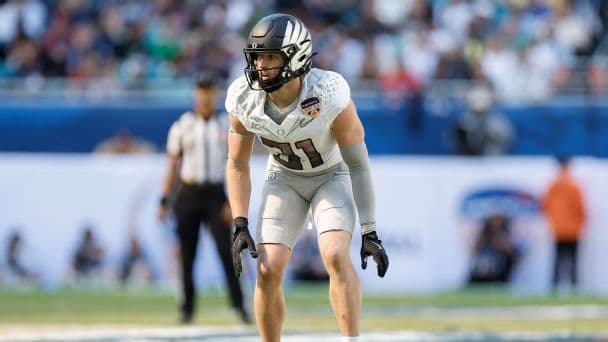
Tannenbaum’s favorite late-round target for the 2026 NFL Draft is Jaffer Murphy. While Murphy is a kicker, he is far from a traditional specialist. Tannenbaum highlights Murphy because of his eye-popping physical profile, including a 4.50-second 40-yard dash—a speed that rivals many wide receivers and defensive backs. Combined with his ability to boot a 70-yard field goal, Murphy represents the classic developmental prospect with high-end tools that can be refined by professional coaching.
To find other gems like Murphy, Tannenbaum looks toward programs like the San Diego State Aztecs, UTSA Roadrunners, and UCF Knights. These schools have become hotbeds for under-the-radar talent. Specifically, the University of Central Florida and San Diego State University have consistently produced athletes who possess the competitive fire necessary to survive the final cuts of an NFL training camp.
Draft Strategy: Building for the Long Term
The 2026 NFL Draft is shaping up to be a class defined by its depth in the trenches and the emergence of high-upside specialists. Tannenbaum’s strategy emphasizes a balanced approach: securing a blue-chip leader like Thieneman early, while taking calculated risks on high-upside players like Murphy late.
Focusing on the Trenches: Arkansas and Texas Tech
Tannenbaum also highlights the Arkansas Razorbacks as a program to watch for physical offensive line prospects, noting that the University of Arkansas continues to churn out massive, powerful blockers. Furthermore, the Vanderbilt Commodores and Texas Tech Red Raiders are noted as excellent sources for situational players and specialists who can provide immediate value in the fourth phase of the game (special teams).
Ultimately, Tannenbaum’s prospect targets reflect a philosophy of "traits plus production." Whether it is the star power at UTSA or the emerging talent at Texas Tech University, the goal remains the same: finding players who fit the specific culture and scheme requirements of an NFL franchise.
- Round 1 Focus: Foundational defensive leaders and elite secondary range.
- Mid-Round Focus: Big Ten and ACC consistency and technical proficiency.
- Late-Round Focus: Developmental upside, viral physical traits, and special teams versatility.
Sources & Original Reporting