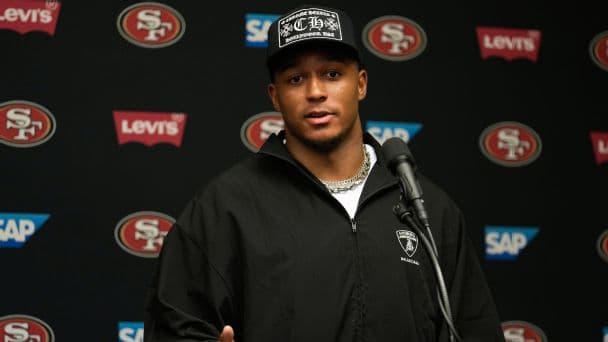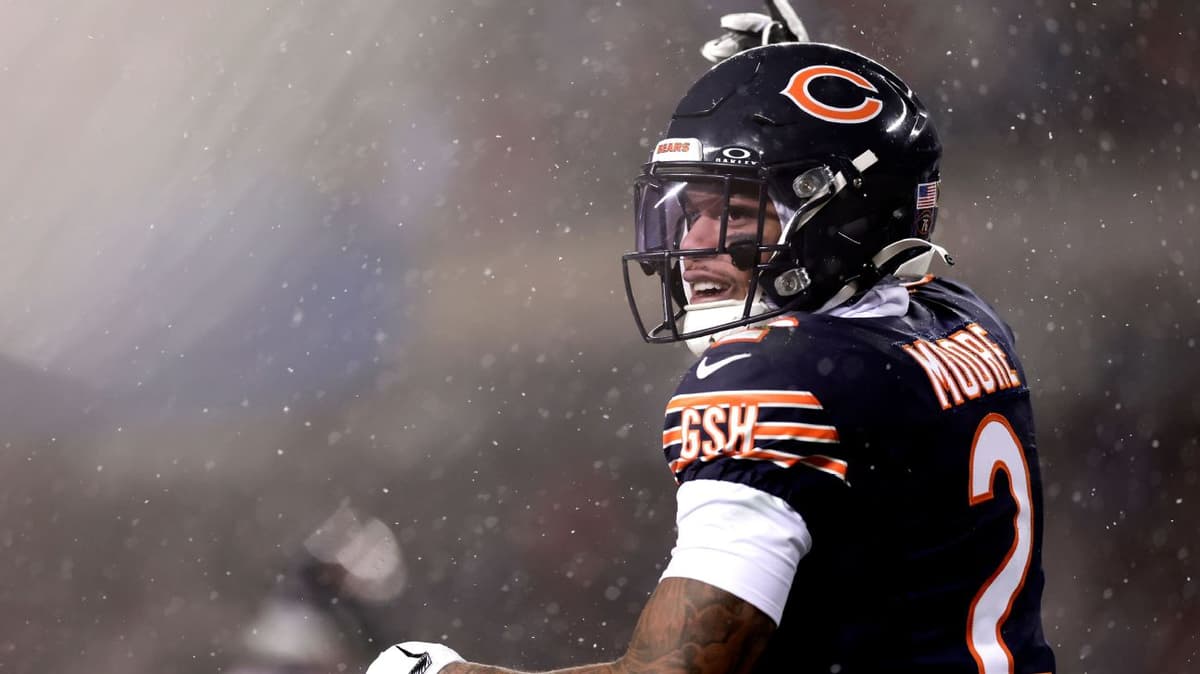
The NFL landscape was rocked today as the Buffalo Bills finalized a blockbuster deal to acquire star wide receiver DJ Moore from the Chicago Bears. In a move that immediately reshapes the power structure of the AFC, the Bills have provided quarterback Josh Allen with the elite perimeter threat he has been seeking. For the Bears, the DJ Moore trade represents a significant shift in philosophy, prioritizing financial flexibility and the opportunity to rebuild the trenches over veteran star power at the skill positions.
The Bills Land a True WR1 for Josh Allen
The acquisition of DJ Moore is a statement of intent from the Buffalo Bills front office. After a season of transition in the wide receiver room, the Bills have secured a player who has consistently produced despite varying levels of quarterback play throughout his career. Moore, coming off a career-high season in receiving yards, brings a unique blend of speed, route-running precision, and elite yards-after-catch (YAC) ability to Western New York.
For Josh Allen, the arrival of Moore simplifies the offensive approach. Moore’s ability to win at all three levels of the field means the Bills no longer have to rely solely on schematic advantages to create separation. Defenses will now be forced to account for a receiver who can turn a short slant into a 60-yard touchdown, potentially opening up more room for Buffalo's vertical passing game and the intermediate middle-of-the-field targets. The synergy between Allen's arm strength and Moore's downfield tracking is expected to be a primary feature of the Bills' 2024 offensive identity.
Impact on the Chicago Bears' Salary Cap and Free Agency
While Chicago fans may be reeling from the loss of their most productive offensive weapon, the DJ Moore trade serves a specific strategic purpose for General Manager Ryan Poles. By moving Moore’s contract, the Bears have opened up significant salary cap space, both for the current season and the years to follow. This move signals that the Bears are looking to be major players in the next phase of NFL free agency, moving away from a top-heavy salary structure to a more balanced roster build.
The financial freedom gained from this trade allows Chicago to address multiple holes on a roster that is still in the middle of a comprehensive rebuild. Rather than being tied to a single high-priced veteran, the Bears can now distribute those funds across the offensive line and defensive front, areas where the team has struggled to find consistency in recent years. This flexibility is the cornerstone of Poles' long-term vision for a sustainable contender in the NFC North.
The Pursuit of Tyler Linderbaum
Perhaps the most intriguing development following the trade is the report that moving Moore’s contract could open the door for the Bears to pursue Tyler Linderbaum. The Pro Bowl center has established himself as one of the premier interior offensive linemen in the league, and his addition would be a game-changer for a Chicago offensive line that has often left its quarterbacks vulnerable. The question of whether the Bears would prioritize a center over a star receiver is answered by their commitment to protecting the pocket.
Acquiring a talent like Linderbaum would signify a "trenches-first" approach for the Bears. By investing in an elite center, Chicago would provide their young quarterback with a reliable signal-caller for the offensive line, improving both pass protection and the efficiency of the run game. While losing Moore hurts the passing attack in the short term, securing a cornerstone like Linderbaum could provide more long-term stability and offensive efficiency for the franchise.
Reshaping the NFL Draft and Roster Strategy
The DJ Moore trade also has immediate implications for the Bears' approach to the upcoming NFL Draft. With a glaring hole now present at the wide receiver position, many analysts expect Chicago to use their newfound draft capital or cap space to find a younger, cheaper replacement. This allows the team to align their receiving corps with the timeline of their young core while utilizing the assets gained in the Moore deal to bolster other units, such as the defensive secondary or edge rusher positions.
Furthermore, the Bills' draft strategy will likely pivot toward defensive depth and offensive line protection, now that their primary need at wide receiver has been addressed with a proven veteran. This trade doesn't just impact two teams; it shifts the draft board for the entire first round, as teams ahead of and behind Buffalo and Chicago react to the new roster realities. The ripple effects will influence how every team in the AFC East and NFC North approaches their off-season acquisitions.
Conclusion: A High-Stakes Gamble for Both Sides
The DJ Moore trade is a rare "win-now" versus "build-for-later" transaction that makes sense for both parties involved. The Bills get the elite weapon needed to maximize Josh Allen’s prime and compete with the likes of Kansas City and Cincinnati. Meanwhile, the Bears gain the financial ammunition and draft flexibility to overhaul their roster from the inside out, potentially landing a generational talent like Tyler Linderbaum to anchor their line. As the league prepares for free agency and the draft, the consequences of this move will be one of the defining stories of the NFL season.
Sources & Original Reporting