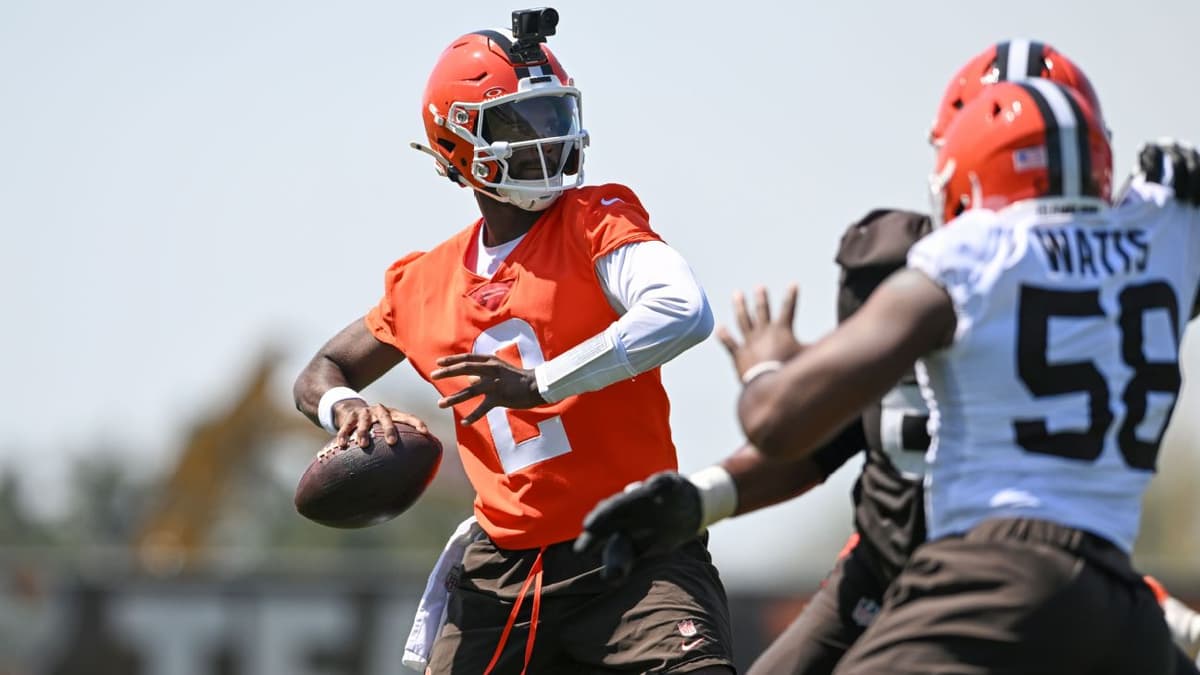
The Cleveland Browns’ quarterback room is under the microscope once again as the team prepares for a pivotal 2026 campaign. However, the latest reports from Berea suggest that the franchise may have found its rhythm with its young signal-caller. On Wednesday, Browns offensive coordinator Todd Monken offered high praise for Shedeur Sanders' development, indicating that the second-year player has made significant strides in his understanding of the professional game. As the team prepares for the upcoming season, Monken’s comments provide a glimpse into a maturing offense that is looking to find stability under center.
Monken Highlights Shedeur Sanders' Development and Growth
Speaking to the media following Wednesday’s practice session, Monken was candid about the progress he has seen from Sanders since his rookie campaign. The offensive coordinator, known for his demanding schemes and high expectations for quarterback play, noted that the jump from year one to year two is often the most critical for a young player’s career trajectory. According to Monken, Shedeur Sanders has met that challenge head-on.
"He’s come a long way," Monken said during his press conference. "When you look at where he was a year ago—just trying to learn the terminology and the speed of the NFL—to where he is now, it’s night and day. His command of the huddle, his ability to check us into the right plays at the line of scrimmage, and his overall comfort in the pocket have all improved tremendously."
The phrase "come a long way" carries significant weight in the Browns’ organization, which has spent years searching for consistent production at the quarterback position. For a coach like Monken to publicly acknowledge Shedeur Sanders' development suggests that the young quarterback is not only mastering the playbook but also earning the trust of the coaching staff.
The Evolution of the Browns' Passing Attack
The development of Sanders is central to the Browns' offensive strategy heading into the new season. Last year, the offense often looked like a work in progress as the team balanced the veteran presence of Deshaun Watson with the need to integrate Sanders into the system. Now, with a full offseason of work as a professional, Sanders is showing the poise that made him a highly-touted prospect.
Mastering the Mental Game
Monken pointed to specific areas where Sanders has evolved, particularly in his decision-making under pressure. "Last year, there were times where he would hold onto the ball a bit too long or try to make the hero play," Monken explained. "Now, he’s understanding the value of the check-down, the value of staying on schedule, and the importance of ball security. That’s the maturity we need to see."
Efficiency Over Heroics
This growth is vital for a Cleveland team that features a high-powered rushing attack and a top-tier defense. The Browns don't necessarily need Sanders to win games single-handedly; they need him to be an efficient distributor who can take advantage of the vertical threats in Monken’s system without putting the defense in difficult positions. By focusing on efficiency, Sanders is allowing the scheme to work for him rather than forcing individual plays.
Competition and Mentorship in the Quarterback Room
While Sanders' progress is the headline, the dynamic within the quarterback room remains a key storyline. The presence of Deshaun Watson provides a unique environment for Sanders. While the two are naturally competing for reps and the long-term future of the position, the veteran-youngster dynamic appears to be paying dividends for the Browns' coaching staff.
Improved Field Vision and Recognition
One of the most notable jumps in Shedeur Sanders' development has been his ability to diagnose complex NFL defenses. Sanders is reportedly seeing the field better and identifying blitz packages earlier in the play clock. This allows him to adjust protections and find his hot reads, a skill that usually takes years for young quarterbacks to master.
Physical Conditioning and Arm Talent
Beyond the mental aspect, the physical transformation has not gone unnoticed. Coaches have noted an improvement in Sanders' lower-body strength, leading to more velocity on intermediate throws and better stability when forced to throw off-platform. This physical maturation has allowed Monken to expand the playbook, incorporating more deep-out patterns and seam routes that require elite arm strength.
Leadership and Intangibles
Sanders has also become a more vocal presence within the locker room and on the practice field. He has become more vocal with the wide receiving corps, spending extra time after practice to work on timing and routes. This proactive approach to leadership has helped build chemistry with the starting unit, ensuring that everyone is on the same page before the regular season kicks off.
Looking Ahead to the Regular Season
As the Browns transition from the early phases of the offseason into the intensity of training camp, the spotlight on Shedeur Sanders' development will only intensify. The NFL is a results-oriented business, and while Monken’s praise is a positive indicator, the true test will come when the live bullets start flying in September.
For now, the Browns appear confident in the direction their young quarterback is heading. If Sanders can continue this upward trajectory, the Cleveland offense could become one of the more balanced and dangerous units in the AFC North. With a veteran coach like Todd Monken guiding his progress, the "long way" Sanders has come might just be the beginning of a successful chapter in Cleveland football history.
Sources & Original Reporting