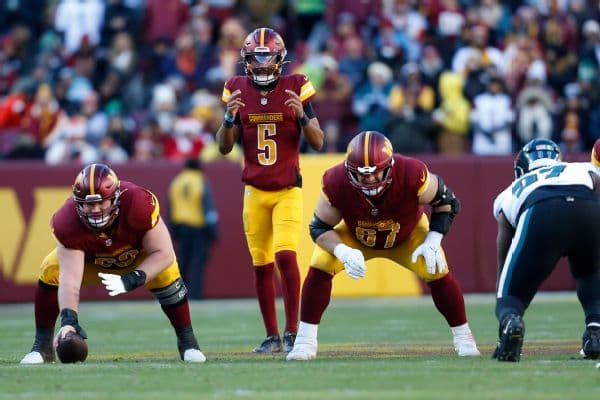
The Washington Commanders have made a significant roster move early in the offseason, officially releasing veteran starting center Tyler Biadasz. This decision, confirmed by league sources, represents a major shift in the team's offensive line strategy as they continue to reshape the roster around their young core. By parting ways with the former Pro Bowler, the Commanders are prioritizing financial flexibility and opening up a critical vacancy at the heart of their protection unit.
Financial Implications of the Tyler Biadasz Release
The decision to move on from Tyler Biadasz is primarily a business decision aimed at maximizing the Commanders' available salary cap space. Biadasz, who signed a substantial three-year, $30 million contract during the previous free agency cycle, was a significant investment for the front office under General Manager Adam Peters. While he provided much-needed stability during the 2024 campaign, the move allows the Commanders to reallocate those funds toward other pressing needs on the roster as they look to take the next step in their rebuilding process.
According to salary cap specialists, this transaction provides the front office with the necessary room to be aggressive in the upcoming free agency period. The Commanders entered the offseason with a healthy amount of cap space, and this move only bolsters their position as one of the most financially flexible teams in the NFL. For a franchise in the middle of a significant culture shift, having the ability to pivot and address multiple defensive or offensive needs is a luxury that the front office is clearly keen to exploit.
A Vital Piece of the 2024 Offensive Line
It is impossible to discuss the recent trajectory of the Washington Commanders without acknowledging the role Tyler Biadasz played in the development of the offense. As a veteran center, Biadasz was tasked with a heavy workload: managing the line calls, identifying complex defensive fronts, and ensuring that rookie quarterback Jayden Daniels was protected in the pocket. His experience was invaluable for a young quarterback navigating the complexities of NFL defenses for the first time.
Tyler Biadasz arrived in Washington with a reputation for consistency and veteran leadership. A former Pro Bowl selection with the Dallas Cowboys, he was brought in to serve as the "quarterback" of the offensive line. Throughout the 2024 season, Biadasz was a fixture in the lineup, starting every game and providing a reliable veteran presence. His ability to diagnose blitzes and communicate line calls was a key factor in the early success of the Commanders' revamped offense under head coach Dan Quinn.
His durability was also a highlight of his short stint in Washington. In an era where offensive line continuity is often disrupted by injuries, Biadasz remained a constant presence. His ability to stay on the field allowed the rest of the unit to build chemistry, which was a significant factor in the team's offensive efficiency. His departure now leaves a leadership void that the team will need to address quickly, as the center-quarterback relationship is the foundation of any successful NFL offense.
Looking Ahead: How Washington Fills the Void
With Tyler Biadasz no longer in the fold, the focus immediately shifts to how the Commanders will replace him. The move creates another significant need for a team that is already looking to bolster several positions. Internal options are headlined by younger players like Ricky Stromberg, a former third-round pick who has shown flashes of potential but has struggled with injuries and limited playing time. The coaching staff may view this as the perfect opportunity to see if a younger, cheaper option can step into a full-time starting role. However, given the importance of protecting a franchise asset like Jayden Daniels, it is highly likely that the Commanders will explore external options through several avenues.
The NFL Draft
Several high-profile interior offensive linemen are expected to be available in the early rounds of the upcoming draft. These prospects could serve as plug-and-play starters, offering the Commanders a way to secure the center position for years to come on a cost-controlled rookie contract. Given Adam Peters' history of finding value in the draft, this remains a primary path for the organization.
Free Agency
The veteran market may offer reliable alternatives who can provide leadership at a lower price point than Biadasz's previous contract. By releasing Biadasz now, Washington has positioned itself to be a major player for any high-end interior linemen who hit the open market. The team can now target specific skill sets that align more closely with their evolving offensive scheme.
The Trade Market
Adam Peters has shown a willingness to be creative with draft capital to acquire established talent. If a starting-caliber center becomes available via trade from a team looking to rebuild or shed salary, the Commanders have the assets and the cap room to make a compelling offer. This proactive approach ensures that the team is not reliant on a single source for talent acquisition.
The Broader Strategy of General Manager Adam Peters
The release of Tyler Biadasz is a microcosm of the broader philosophy currently guiding the Washington Commanders. Since taking over as General Manager, Adam Peters has shown a willingness to make difficult decisions regarding established veterans if those decisions align with the long-term financial and schematic vision of the team. This "roster churn" is a common tactic for successful executives who want to avoid being bogged down by aging contracts and stagnant talent pools.
By making this move early in the offseason, the Commanders are giving themselves ample time to scout replacements and set their board for both the draft and free agency. It also sends a clear message to the rest of the locker room and the league: the front office is committed to constant improvement and will not hesitate to move on from players—even starters—to improve the team's overall health and flexibility. The Commanders are no longer a team that will overpay for past performance; instead, they are focused on building a roster that is young, hungry, and financially sustainable for years to come.
Sources & Original Reporting