The Denver Broncos have spent much of the current NFL season establishing themselves as a defensive powerhouse. With a pass rush that keeps quarterbacks under constant duress and a secondary capable of erasing top-tier wide receivers, they have become a nightmare for most offensive coordinators. However, as the season progresses and the competition stiffens, a specific Denver Broncos defensive weakness has emerged that could prove to be the unit's Achilles' heel: their susceptibility to big plays from running backs and tight ends in the middle of the field.
The Middle-of-the-Field Dilemma
While Denver's defense is statistically one of the toughest to beat, they are not invincible. The primary Denver Broncos defensive weakness lies in the intermediate zones—specifically the area between the line of scrimmage and the deep safeties. This region, often referred to as the "seam" or the "hole," has become a playground for versatile offensive weapons who don't fit the traditional wide receiver mold.
Opponents have realized that while Denver’s cornerbacks are elite at man-to-man coverage on the outside, the interior of the defense can be manipulated. By using play-action or quick-release passes, quarterbacks are successfully finding windows to exploit. The vulnerability isn't necessarily due to a lack of effort, but rather a combination of scheme and the physical demands of covering modern, hybrid athletes in space.
Tight Ends: The Mismatch Nightmare
Tight ends have historically been a difficult assignment for any defense, but they have been particularly effective against Denver this year. Because the Broncos often prioritize stopping the deep ball and containing explosive outside threats, tight ends are frequently left with favorable matchups against linebackers or smaller safeties.
The issues arise in several key areas:
- Physical Mismatches: Large, athletic tight ends are using their frame to box out Denver’s defenders on third-and-medium situations.
- Seam Routes: Tight ends are finding the soft spots in zone coverage, particularly when the Broncos' pass rush fails to get home instantly.
- Red Zone Efficiency: Inside the 20-yard line, the field shrinks, and the Broncos' tendency to focus on the perimeter leaves the middle open for quick strikes to the tight end.
When a defense is as aggressive as Denver's, the middle of the field often becomes the release valve for a pressured quarterback. If the Broncos cannot shore up their coverage against these big-bodied targets, they remain at risk of giving up the "chunk plays" that sustain long scoring drives.
Running Backs as Receiving Threats
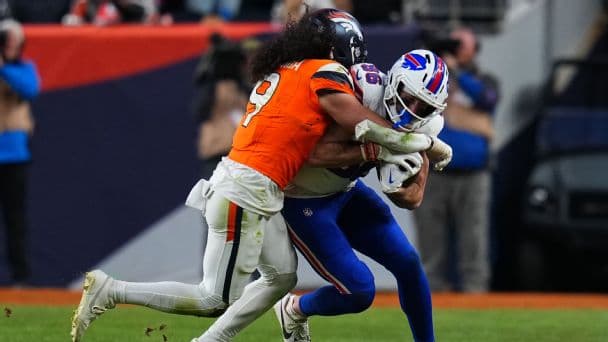
The Denver Broncos defensive weakness extends beyond the tight end position to include running backs coming out of the backfield. Modern NFL offenses increasingly use running backs as extension of the passing game, and Denver has struggled to contain these dual-threat players in the open field.
Whether it is a simple swing pass, a screen, or a sophisticated wheel route, running backs are finding space behind Denver's aggressive front seven. When the Broncos blitz, they often vacate the very areas where a running back can be most dangerous. This creates a high-risk, high-reward scenario where a missed tackle can result in a massive gain for the offense. The ability of a running back to catch a short pass and turn it into a 20-yard gain has been a recurring thorn in the side of Denver’s defensive staff.
Strategic Implications for the Postseason
As the Broncos look toward a deep playoff run, addressing this Denver Broncos defensive weakness will be the top priority for the coaching staff. In the postseason, elite quarterbacks are masters at identifying and exploiting even the smallest cracks in a defensive scheme. Teams with versatile offensive personnel will undoubtedly look at the film and see the middle of the field as their best path to victory.
To counter this, Denver may need to adjust their personnel packages or alter their zone responsibilities. This might involve using a "big nickel" package more frequently or asking their safeties to play a more proactive role in intermediate coverage. Regardless of the tactical shift, the facts remain clear: for Denver to maintain their status as a championship-caliber defense, they must find a way to neutralize the threat posed by running backs and tight ends in the heart of the field.
While no defense in the NFL is perfect, the best ones are those that can adapt mid-season. The Broncos have the talent and the coaching pedigree to fix these issues, but until they do, every opponent on their schedule will be looking to attack the middle.
Sources & Original Reporting