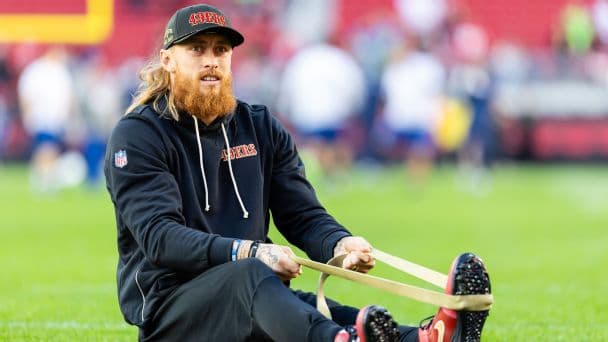
The San Francisco 49ers face a significant challenge as they look toward the future of their offense following a devastating injury to one of their most influential leaders. All-Pro tight end George Kittle is currently navigating the long road to recovery after suffering a torn Achilles during the postseason on Jan. 11. While the injury is one of the most demanding physical setbacks a professional athlete can face, there is growing optimism regarding a George Kittle 2026 season return that could see him back on the field sooner than some initially feared.
The Significance of the Jan. 11 Injury
The injury occurred during a critical juncture for the 49ers, immediately shifting the team's focus from a championship pursuit to the long-term health of their star playmaker. An Achilles tear involves the complete rupture of the tendon connecting the calf muscles to the heel bone, an injury that traditionally requires a grueling rehabilitation process lasting anywhere from nine to twelve months.
For a player like Kittle, whose game is built on explosive blocking, sudden lateral movements, and high-speed route running, the integrity of the Achilles is paramount. The 49ers medical staff confirmed the severity of the tear shortly after the incident on Jan. 11, and surgery was performed to repair the damage. Since that time, the focus has shifted entirely to a structured recovery protocol designed to restore Kittle’s power and flexibility.
The Optimistic Outlook for a George Kittle 2026 Season Return
Despite the daunting nature of the injury, recent reports suggest that the 49ers are hopeful Kittle could be available near the start of the 2026 NFL season. If Kittle were to return by September, it would place his recovery timeline at approximately eight months—a feat that is becoming increasingly common in the modern era of sports medicine.
Advancements in surgical techniques and post-operative physical therapy have shortened the window for Achilles recoveries. In recent years, several high-profile NFL players have successfully returned to the field in under a year, providing a blueprint for Kittle’s rehabilitation. The 49ers organization has remained disciplined in their public messaging, emphasizing that while the goal is a George Kittle 2026 season return, they will not compromise his long-term health to rush him back into the lineup.
Impact on the San Francisco 49ers Offense
Losing George Kittle is about more than just losing a pass-catcher; it is about losing the "engine" of Kyle Shanahan’s offensive scheme. Kittle’s unique ability to serve as an elite sixth blocker in the run game while simultaneously threatening defenses as a deep-ball receiver makes him irreplaceable in the current roster construction. During his absence, the 49ers will likely lean on a combination of internal depth and schematic adjustments.
- Run Blocking: The 49ers' outside zone running scheme relies heavily on Kittle’s ability to seal the edge. Without him, the offensive line must take on a heavier burden.
- Passing Game: Kittle has been a primary safety valve and red-zone target. His absence will require the 49ers' wide receivers to pick up the slack in intermediate passing routes.
- Leadership: As a vocal leader and a captain, Kittle’s presence in the locker room remains vital even while he is on the physically unable to perform (PUP) list.
The Road Ahead: Rehabilitation Milestones
The journey toward the 2026 season will be marked by several key milestones. The initial phase of recovery focuses on range of motion and weight-bearing exercises. Once the tendon has sufficiently healed, Kittle will move into the strengthening phase, where he will work to regain the calf muscle mass that typically atrophies following such an injury.
The final and most difficult hurdle will be the return to football-specific activities. This includes cutting, jumping, and absorbing contact—elements of the game that put the most stress on the Achilles tendon. The 49ers' training staff will likely monitor Kittle’s progress through high-tech tracking data to ensure that his explosive movements match his pre-injury benchmarks before he is cleared for full-contact practice.
Conclusion: A Vital Piece of the 49ers' Future
While the Jan. 11 injury was a major blow to the 49ers' immediate plans, the potential for a George Kittle 2026 season return provides a beacon of hope for the franchise. Kittle has proven throughout his career to be one of the most resilient athletes in the NFL, often playing through significant pain to help his team. As the 2026 season approaches, the entire league will be watching to see if the "People's Tight End" can defy the odds once again and lead the 49ers back to the top of the NFC West.
Sources & Original Reporting